The short answer
A chimney needs a new liner when the existing flue is cracked or deteriorated, or when it is the wrong size or type for the appliance it serves, such as after an oil-to-gas boiler conversion. SummitHearth inspects the flue with a camera, then installs a properly sized liner, top seal and cap, and leaves your home clean.
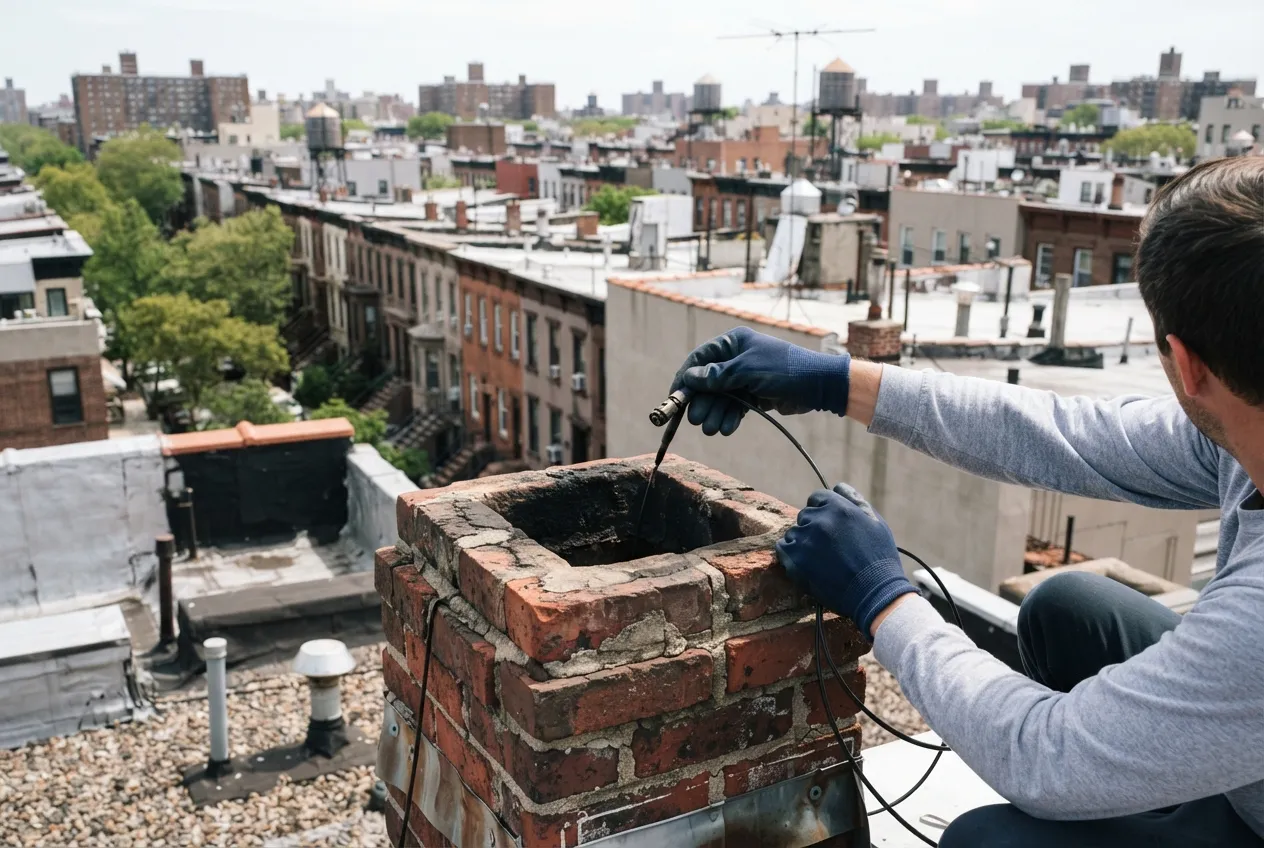
A chimney liner is the tube inside your chimney that carries smoke and exhaust gases up and out of the house. In many Brooklyn brownstones, row houses and older homes, the original clay tile liner is cracked, missing pieces, or was never designed for the appliance now connected to it. SummitHearth Chimney Services installs new liners for fireplaces, wood stoves, boilers and water heaters in Brooklyn and nearby neighborhoods. Our certified technicians start with an inspection, show you what they found with photos or video from the flue camera, and size the liner to the appliance it will serve. This page covers the warning signs, what the job includes, how our crew works and how a visit is scheduled.
Signs you need a new chimney liner
A damaged liner rarely fails all at once. Most owners notice small changes first, often during the first cold weeks when the heat or fireplace starts running again. If you see any of the following, have the flue inspected before the next fire or heating cycle.
- Smoke or a strong creosote smell in the room, especially on windy days or when the fireplace is not in use
- Poor draft: smoke rolls back into the room, fires are hard to start, or the boiler or water heater shows signs of backdrafting
- Pieces of clay tile, mortar or brick flakes collecting in the firebox, at the base of the chimney or in the cleanout
- White staining on the brick, inside or out, which usually means moisture is moving through the masonry
- Water in the firebox or damp spots on walls next to the chimney after rain
- A recent or planned switch from oil to gas, or a new boiler or water heater connected to an old flue
What liner installation includes
Every job is sized to the appliance and the flue, but the core work is the same. Here is what a standard installation covers.
- A camera inspection of the existing flue before any work starts, with photos or video you can review
- Cleaning the flue so the new liner goes into a clear passage
- Measuring the flue and matching the liner size and type to the appliance, whether a fireplace, wood stove, boiler or water heater
- Removing broken clay tile or obstructions where needed to make room for the liner
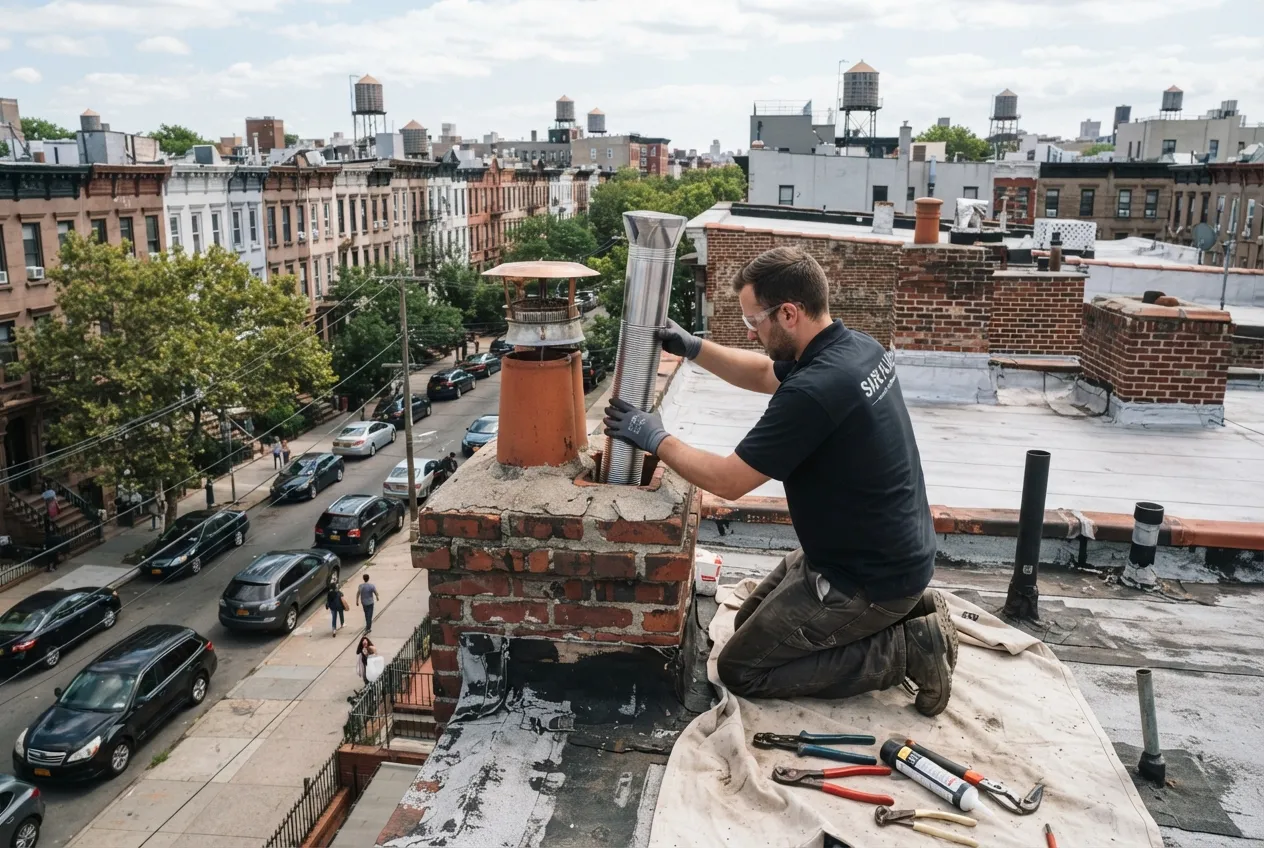
- Installing a stainless steel liner from the appliance connection to the top of the chimney, with insulation where the application calls for it
- Connecting the liner at the bottom with the proper fittings for the appliance
- Sealing the top with a top plate and fitting a chimney cap to help keep out rain and animals
- A final camera check, a draft test and a walkthrough of the finished work
How our crew works in your home and on the roof
Inside, the crew lays drop cloths from the door to the work area and covers the hearth, flooring and nearby furniture. Before brushing, we set up a HEPA vacuum at the fireplace opening or cleanout so soot and dust are pulled away instead of drifting into the room. Rotary brushes clean the flue walls, and a camera goes up the chimney to show the condition of the tile, joints and any offsets before the liner is installed.
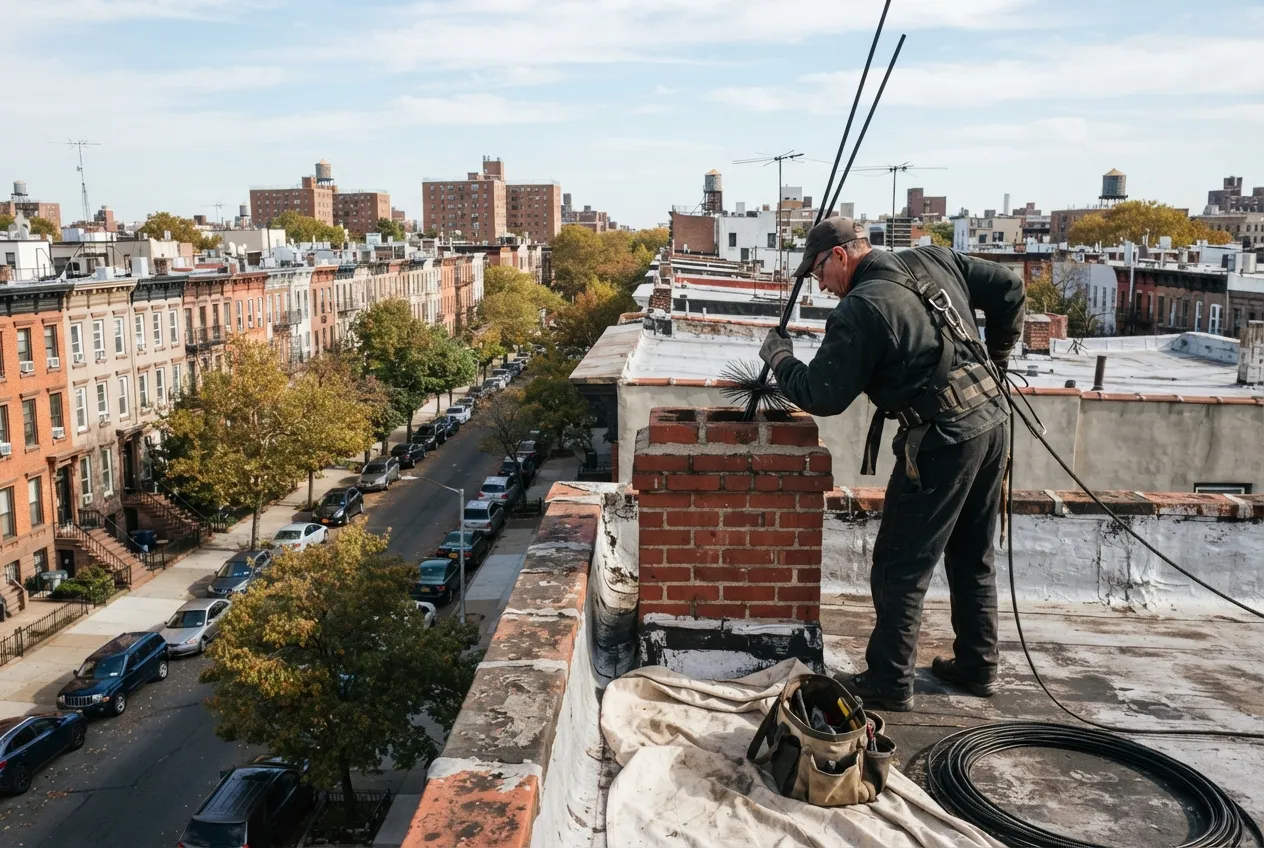
On the roof, technicians set up safe access first, using equipment suited to the building. Brooklyn row houses often have shared walls and chimneys that hold more than one flue, so we confirm which flue belongs to your appliance before anything is removed. The liner is fed down from the top, connected at the bottom and sealed at the crown. Before we leave, the work area is vacuumed and the drop cloths come up last.
Time for your annual chimney check?
The standards we follow
Our work follows NFPA 211, the national standard that calls for chimneys, fireplaces and vents to be inspected once a year. Chimney professionals use three inspection levels. A Level 1 inspection fits when nothing about the system has changed. A Level 2 inspection is the right step when the system changes, such as a new appliance or a switch of fuel, or when the home is sold. Because relining usually goes along with one of those changes, most liner jobs start with a Level 2 inspection. A Level 3 inspection is needed when a hidden hazard can only be reached by opening part of the chimney or building.
If your building is converting its boiler from oil to gas, New York City requires the chimney to be evaluated as part of that work. A new liner is often needed, because gas exhaust produces acidic condensate that can corrode a masonry flue. We can handle the evaluation and the relining together so the two steps stay coordinated.
What affects the price
We give a written quote after the inspection, once we know what the flue actually needs. The main factors are:
- Chimney height and how easy it is to reach the roof safely
- Fuel type and the appliance the liner will serve
- Flue size and condition, including offsets, broken tile or tight spots
- How much creosote, soot or debris has to be cleaned out first
- Whether a camera inspection, a Level 3 inspection or masonry repair is needed before the liner goes in
How a visit works
When you contact us, we ask about the appliance, the type of building and any symptoms you have noticed. On the first visit, a certified technician inspects the chimney, runs the camera and walks you through what they found. You get a written quote that explains the recommended liner and any repairs.
Once you approve, we schedule the installation. Many single-flue installations are completed in one day, while tall buildings, offsets or extra repairs can add time. For buildings with tenants, keep in mind that New York City's heat season runs from October 1 through May 31, when owners must keep apartments heated to the city's minimum temperatures. If a boiler flue needs relining, booking before October, or planning the shutdown carefully during the season, helps keep the heat on for residents.
Chimney Liner Installation by city
- Chimney Liner Installation in Downtown Brooklyn
- Chimney Liner Installation in DUMBO
- Chimney Liner Installation in Boerum Hill
- Chimney Liner Installation in Brooklyn Heights
- Chimney Liner Installation in Fort Greene
- Chimney Liner Installation in Carroll Gardens
- Chimney Liner Installation in Cobble Hill
- Chimney Liner Installation in Gowanus
- Chimney Liner Installation in Red Hook
- Chimney Liner Installation in Clinton Hill
- Chimney Liner Installation in Prospect Heights
- Chimney Liner Installation in Park Slope