The short answer
A chimney inspection checks your fireplace, stove, or boiler flue for cracks, blockages, creosote, water damage, and animal entry so you know whether it is safe to use. The NFPA 211 standard calls for an inspection once a year, and Brooklyn homeowners are best served by scheduling it before the heating season starts on October 1.
A chimney inspection tells you whether your fireplace, wood stove, or boiler flue is safe to use before you rely on it. Many Brooklyn chimneys serve brownstones, row houses, and older frame homes. In these homes the masonry has been through many freeze-thaw winters, and flues may have been relined, shared with a heating appliance, or left unused for years. Our certified technicians examine the whole system, from the firebox or appliance connection up to the crown on the roof. They explain what they find in plain terms and leave you with photos and a written report, so you can decide what to do next with real information instead of guesswork.
Signs you need a chimney inspection
Most homeowners call us because something changed or something seems off. Any of the following is a good reason to have the chimney looked at before the next fire or the next heating season:
- A smoke or creosote smell in the room, especially on humid days or when the fireplace hasn't been used
- Poor draft: smoke rolling into the room, fires that are hard to start, or a boiler or water heater that seems to backdraft
- Debris, mortar grit, or brick flakes collecting in the firebox
- White staining on the outside brick or on the chimney breast inside the house
- Scratching, chirping, or nesting sounds coming from inside the flue
- Water in the firebox, rust on the damper, or damp stains on nearby walls and ceilings
- You just bought the home, switched fuels, or installed a new stove, insert, or boiler
What a chimney inspection includes
Every inspection follows the same checklist, so nothing gets skipped. How deep we go depends on the inspection level your situation calls for, which we explain below.
- Firebox, smoke chamber, damper, and throat checked for cracks, gaps, and heat damage
- Flue liner examined for cracks, missing mortar joints, and blockages
- Creosote and soot buildup assessed and described
- Appliance connector and thimble checked on gas, oil, and wood-burning appliances
- Clearances to nearby wood framing and combustibles, where they can be seen
- Exterior brick, mortar joints, crown, flashing, and chimney cap or screen
- Signs of water entry, animal entry, and draft problems
- Camera scan of the flue when a Level 2 inspection is called for or the liner can't be seen directly
- Photos and a written report with findings and recommended next steps
How our crew works in your home and on the roof
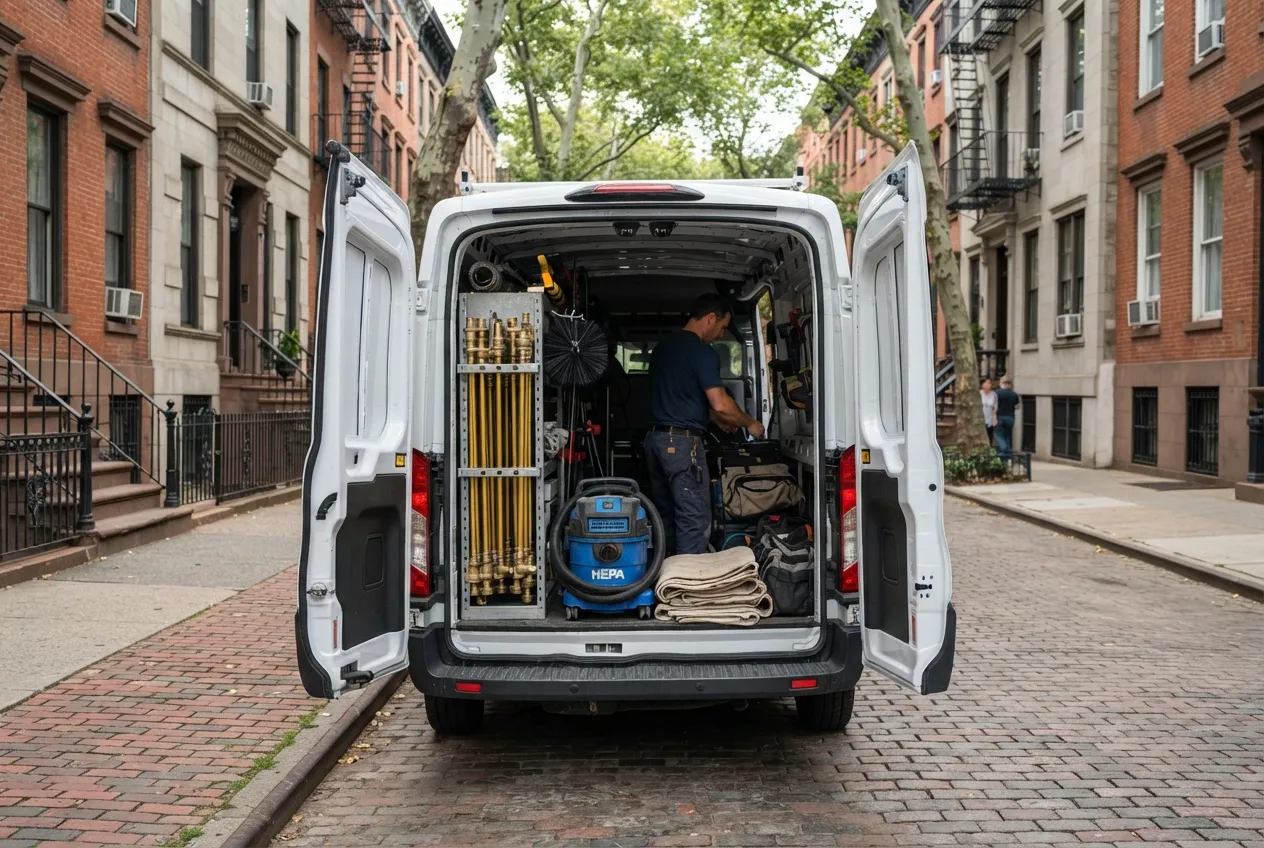
Inside, the crew lays drop cloths from your door to the hearth before any tools come out. The fireplace opening is sealed off, and a HEPA vacuum runs while we work so soot stays in the chimney and out of your living room. If heavy buildup is hiding the flue walls, we will recommend a cleaning with rotary brushes first. A thick coat of soot can cover cracks, and an inspection is only as good as what can actually be seen. For the flue itself, we lower a camera on a cable and record what the liner looks like from top to bottom.
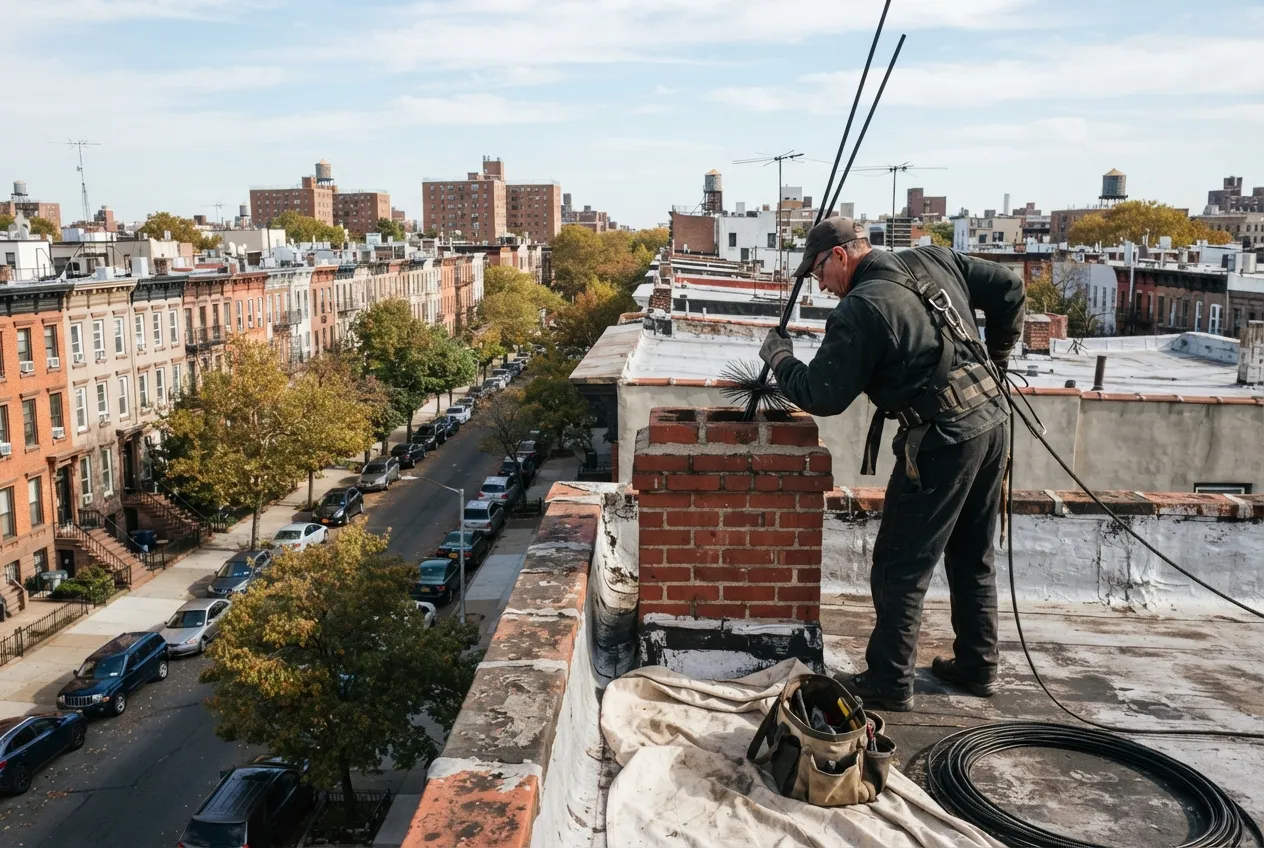
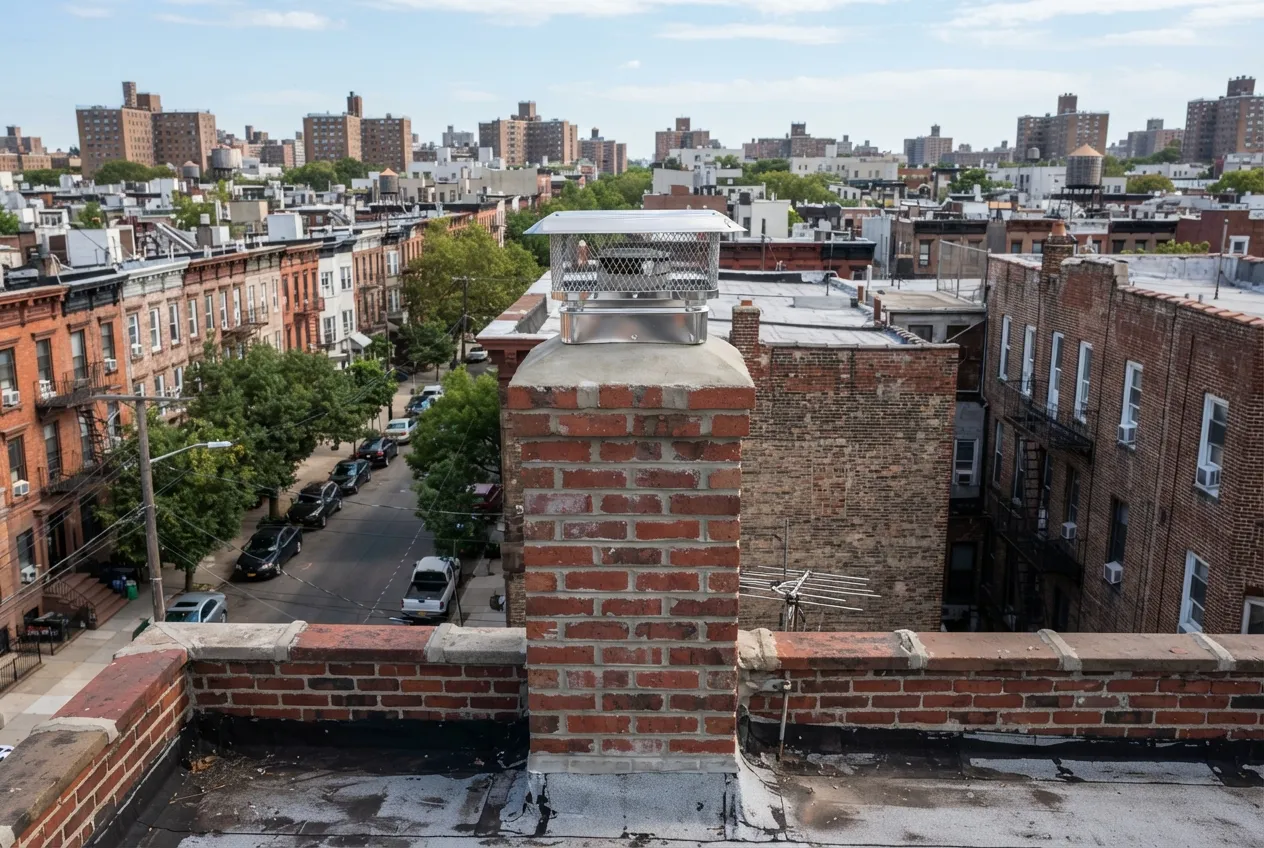
On the roof, we check the crown for cracks, the cap and screen for damage or missing pieces, the flashing where the chimney meets the roof, and the mortar joints that take the most weather. On attached row houses, roof access may be through a hatch or bulkhead, and we will ask about access when you book. We don't work on roofs in unsafe weather. If ice, high wind, or heavy rain rolls in, we will finish the interior work and come back for the roof.
Time for your annual chimney check?
The standard we follow: NFPA 211 and the three inspection levels
The NFPA 211 standard calls for chimneys, fireplaces, and vents to be inspected once a year. Chimney professionals use three inspection levels. A Level 1 inspection is the standard yearly check when nothing about the system has changed. A Level 2 inspection is called for when the system changes, such as a new appliance or a switch of fuel, or when the home is sold. It includes a camera scan of the flue. A Level 3 inspection is needed when a hidden hazard can only be reached by opening part of the chimney or building. We tell you which level fits your situation and why before we start.
Fuel changes matter in New York City. When a building converts its boiler from oil to gas, the chimney has to be evaluated as part of the work. A new liner is often needed, because gas exhaust produces acidic condensate that can corrode a masonry flue. Timing matters too. The city's heat season runs from October 1 through May 31, so having the chimney inspected in late summer or early fall leaves time for any repairs before you need the heat.
What affects the cost of an inspection
Every chimney is different, so the cost depends on what the inspection involves. We explain the factors before any work begins:
- Chimney height and how hard the roof is to reach safely
- Fuel type: wood, gas, or oil, and whether the flue serves more than one appliance
- Flue size, liner type, and overall condition
- How much creosote or soot buildup is present
- Whether a camera inspection is needed, and whether repairs are found that you choose to have done
How a visit works
When you book, we ask about your home, what fuel the chimney serves, when it was last inspected, and any symptoms you have noticed. That tells us which inspection level is likely and whether to plan for a camera or a cleaning.
On the day of the visit, the crew arrives, protects the work area, and walks you through the plan. They inspect inside and on the roof, then show you photos or camera footage of anything that needs attention. You receive a written report that separates urgent safety issues from items to watch. If repairs are needed, we explain your options and let you decide. Nothing is done without your approval.
Chimney Inspection by city
- Chimney Inspection in Downtown Brooklyn
- Chimney Inspection in DUMBO
- Chimney Inspection in Boerum Hill
- Chimney Inspection in Brooklyn Heights
- Chimney Inspection in Fort Greene
- Chimney Inspection in Carroll Gardens
- Chimney Inspection in Cobble Hill
- Chimney Inspection in Gowanus
- Chimney Inspection in Red Hook
- Chimney Inspection in Clinton Hill
- Chimney Inspection in Prospect Heights
- Chimney Inspection in Park Slope