The short answer
Yes, SummitHearth serves Fort Greene, about a mile east of our Brooklyn office. We clean, inspect and repair chimneys in the neighborhood's brownstones, rowhouses and pre-war buildings, and we also clean dryer vents and air ducts. Book a yearly inspection before heat season begins on October 1.
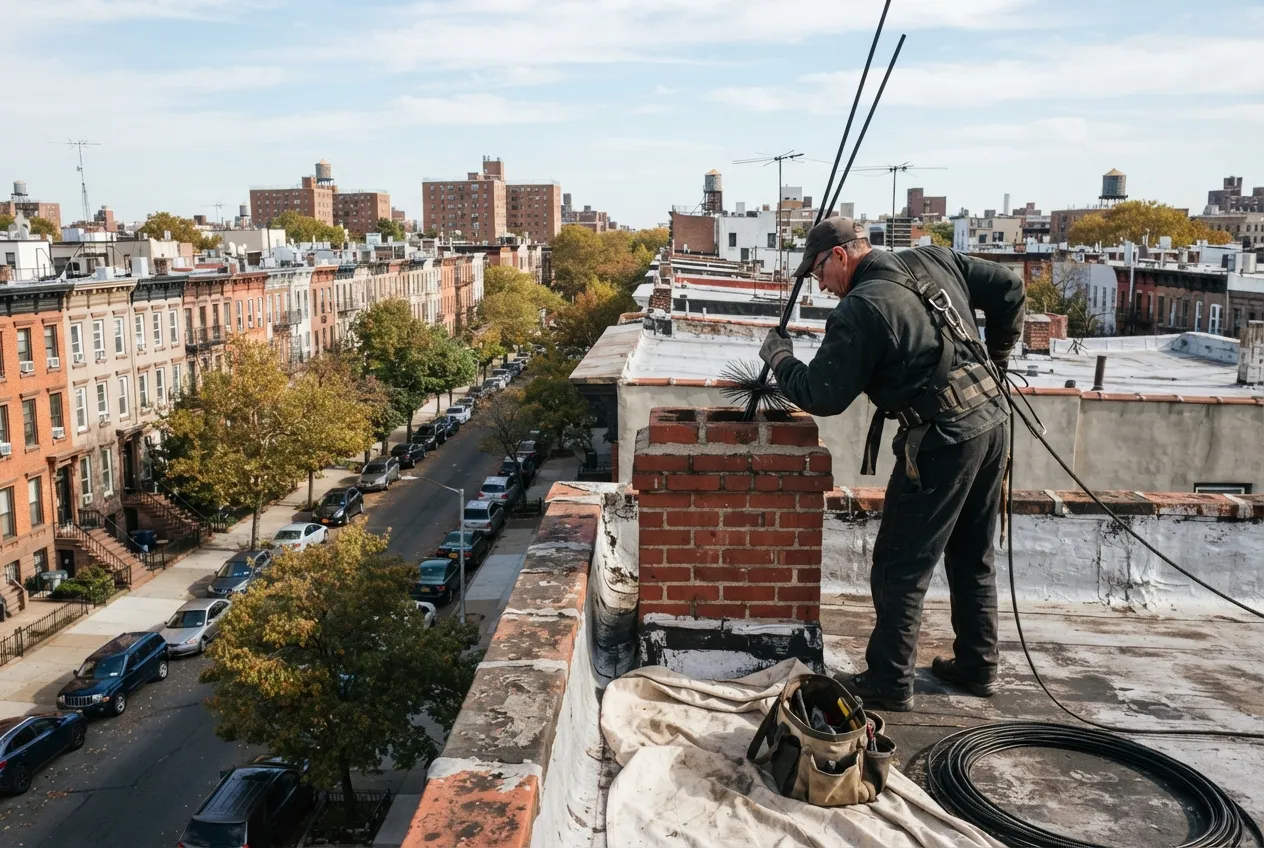
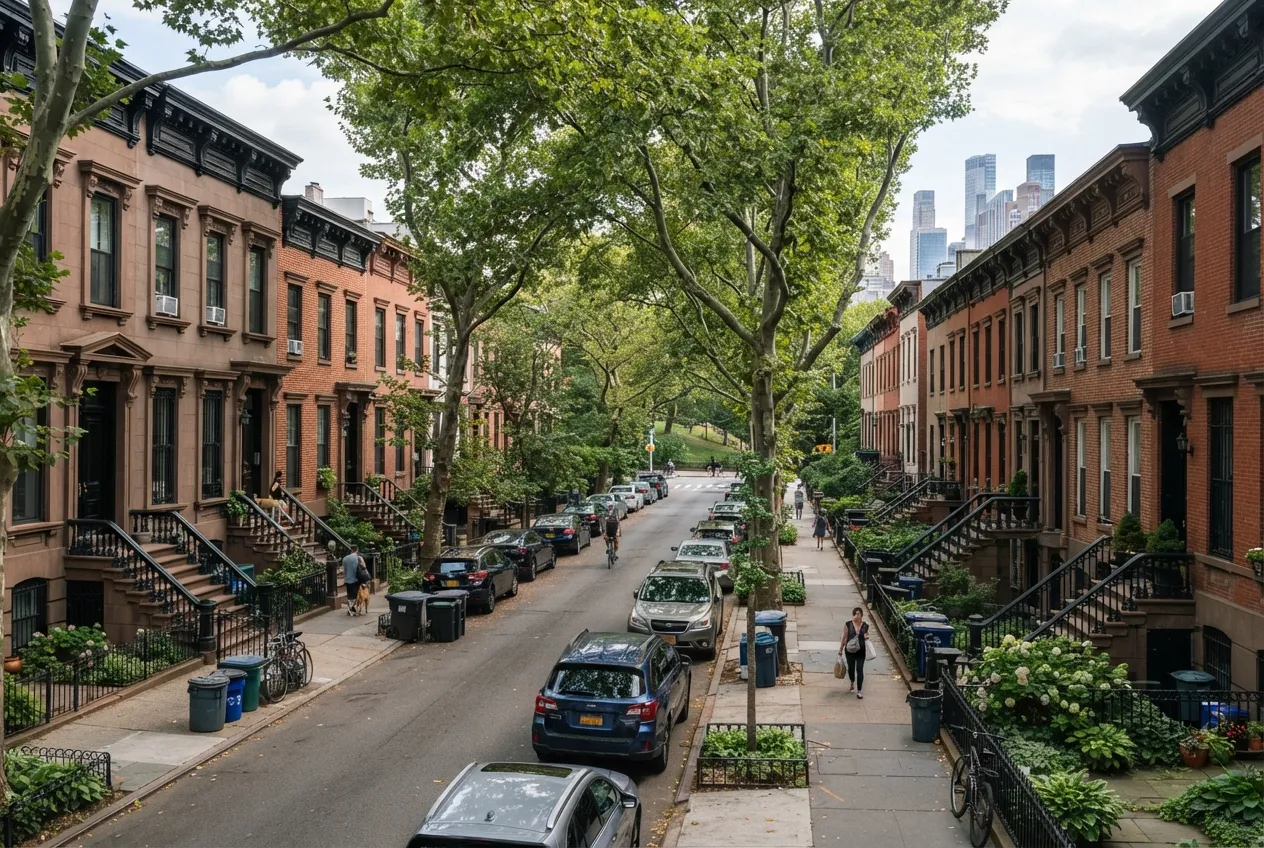
Fort Greene is about a mile east of our Brooklyn office, so it's close to home for our crew. Most of the neighborhood's housing is older masonry: brownstones, rowhouses and pre-war apartment buildings. Many have original fireplaces and chimneys that have served several generations of heating systems. SummitHearth Chimney Services cleans, inspects and repairs chimneys, fireplaces, dryer vents and air ducts throughout Fort Greene and the 11205 ZIP code. Our certified technicians explain what they find in plain terms.
Chimneys in Fort Greene's Brownstones and Rowhouses
Many Fort Greene homes were built with several fireplaces, often one per floor. Their flues run side by side inside a shared masonry stack. Over the decades, owners closed off some of those fireplaces and converted others to decorative use. One flue often ended up venting the boiler or water heater. Before anyone lights a fire, you need to know which flue serves which opening and whether that flue is still sound.
New York's climate is hard on brick. Winter brings repeated freeze-thaw cycles: water soaks into mortar and brick, freezes, expands and pushes the masonry apart. Nor'easters drive rain sideways into crowns and flashing, and humid summers keep damp flues from drying out. In older Brooklyn chimneys we most often find cracked crowns, crumbling mortar joints, rusted dampers and water stains on walls near the chimney.
Services We Offer in Fort Greene
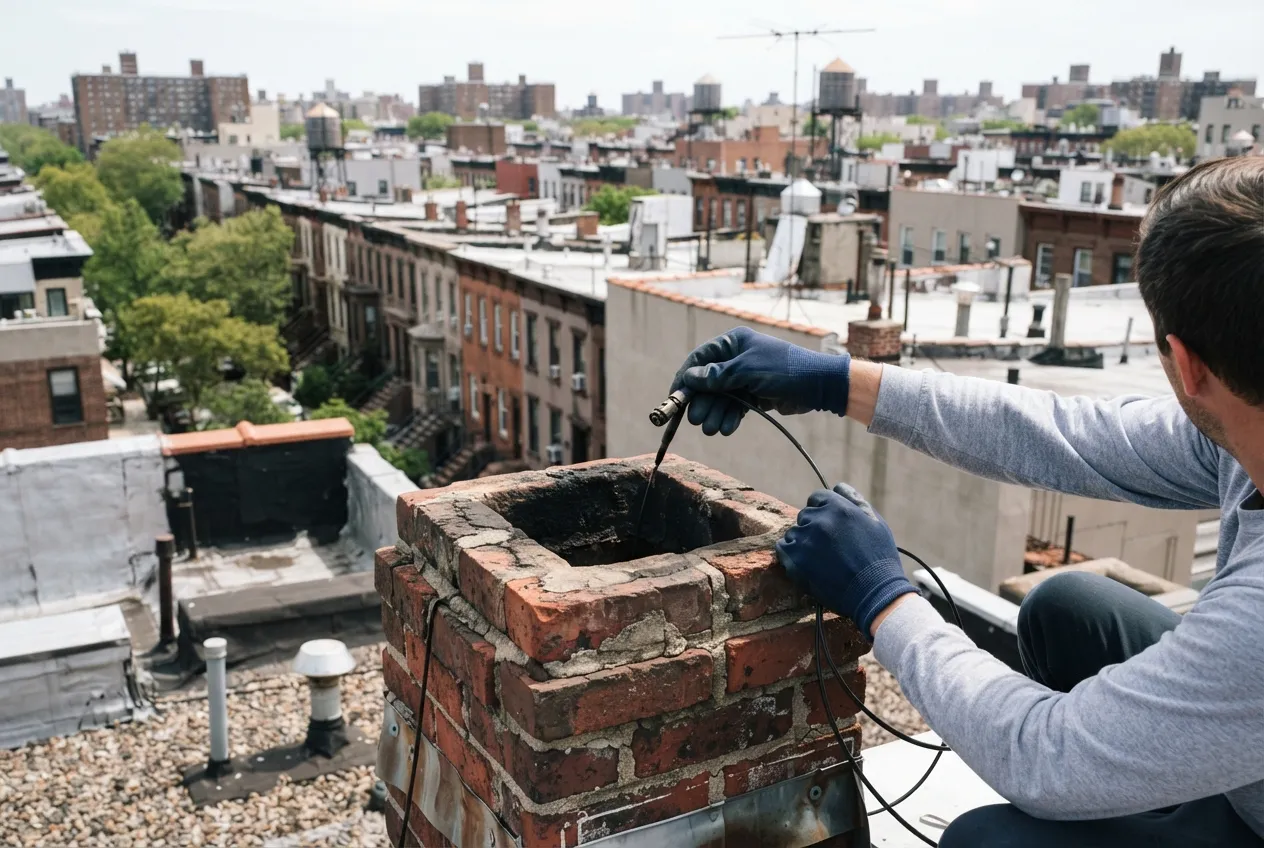
Every visit starts with a look at the whole system. You'll know what needs attention now and what can wait.
- Chimney sweep: removes soot and creosote from fireplace and stove flues
- Chimney inspection: yearly checks, plus deeper evaluations when something changes
- Chimney repair: crowns, mortar joints, flashing and spalled brick
- Chimney liner installation: new liners for damaged flues and fuel conversions
- Chimney cap & chase cover: keeps out rain, birds and animals
- Chimney waterproofing: a vapor-permeable treatment that lets masonry breathe
- Fireplace & damper repair: firebox, smoke chamber and damper fixes
- Chimney rebuilding: for stacks too deteriorated to repair
- Dryer vent cleaning: clears lint from the full duct run to the outside wall
- Air duct cleaning: for visible mold, pests, or heavy dust and debris
Inspections Before Heat Season
The NFPA 211 standard calls for chimneys, fireplaces and vents to be inspected once a year. A Level 1 inspection fits when nothing has changed. A Level 2 inspection applies when you add a new appliance, switch fuels, or buy or sell a home. A Level 3 inspection is for hidden hazards that can only be reached by opening part of the chimney or building.
New York City's heat season runs from October 1 through May 31. During that time, building owners must keep apartments heated to the city's minimum temperatures. If you own a multi-unit brownstone or a small apartment building, a boiler flue problem in January is a real headache. An inspection in late summer or early fall leaves time for repairs before the heat has to stay on.
If your building is converting its boiler from oil to gas, the chimney has to be evaluated as part of that work. Gas exhaust produces acidic condensate that can corrode a masonry flue, so the building often needs a new liner. We can inspect the flue and install a properly sized liner.
Time for your annual chimney check?
Dryer Vents and Air Ducts
According to the U.S. Fire Administration, failure to clean is the leading factor contributing to clothes dryer fires in homes. In rowhouses, dryer vents often run a long way or take tight turns to reach an outside wall, so lint builds up faster. Your vent probably needs cleaning if loads take longer to dry or the laundry area feels hot.
For air ducts, we follow the U.S. EPA's guidance: cleaning makes sense when there's substantial visible mold, signs of vermin, or excessive dust and debris. The EPA also says duct cleaning hasn't been shown to prevent health problems, so we won't claim it does. The agency advises researching the process before responding to very cheap advertised offers and being careful with chemical treatments. We show you what we find, and we only use chemical treatments when there's a clear reason and you agree.
Serving Fort Greene and Nearby Neighborhoods
Our crews work across the 11205 ZIP code and nearby Clinton Hill, Downtown Brooklyn, DUMBO, Boerum Hill and Prospect Heights. Fort Greene is close to our office, so scheduling a visit here is usually simple. We're glad to coordinate with building managers, co-op boards or tenants when we need access to the roof or a basement boiler room.
ZIP codes we serve
- 11205
Services in Fort Greene
- Chimney Sweep in Fort Greene
- Chimney Inspection in Fort Greene
- Chimney Repair in Fort Greene
- Air Duct Cleaning in Fort Greene
- Chimney Liner Installation in Fort Greene