The short answer
Fireplace and damper repair fixes the parts that control fire and smoke: the firebox, smoke chamber and damper. SummitHearth inspects the system, repairs or replaces what's failing, and checks that the fireplace drafts properly before we leave.
A fireplace works well only when every part does its job. The firebox holds the fire, the smoke chamber guides smoke up into the flue, and the damper opens for a fire and closes tightly when you're done. In Brooklyn brownstones, row houses and older frame homes, these parts are often decades old, and many have been patched more than once. When a damper sticks, a firebox joint opens up, or the smoke chamber turns rough and cracked, you notice it as smoke in the room, a cold draft in winter, or a fire that never quite catches. SummitHearth's certified technicians find what's wrong, explain it in plain terms, and repair it so you can use your fireplace with confidence.
Signs you need it
Most fireplace and damper problems show up gradually. If you notice any of the following, have the fireplace looked at before you build another fire. This matters most early in the season, when you're likely to use it often.
- A smoke or creosote smell in the room, especially on humid days or when the fireplace isn't in use
- Poor draft: smoke rolls out of the opening, or fires are hard to start and keep going
- Bits of brick, mortar or flakes of masonry collecting on the firebox floor
- White, chalky staining on the brick inside the firebox or on the chimney breast
- Water, damp ash or rust in the firebox after rain
- Scratching or bird and animal noises above the damper
- A damper that won't open, won't stay open, or lets cold air in when it's closed
What's included
Every repair starts with an inspection of the fireplace and the flue above it, because the visible symptom isn't always the real cause. A smoky fireplace, for example, can come from a warped damper, a damaged smoke chamber, or a blockage higher up. Depending on what we find, the work can include the following.
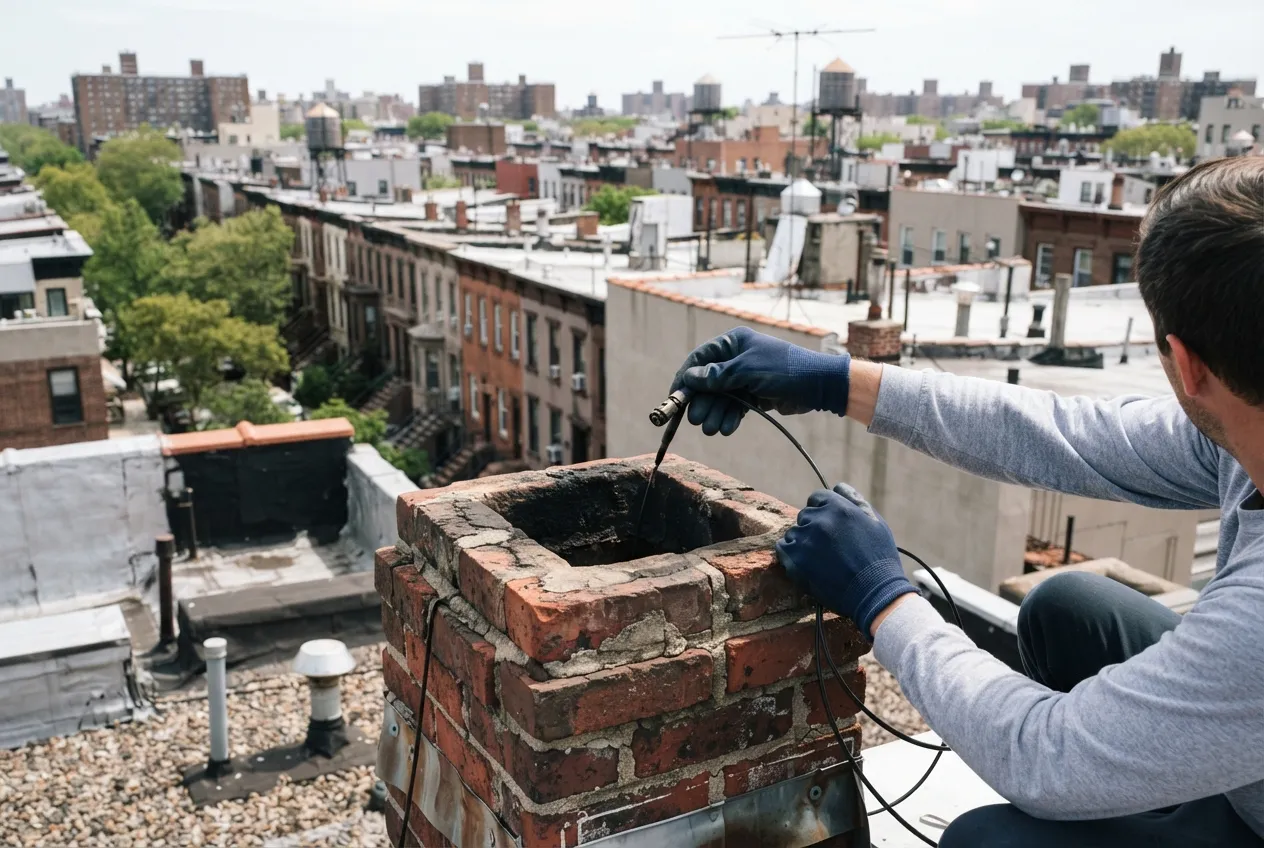
- Inspection of the firebox, damper, smoke chamber and lower flue, using a camera where the view is limited
- Repair or adjustment of the existing throat damper, including handles, pivots and the seal
- Replacement of a rusted or warped damper, or installation of a top-sealing damper at the chimney crown
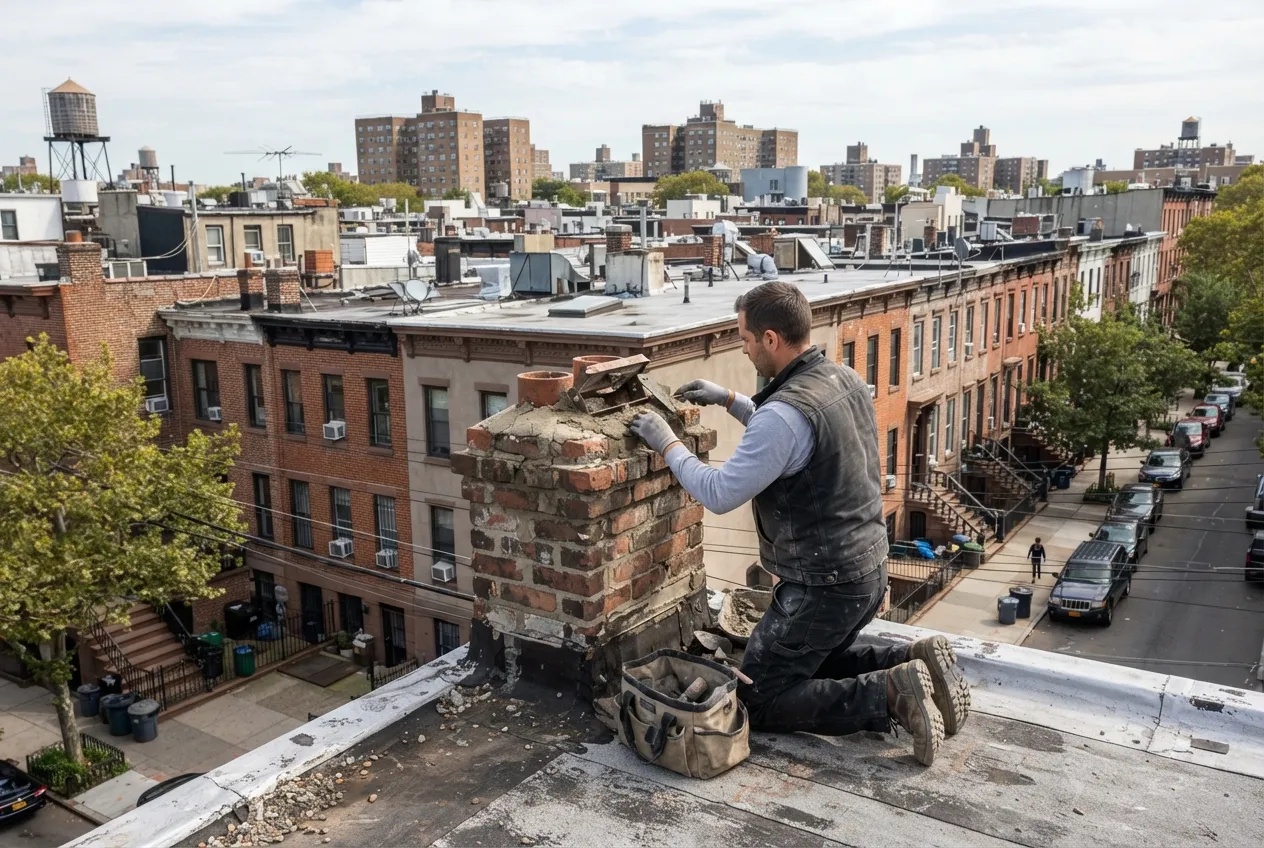
- Repointing of open mortar joints and replacement of cracked or spalled firebrick
- Rebuilding or reparging a rough or cracked smoke chamber
- Repair of the hearth and the area in front of the fireplace opening where needed
- A draft check once the work is finished
- Written notes and photos of what we found and what we repaired
How our crew works inside your home and on the roof
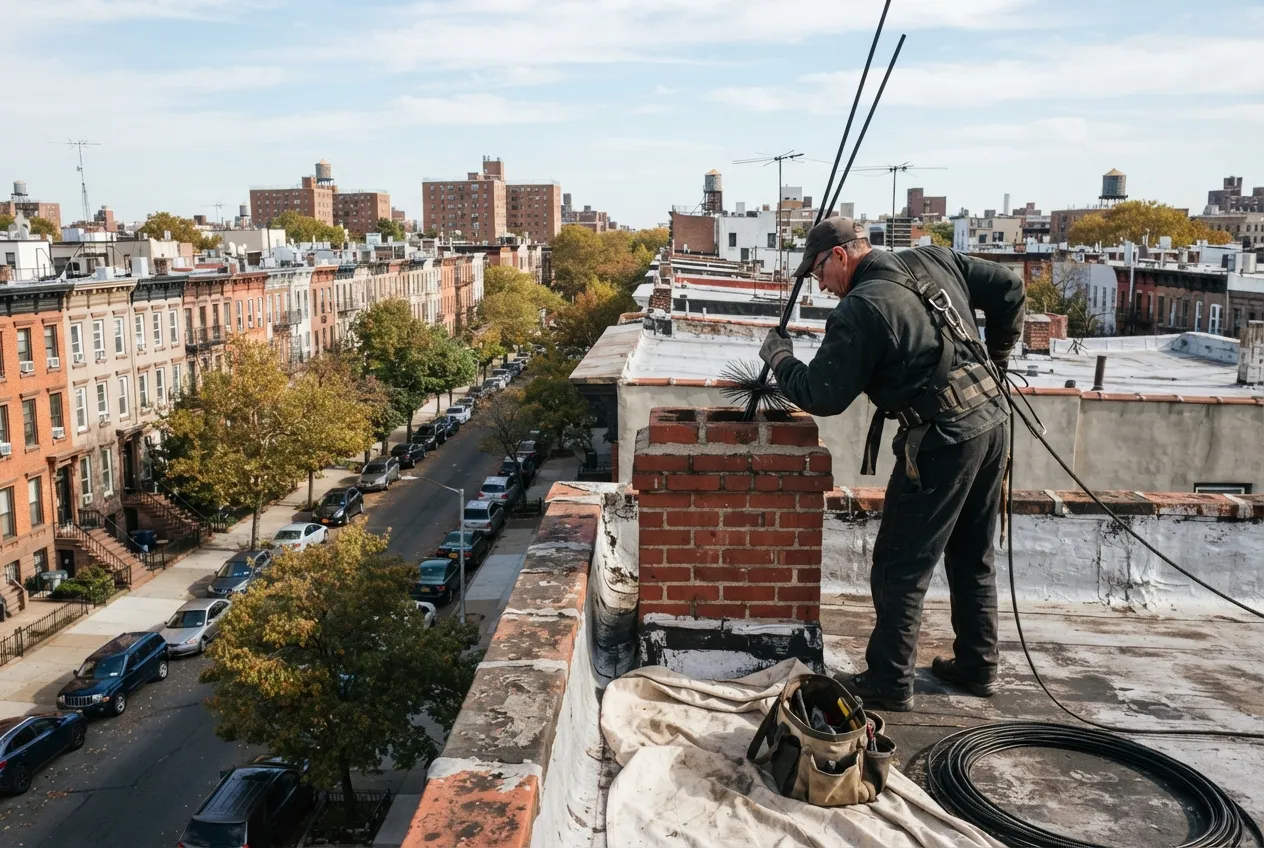
Inside, we lay drop cloths from the door to the hearth and cover the fireplace opening while we work. HEPA vacuums run during cleaning and demolition so soot and masonry dust stay out of the room. If the flue needs cleaning before a repair, we use rotary brushes sized to the flue, which lets us see the condition of the masonry clearly. A camera shows us the smoke chamber and flue walls that a flashlight can't reach, and we can show you that footage.
On the roof, we check the chimney crown, cap and the top of the flue. If you're getting a top-sealing damper, we mount it here and run its control cable down to the firebox. We take care on older roofs and use proper access equipment, and we tell you about anything else we notice up top, like a cracked crown or loose flashing, rather than leaving it for you to discover later.
Time for your annual chimney check?
The standard we follow
Our work follows NFPA 211, the national standard for chimneys, fireplaces and vents. It calls for these systems to be inspected once a year. Chimney professionals use three inspection levels. Level 1 applies when nothing about the system has changed. Level 2 applies when the system changes, for example a new appliance or a switch of fuel, or when the home is sold. Level 3 applies when a hidden hazard has to be reached by opening part of the chimney or building.
Most fireplace and damper repairs begin with a Level 1 or Level 2 inspection. If your building has converted its boiler from oil to gas, keep in mind that New York City requires the chimney to be evaluated as part of that work, and a new liner is often needed. Gas exhaust produces acidic condensate that can corrode a masonry flue.
What affects the price
We give you a clear quote after the inspection, once we know what the fireplace actually needs. The main factors are:
- Chimney height and how easy it is to reach the roof
- Fuel type and how the fireplace has been used
- Flue size, shape and current condition
- How much soot or creosote buildup has to be removed first
- Whether a camera inspection is needed
- The type of repair, such as adjusting a damper versus rebuilding a smoke chamber
How a visit works
When you book, we ask what you've noticed and when you last used the fireplace. Please don't burn anything for at least a day beforehand so the firebox is cool. When the crew arrives, they protect the room, inspect the system and walk you through what they found, with photos or camera footage. Small fixes, like freeing a stuck damper, can often be handled the same day. Larger masonry work is scheduled with a written scope so you know what's being done and why.
Plan ahead if you rely on the fireplace in winter. New York City's heat season runs from October 1 through May 31, and many homeowners want their fireplace ready before cold weather settles in.