The short answer
A chimney sweep cleans soot, creosote and blockages out of your flue and includes a visual inspection, so you know whether your fireplace or appliance is safe to use. The NFPA 211 standard calls for chimneys to be inspected once a year, and a sweep is the usual way to do that.
A chimney sweep removes the soot, creosote and debris that build up inside a flue, and it gives a technician a clear look at the condition of your chimney. In Brooklyn, that covers wood-burning fireplaces in brownstones and row houses, flues that vent gas and oil boilers, and older masonry chimneys that have been in use for a long time. SummitHearth's certified technicians clean the flue from the firebox to the cap, check what they find along the way, and tell you plainly what condition it's in. Here is what to watch for, what the service includes and how a visit goes.
Signs you need a chimney sweep
Most chimneys give some warning before a problem gets serious. If you notice any of the following, schedule a sweep and inspection rather than waiting for the next heating season.
White staining, often called efflorescence, means water is moving through the masonry and leaving minerals behind. It isn't a cleaning problem on its own, but it tells us to look closely at the crown, cap and flashing while we're there.
- A smoky or tar-like creosote smell, especially on humid days or when the air conditioning is running
- Poor draft: smoke rolls back into the room, or the fire is hard to start and keep going
- Debris, chunks of soot, or flakes of brick and mortar collecting in the firebox
- White staining on the brick inside the fireplace or on the outside of the chimney
- Scratching, chirping or fluttering sounds from birds, squirrels or other animals in the flue
- Water or damp ash in the firebox after rain
What's included in every sweep
Every chimney sweep includes the same core work, whether the flue serves an open fireplace, a wood stove or a boiler.
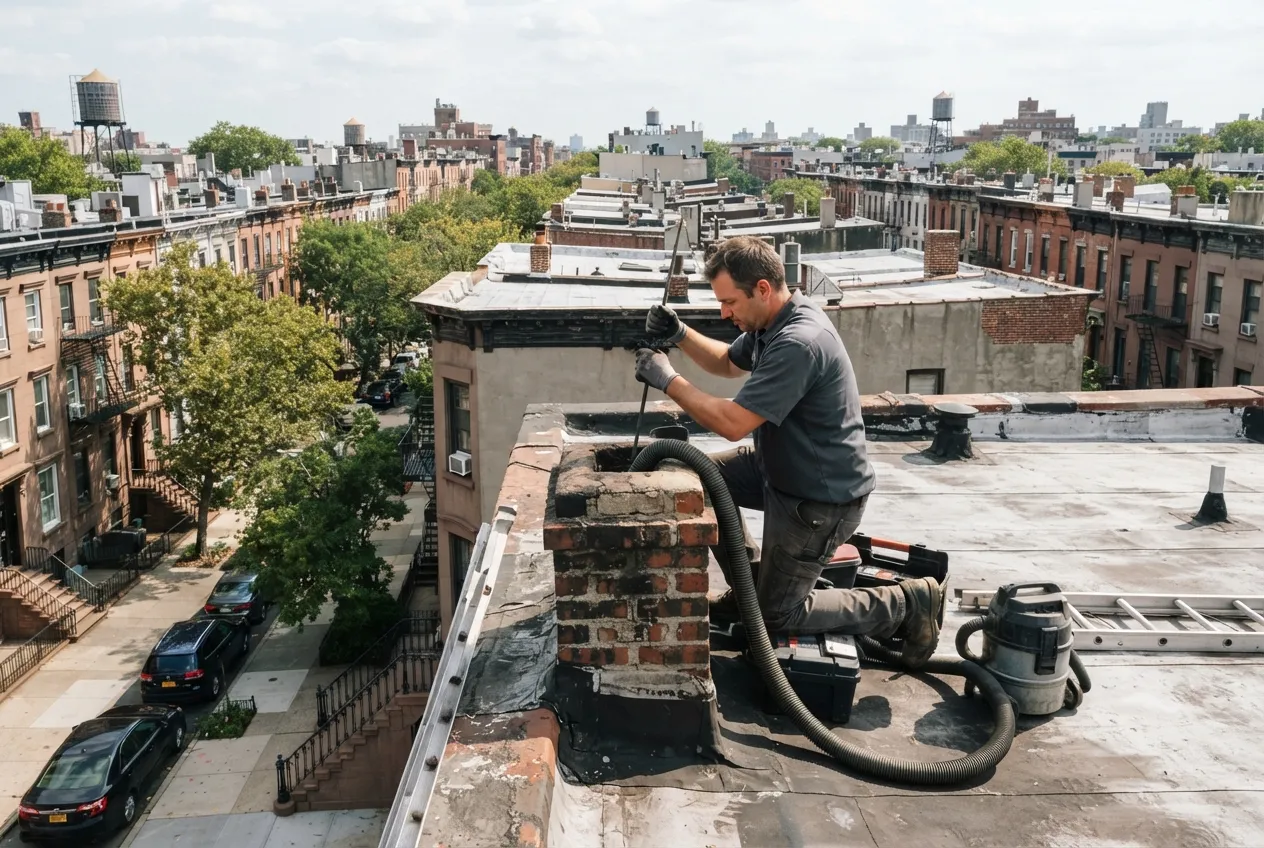
- Drop cloths and a HEPA vacuum set up to contain soot at the fireplace or appliance opening
- Brushing the full length of the flue with rods and brushes sized to the liner
- Cleaning the smoke chamber, smoke shelf and firebox
- Removing nests, leaves and other blockages that can be reached safely
- Checking that the damper opens, closes and seals properly
- Checking the chimney cap, crown and flashing from the roof when access allows
- A visual inspection of the accessible parts of the chimney, at least to Level 1
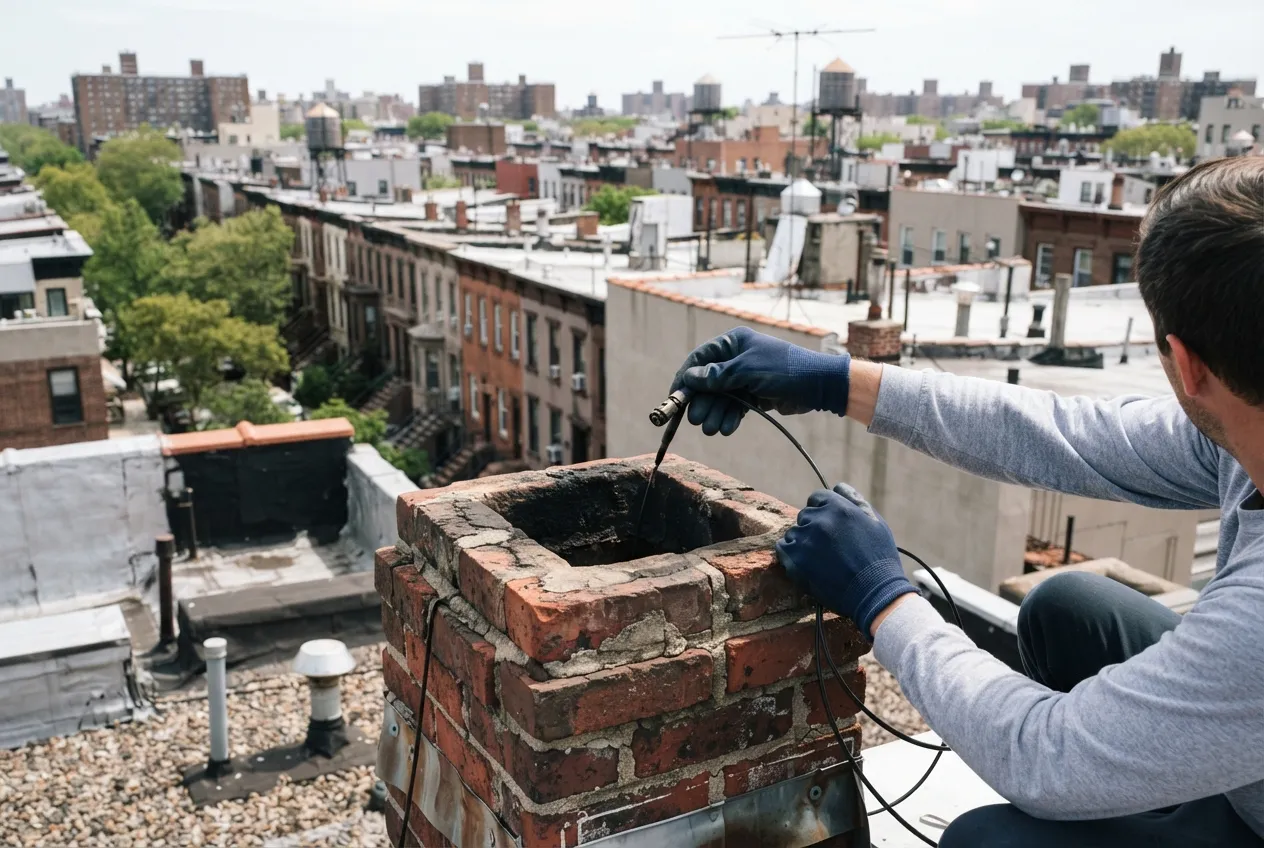
- A camera inspection of the flue when we need to see the liner, joints or hidden damage
- A plain-language report with photos and any recommended repairs
How the crew works inside your home and on the roof
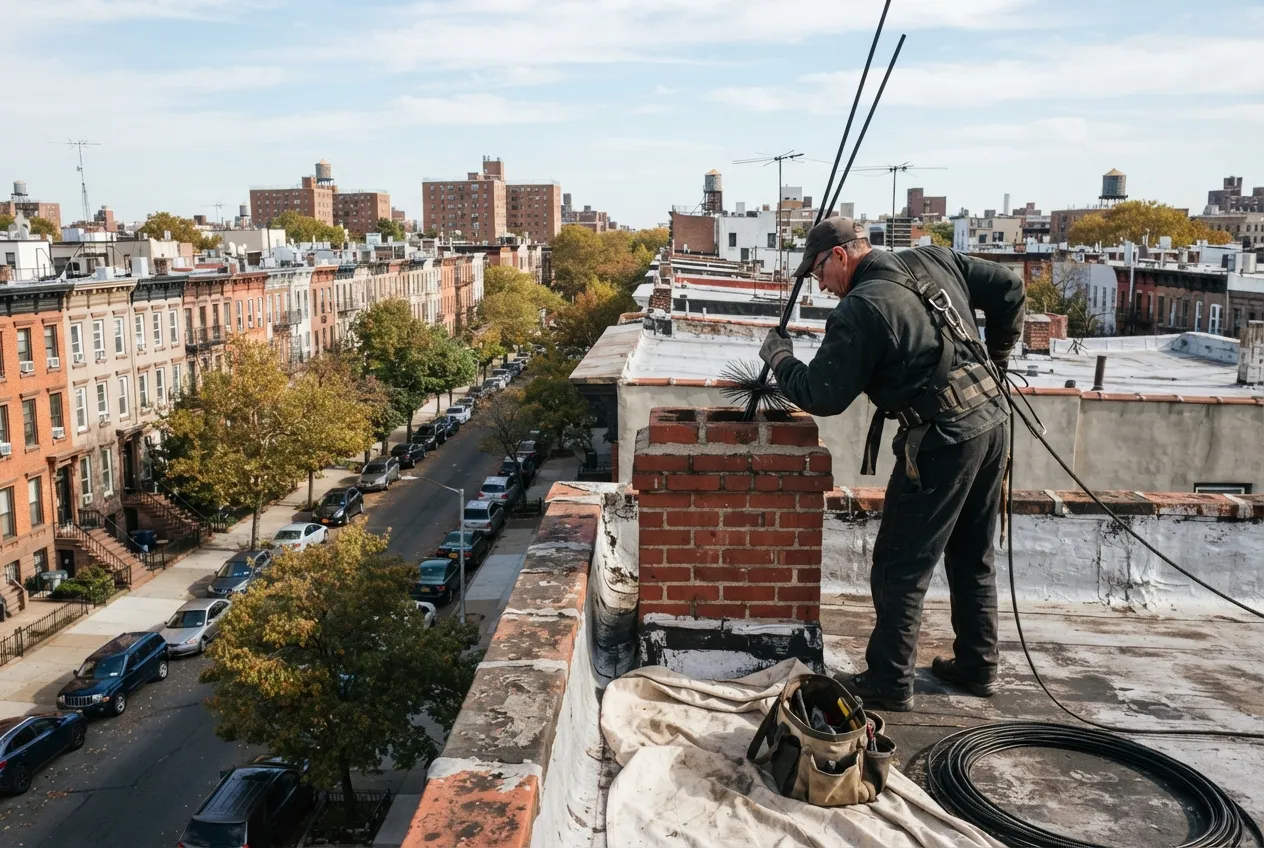
Inside, the crew protects the path from your door to the fireplace and lays drop cloths around the hearth before anything is opened. A HEPA vacuum runs at the opening during brushing, so fine soot is pulled out of the air instead of settling on your furniture. For most flues we use rotary brushes, which spin against the liner and break loose creosote and soot more evenly than a hand brush. Hard, glazed creosote may need a different tool or a second visit, and we'll explain why before going further.
When the flue needs a closer look, we run a camera up the chimney to check the liner, the mortar joints and any bends we can't see from the firebox. You can watch the footage with the technician.
On the roof, the technician checks the cap, crown, flashing and visible brick, and can brush from the top when that works better. Brooklyn roofs vary widely, from flat roofs reached through a bulkhead or hatch to pitched roofs that need a ladder setup, so we'll ask about access when you book. We don't go up in unsafe weather.
Time for your annual chimney check?
The standard we follow
We work to the NFPA 211 standard, which calls for chimneys, fireplaces and vents to be inspected once a year. Chimney professionals use three inspection levels, and the right one depends on what has changed:
Many Brooklyn buildings vent boilers through masonry chimneys that were built for oil or coal. When a New York City building converts its boiler from oil to gas, the chimney has to be evaluated as part of the work. A new liner is often needed, because gas exhaust produces acidic condensate that can corrode a masonry flue.
- Level 1: for a chimney in regular use when nothing about the system has changed
- Level 2: when the system changes, such as a new appliance or a switch of fuel, or when the home is sold
- Level 3: when a hidden hazard can only be reached by opening part of the chimney or building
What affects the price
We give you a quote before any work starts. The main factors are:
If we find something that changes the scope, we stop and talk it through with you before doing anything more.
- Chimney height and how hard the roof is to reach
- Fuel type (wood, gas or oil) and the residue each one leaves
- Flue size and shape, the number of flues, and the condition of the liner
- How much soot, creosote or debris has built up
- Whether a camera inspection is needed
- Whether repairs such as a new cap, damper or liner work are recommended
How a visit works
When you book, tell us what the chimney serves, when it was last cleaned if you know, how the roof is reached, and any signs you've noticed. We'll confirm an arrival window.
On the day, the technician walks through the job with you, sets up protection, then cleans and inspects. How long the visit takes depends on the number of flues, roof access and how much buildup there is.
Afterward, you get a written summary with photos, notes on condition, and any repairs listed by urgency. If a fireplace or flue isn't safe to use, we'll tell you directly. New York City's heat season runs from October 1 through May 31, so building owners often schedule sweeps for boiler flues before the heat has to be on.
Chimney Sweep by city
- Chimney Sweep in Downtown Brooklyn
- Chimney Sweep in DUMBO
- Chimney Sweep in Boerum Hill
- Chimney Sweep in Brooklyn Heights
- Chimney Sweep in Fort Greene
- Chimney Sweep in Carroll Gardens
- Chimney Sweep in Cobble Hill
- Chimney Sweep in Gowanus
- Chimney Sweep in Red Hook
- Chimney Sweep in Clinton Hill
- Chimney Sweep in Prospect Heights
- Chimney Sweep in Park Slope