The short answer
A chimney sweep in Brooklyn Heights clears creosote, soot and blockages from fireplace and boiler flues in brownstones, rowhouses and pre-war buildings. The NFPA 211 standard calls for a yearly chimney inspection, and early fall is a good time to book. That gets the work done before New York City's heat season starts on October 1.
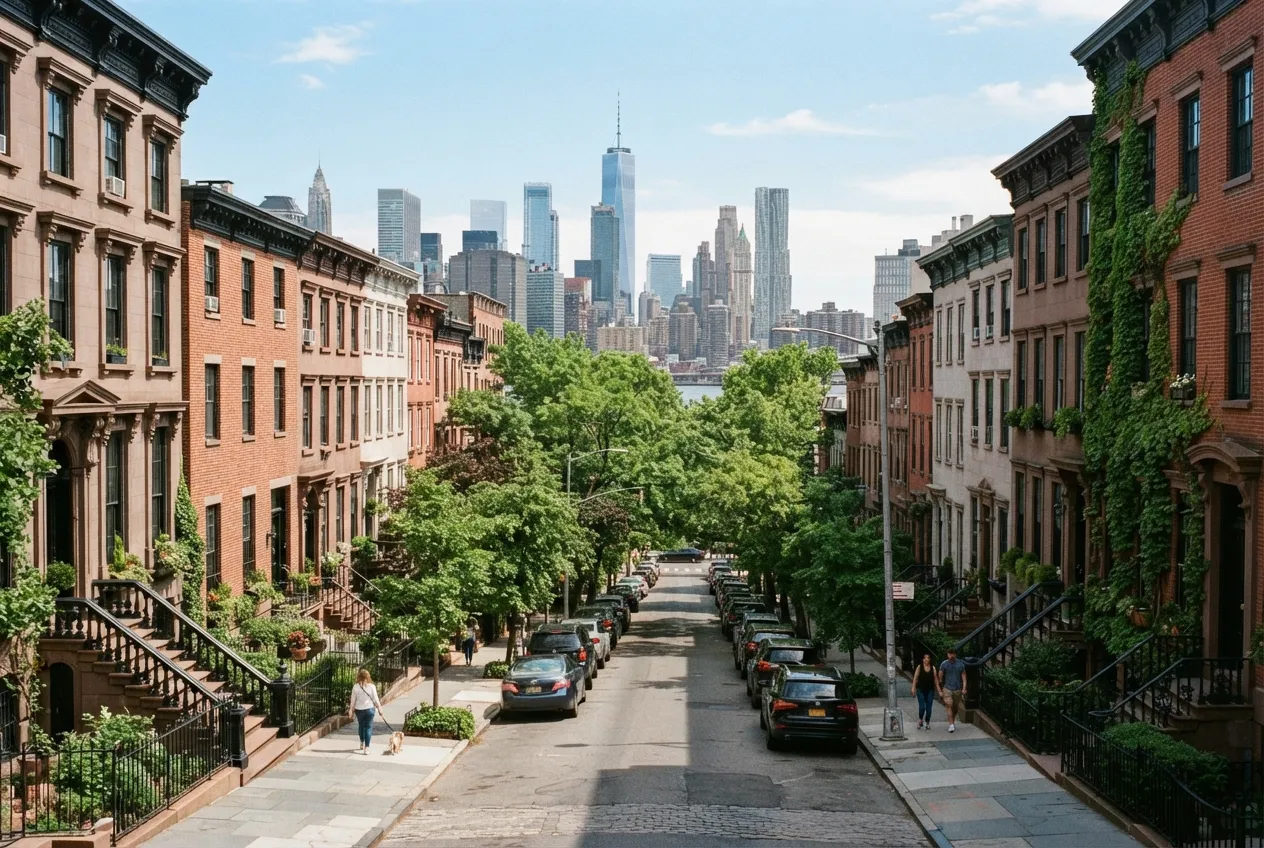
Brooklyn Heights has some of the oldest housing in Brooklyn, and its chimneys show it. Brownstones and rowhouses often have fireplaces on several floors feeding one masonry stack. Pre-war apartment buildings send boiler exhaust up tall flues that run hard all winter. SummitHearth Chimney Services is about a mile from Brooklyn Heights, so our certified technicians can reach you easily. A chimney sweep removes the creosote, soot and debris that build up inside a flue. It also gives us a close look at the liner, damper and masonry while we're there.
What a Sweep Looks Like in a Brooklyn Heights Home
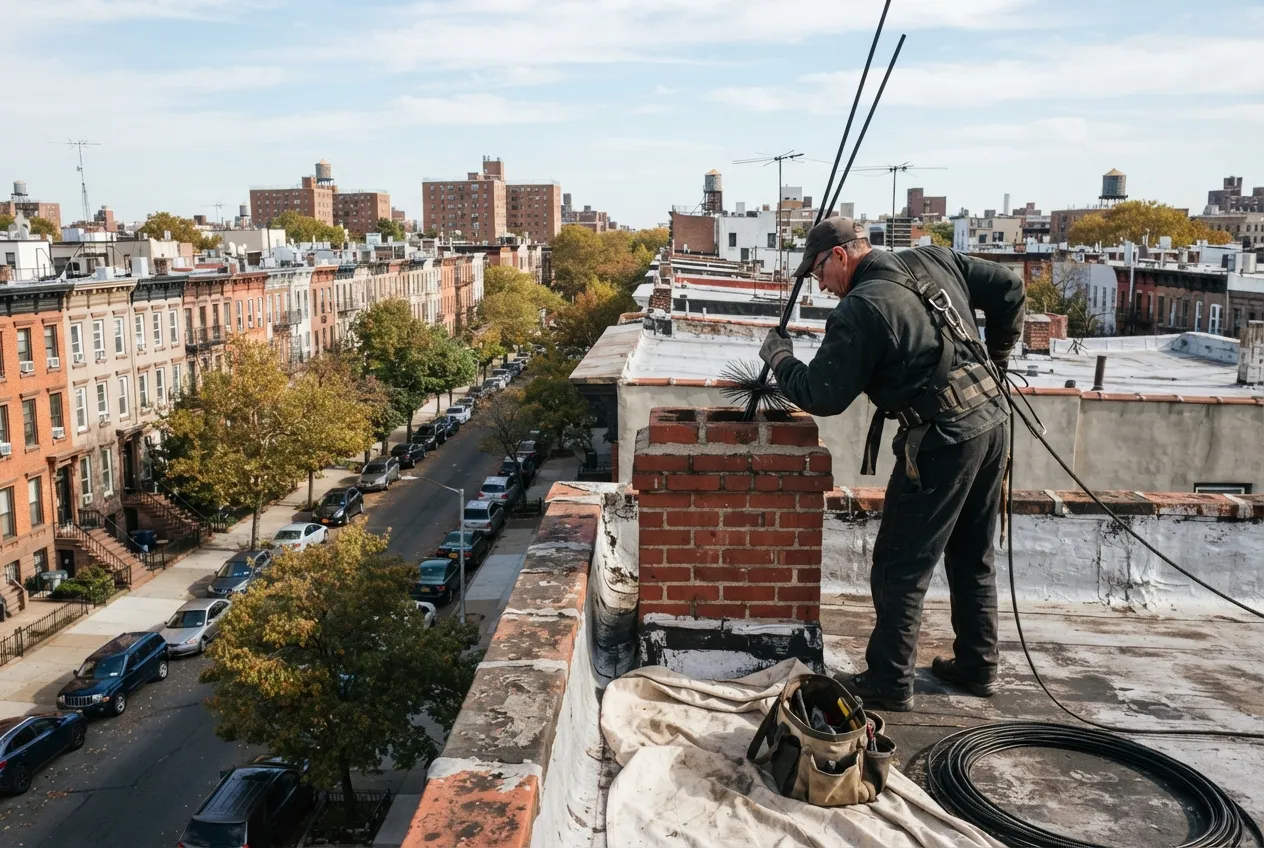
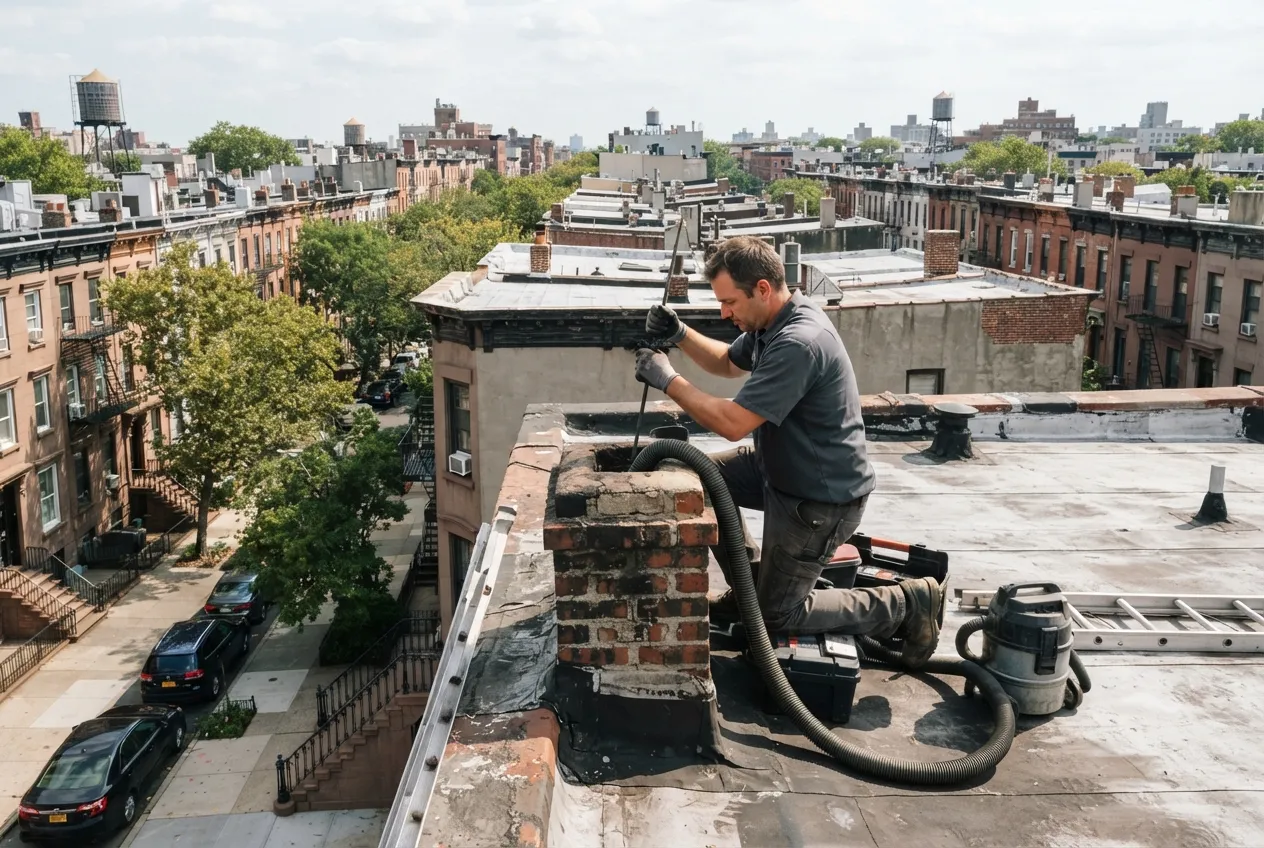
We start by protecting your living space. We lay drop cloths, close off the fireplace opening, and run a HEPA-filtered vacuum while we work so soot stays in the chimney and out of your parlor floor. Then we brush the flue from the firebox up or from the roof down, depending on how the chimney is built and how the roof is reached. In many rowhouses, that means going through a roof hatch.
Once the flue is clean, we inspect what we can see and tell you plainly what we found. If something needs attention, we show you photos so you can see the problem yourself.
- Firebox, smoke chamber and smoke shelf cleaned of soot and creosote
- Damper checked for rust, warping and smooth operation
- Flue brushed full length and debris removed
- Chimney cap and screen checked for damage and nesting animals
- Visible liner and mortar joints reviewed for cracks or gaps
Older Masonry Chimneys With Several Flues
Many brownstones and rowhouses in the neighborhood were built with a fireplace in nearly every main room. Each fireplace usually has its own flue inside a shared chimney stack. Over the years, some of those fireplaces were sealed off, converted to decorative use, or reopened by a later owner. Before we sweep, we confirm which flues are active and which one connects to which fireplace. That way we know the flue you plan to use is the one we cleaned.
Older masonry flues may be unlined or have clay tile liners that have cracked with age. A sweep removes the buildup that hides these problems. If we find damage, we explain what it means for safe use and what your options are. We don't push repairs you don't need.
Yearly Inspections and When a Closer Look Is Needed
The NFPA 211 standard calls for chimneys, fireplaces and vents to be inspected once a year. Chimney professionals use three levels of inspection. A Level 1 inspection fits when nothing about your system has changed. A Level 2 inspection applies when the system changes, such as a new insert or a switch to a different fuel, and when a home is sold. A Level 3 inspection is for cases where a hidden hazard can only be reached by opening part of the chimney or building.
If you are buying or selling a Brooklyn Heights brownstone, or planning to put a fireplace back into use after years of sitting idle, ask us about a Level 2 inspection along with your sweep.
Time for your annual chimney check?
Boiler Flues in Pre-War Buildings
Fireplaces aren't the only thing that needs sweeping. The boiler flue in a pre-war apartment building or a multi-unit rowhouse can collect soot and debris and develop blockages, especially after years of burning oil. New York City's heat season runs from October 1 through May 31. During that time, building owners must keep apartments heated to the city's minimum temperatures, so a flue problem in midwinter is a serious one.
When a New York City building converts its boiler from oil to gas, the chimney has to be evaluated as part of the work. A new liner is often needed, because gas exhaust produces acidic condensate that can corrode a masonry flue. We can sweep and evaluate the chimney so the condition of the flue is clear before the conversion moves forward.
Scheduling and Nearby Neighborhoods
Late summer and early fall are the easiest times to book a sweep, before the first cold weekend and before heat season begins. If you only use your fireplace a few times a year, a yearly sweep and inspection is still worth doing. Animal nests, fallen debris and deteriorating liners don't depend on how often you light a fire.
Besides Brooklyn Heights, our technicians regularly sweep chimneys in Downtown Brooklyn, DUMBO, Boerum Hill, Fort Greene and Carroll Gardens.
More services in Brooklyn Heights
- Chimney Inspection in Brooklyn Heights
- Chimney Repair in Brooklyn Heights
- Air Duct Cleaning in Brooklyn Heights
- Chimney Liner Installation in Brooklyn Heights