
The short answer
Air duct cleaning is worth it in a Brooklyn Heights home when there is visible mold growth, signs of pests, or heavy dust and debris inside the ducts. SummitHearth inspects first and cleans only when the condition calls for it. We can also clean the dryer vent, which is a more pressing fire-safety job.
Most Brooklyn Heights homes weren't built with ductwork. The brownstones, rowhouses and pre-war apartment buildings here were typically heated by radiators. The central air and forced-air systems many owners added later run through closets, cellars, top-floor crawl spaces and wall cavities. That makes the ducts hard to see and easy to forget. SummitHearth's office is about a mile southeast of the neighborhood, so our certified technicians can get to you quickly. They inspect your ductwork, show you what's inside, and tell you plainly whether cleaning is worth doing.
When Duct Cleaning Makes Sense, and When It Doesn't
The U.S. Environmental Protection Agency recommends cleaning air ducts in three situations. The EPA also notes that duct cleaning has not been shown to prevent health problems. We follow the same approach. If your ducts are in reasonable shape, we'll tell you so rather than sell you a cleaning you don't need.
Signs worth having checked include:
- Substantial mold growth you can see inside ducts or on other parts of the heating and cooling system
- Evidence of mice, insects or other vermin in the ductwork
- Excessive dust and debris, such as dust puffing out of supply registers or buildup visible behind the grilles
- Leftover dust from a renovation, plaster work or floor refinishing that reached the system
- A system that sat unused for a long stretch before you bought or moved into the home
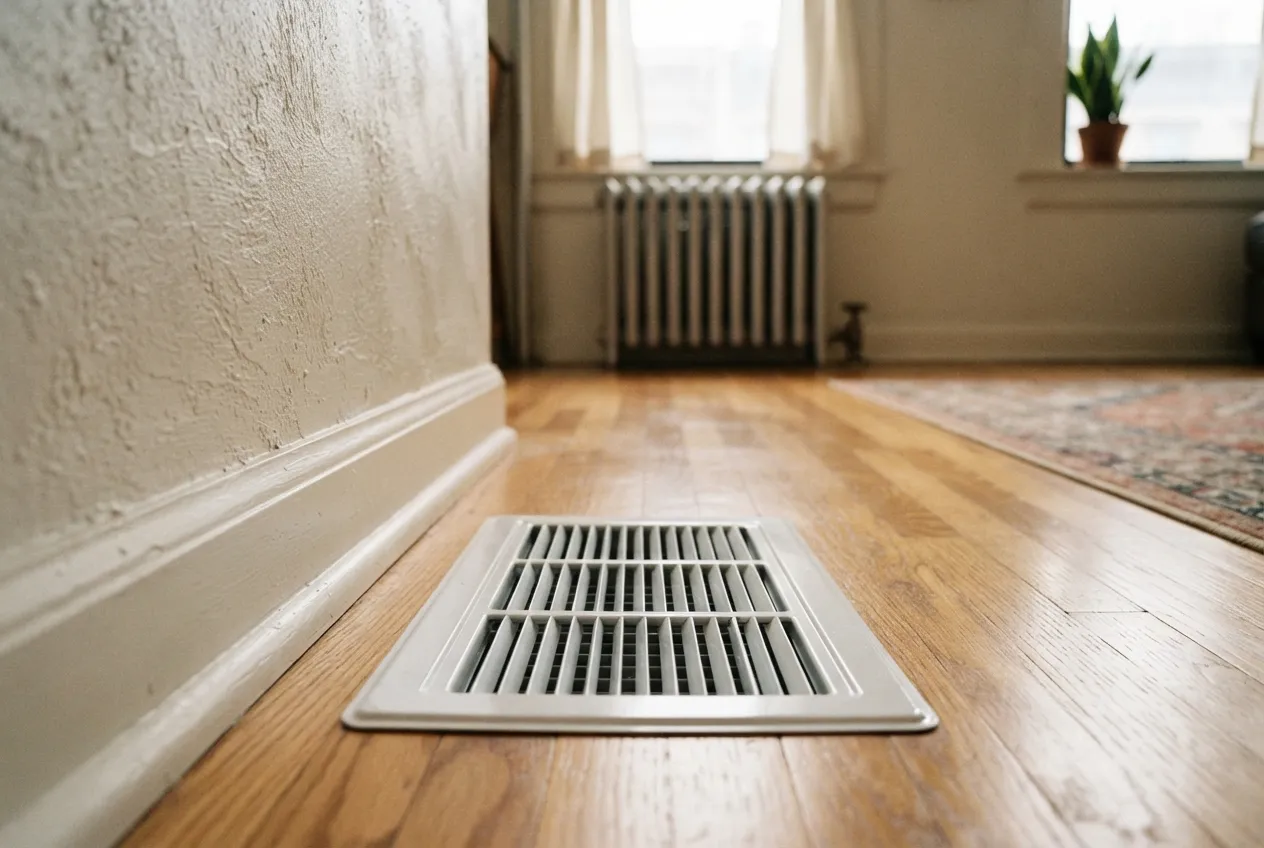
Ductwork in Brooklyn Heights Brownstones and Pre-War Buildings
In a brownstone or rowhouse, ductwork is usually a retrofit. Older homes often have flexible duct snaking through a tight attic or crawl space above the top floor, with short runs dropping into bedrooms. Some have trunk lines in the cellar feeding the parlor floor, or a mix of both. Narrow footprints and several stories mean long vertical runs and sharp bends, and that is where dust and debris tend to collect.
In pre-war apartment buildings, individual units may have their own air handler in a closet or ceiling, often added during a renovation. These systems are compact, and access panels can be small or hidden behind finished surfaces. We plan around plaster walls, decorative ceilings and finished floors. We protect them during the work and avoid cutting new openings unless you approve it first.
What Happens During a Visit
Every job starts with a look inside the system, so the work matches what we actually find.
- Inspect the air handler, blower area, accessible trunk lines and branch ducts, and show you what we see
- Cover floors and furnishings along the work path, and seal off registers in rooms we aren't working in
- Put the duct system under negative pressure with a vacuum collection unit so loosened debris is pulled out, not blown into the house
- Agitate the duct interiors with brushes and air tools sized for each run, including flexible duct that needs a gentler approach
- Clean the registers and grilles, and check the filter fit and the access to the blower
- Walk you through the results and point out any issues, such as disconnected flex duct or gaps that let in unconditioned air
Time for your annual chimney check?
A Careful Word on Chemical Treatments
Some duct cleaning offers come bundled with sprayed sanitizers or coatings. The EPA advises caution with chemical treatments inside ductwork, and we don't apply them by default. If mold is present, we first deal with the moisture source and remove the contamination physically. Any treatment is something we'll discuss with you openly before using it. The EPA also warns consumers to research the process before responding to very cheap advertised offers. That's good advice whoever you hire.
Don't Skip the Dryer Vent
According to the U.S. Fire Administration, failure to clean is the leading factor contributing to clothes dryer fires in homes. In rowhouses and apartments, dryer vents often run a long way to reach an outside wall or rear yard, and lint builds up in every bend. We can clean the dryer vent on the same visit as your air ducts. We also check that it ends at a working exterior hood.
Scheduling Around the Heating Season
New York City's heat season runs from October 1 through May 31. Many owners prefer to have ducts inspected in late summer or early fall, before the system runs hard all winter. Spring is another good window before cooling season. If you've just finished a renovation, it makes sense to have the ducts checked once the dust settles, whatever the time of year.
Besides Brooklyn Heights, we also serve nearby Downtown Brooklyn, DUMBO, Boerum Hill, Fort Greene and Carroll Gardens.
More services in Brooklyn Heights
- Chimney Sweep in Brooklyn Heights
- Chimney Inspection in Brooklyn Heights
- Chimney Repair in Brooklyn Heights
- Chimney Liner Installation in Brooklyn Heights