The short answer
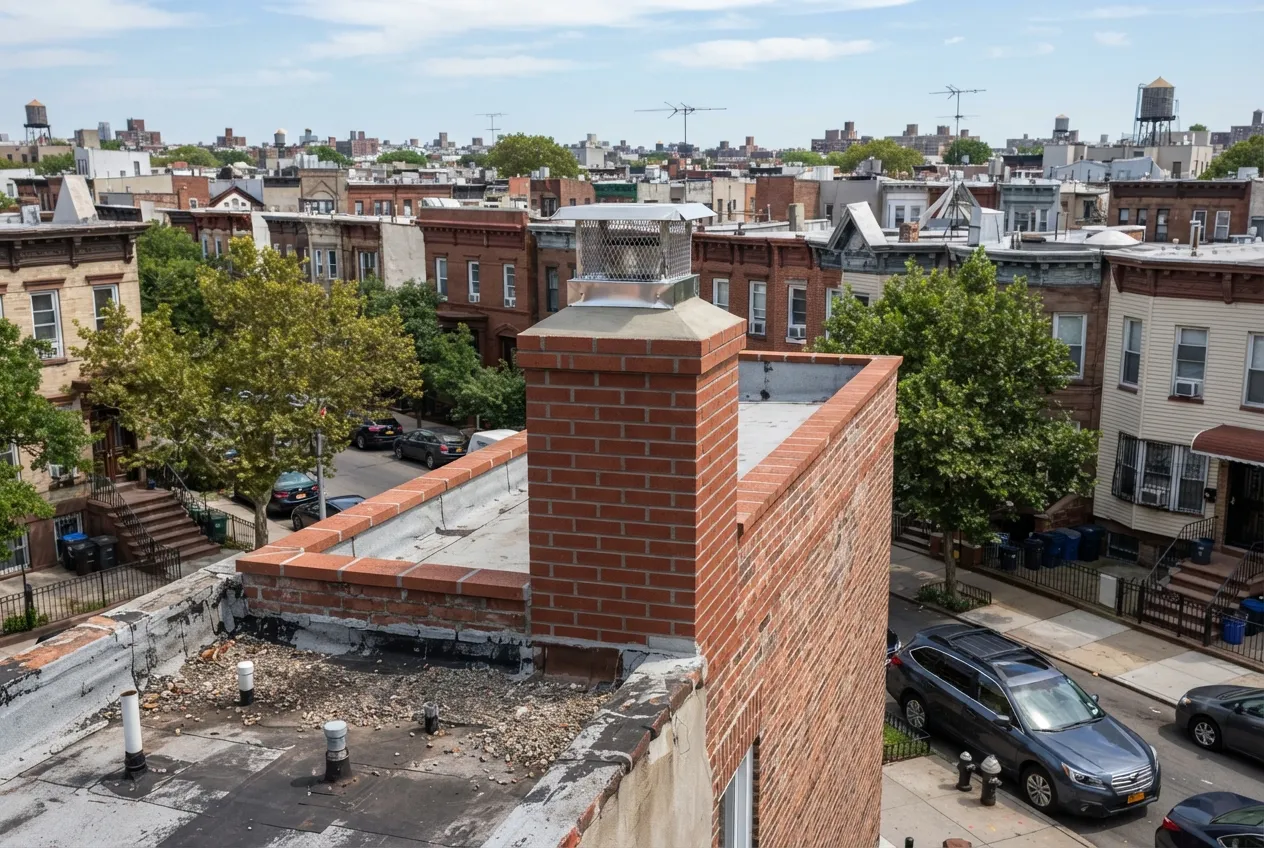
You need a chimney rebuild when bricks are loose, spalling, or leaning and the damage goes deeper than the mortar joints. SummitHearth inspects the chimney, removes damaged masonry down to sound brick, and rebuilds it with matched brick, mortar, a new crown, and flashing where needed.
A chimney that is leaning, cracked, or shedding brick can't be fixed with a coat of sealant. When the masonry has broken down, the safe fix is to take the damaged section apart and lay it up again on sound brick. SummitHearth Chimney Services rebuilds chimneys for homeowners in Brooklyn and nearby neighborhoods, from row houses to detached homes. Our certified technicians inspect first, show you how much of the chimney actually needs to come down, and rebuild only that portion. You get a clear scope, a clean work area, and a chimney built to handle New York weather.
Signs you need it
Chimney masonry usually fails slowly. Water gets into the brick and mortar, then freezes and thaws through the winter. Most owners notice the problem from inside the house before they notice it on the roof. If you see any of the following, have the chimney looked at before the next heating season.
- Brick chips, sand, or mortar flakes collecting in the firebox or on the smoke shelf
- White staining on the outside brick, a sign that water is moving through the masonry and carrying salts to the surface
- Water in the firebox, or stains on the ceiling or wall next to the chimney after rain
- Poor draft or smoke rolling into the room, which can happen when a damaged flue or crown changes how the chimney pulls
- A smoke or creosote smell that lingers, especially in damp weather
- Cracked, spalling, or missing bricks, open mortar joints, or a chimney that visibly leans away from the house
What's included
Every rebuild is scoped to the damage we find, so no two jobs are identical. A typical chimney rebuild with us includes the following.
- A full inspection of the chimney, including a camera look inside the flue where we can't see directly
- A written scope showing which courses of brick come down and why
- Protection of the roof, siding, and ground below before demolition starts
- Careful removal of damaged brick down to sound masonry
- Rebuilding with brick and mortar chosen to match the existing chimney as closely as possible in color, size, and strength
- A new or repaired crown that sheds water away from the flue
- Resetting or replacing flue tiles at the top of the stack as needed
- New flashing where the chimney meets the roof, if the old flashing is damaged
- Cap installation or reinstallation to help keep out rain and animals
- Cleanup of the roof, gutters, and work area, plus photos of the finished chimney
How our crew works inside your home and on the roof
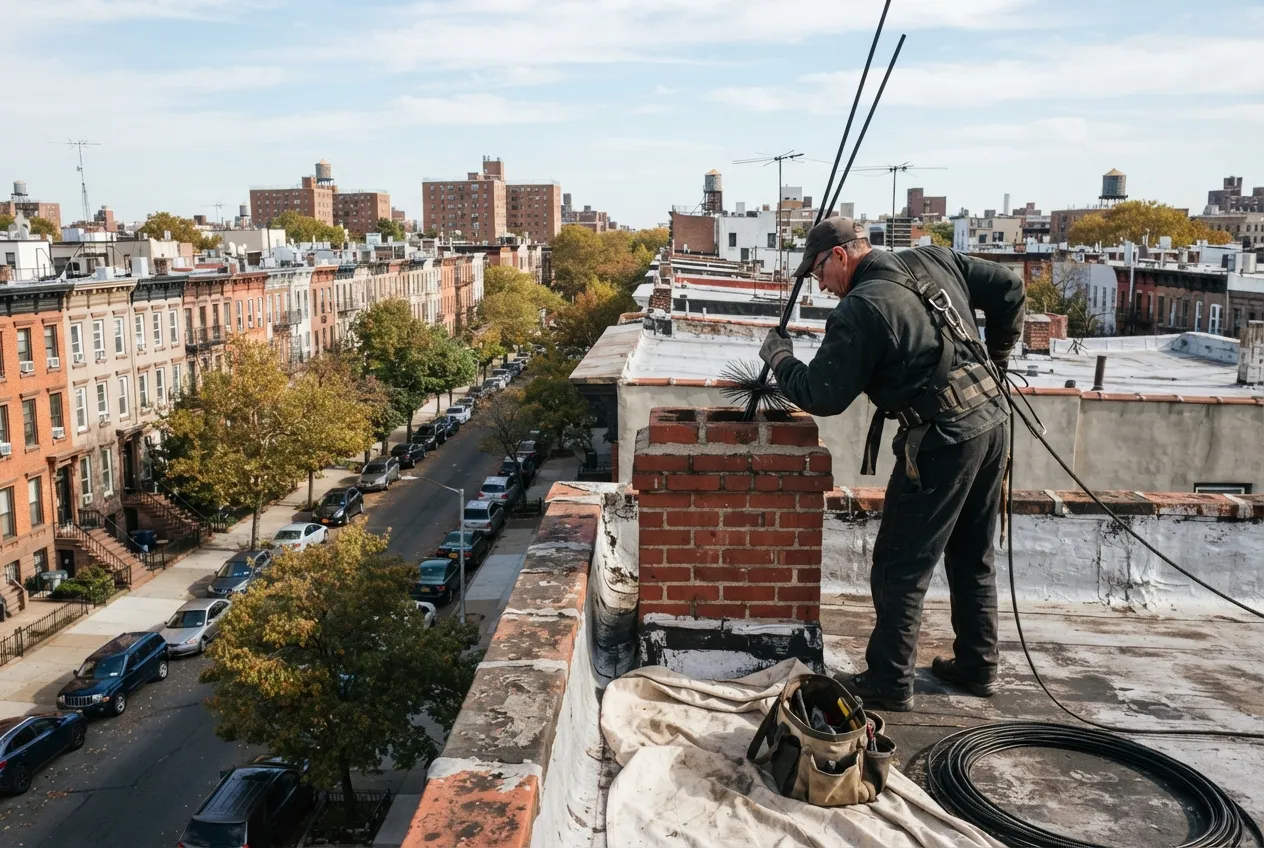
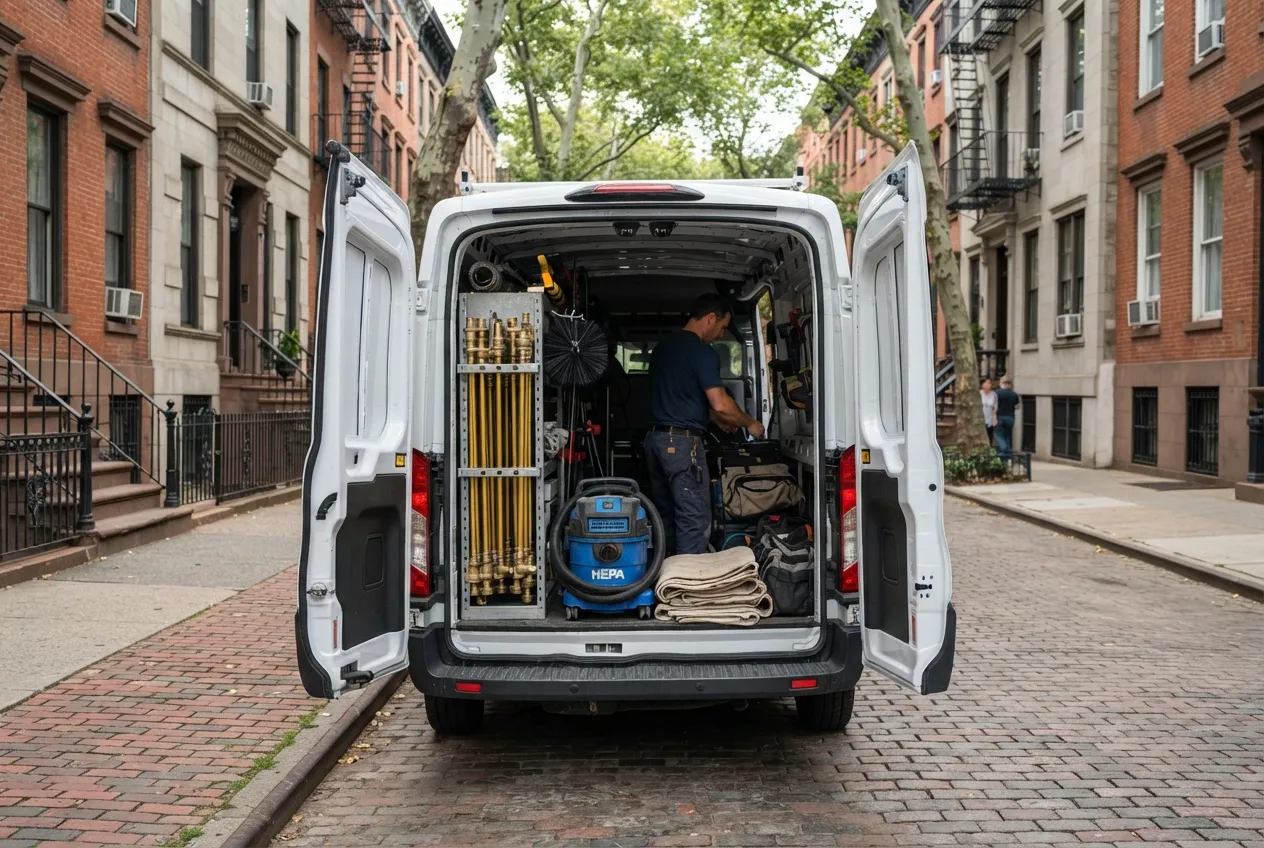
Most of a rebuild happens on the roof, but we still come inside to check the firebox, damper, and flue from below. Before we touch anything indoors, we lay drop cloths from the door to the fireplace and seal the fireplace opening. We run HEPA vacuums while we work so dust and loose mortar don't drift into the room. If the flue needs cleaning before or after the masonry work, we use rotary brushes sized to the flue. We also run a camera up the flue to record the liner condition, so you can see what we see.
On the roof, we set up safe access, cover nearby roofing and skylights, and lower debris in bags or a chute instead of dropping it. We take down damaged brick by hand, course by course, to avoid shaking loose the sound masonry below. New brick is laid in mortar suited to the age of the chimney. Many older Brooklyn chimneys were built with softer brick, and a mortar that is too hard can crack it over time. At the end of each work day, we cover the open chimney so rain doesn't get in.
Time for your annual chimney check?
The standard we follow
We follow the NFPA 211 standard, which calls for chimneys, fireplaces, and vents to be inspected once a year. Chimney professionals use three inspection levels. A Level 1 inspection applies when nothing about the system has changed. A Level 2 inspection is called for when the system changes, such as a new appliance or a switch to a different fuel, or when the home is sold. A Level 3 inspection is needed when a hidden hazard can only be reached by opening part of the chimney or building.
A rebuild usually starts with at least a Level 2 inspection, including a camera look inside the flue. If you're converting your boiler from oil to gas, New York City requires the chimney to be evaluated as part of that work. Gas exhaust produces acidic condensate that can corrode a masonry flue, so a new liner is often needed. It makes sense to plan the liner and any rebuilding together.
What affects the price
We price each rebuild after we inspect the chimney. The main factors are:
- Chimney height and roof access, including roof pitch and whether scaffolding is needed
- How far down the damage goes, from the top few courses to a full rebuild down to the roofline
- Fuel type and whether the flue needs a new liner, especially after an oil-to-gas conversion
- Flue size and condition, and how many flues run through the chimney
- How much creosote or soot buildup must be cleaned before work can start
- Whether a camera inspection, crown, flashing, or other repair is needed alongside the rebuild
How a visit works
First, we schedule an inspection at a time that works for you. The technician checks the chimney from the roof and from inside, runs a camera through the flue where it fits, and photographs the damage.
Next, we walk you through what we found and give you a written scope and estimate. Nothing comes down until you approve it.
On rebuild day, the crew protects your home, removes the damaged masonry, and rebuilds the chimney. Depending on the size of the job and the weather, the work can take more than one day. When we finish, we clean up and show you photos of the completed work.
Timing matters in New York City. Heat season runs from October 1 through May 31, when building owners must keep apartments heated to the city's minimum temperatures. If your chimney serves a boiler, we'll help you plan the work around that. Mortar also cures best in mild weather, so spring and early fall are good times to schedule.