The short answer
Chimney waterproofing is a breathable, masonry-rated water repellent applied to exposed brick after the crown, mortar and flashing have been checked and repaired. It slows the freeze-thaw damage behind flaking brick, white staining and water in the firebox. We inspect first so the treatment addresses the real source of the water.
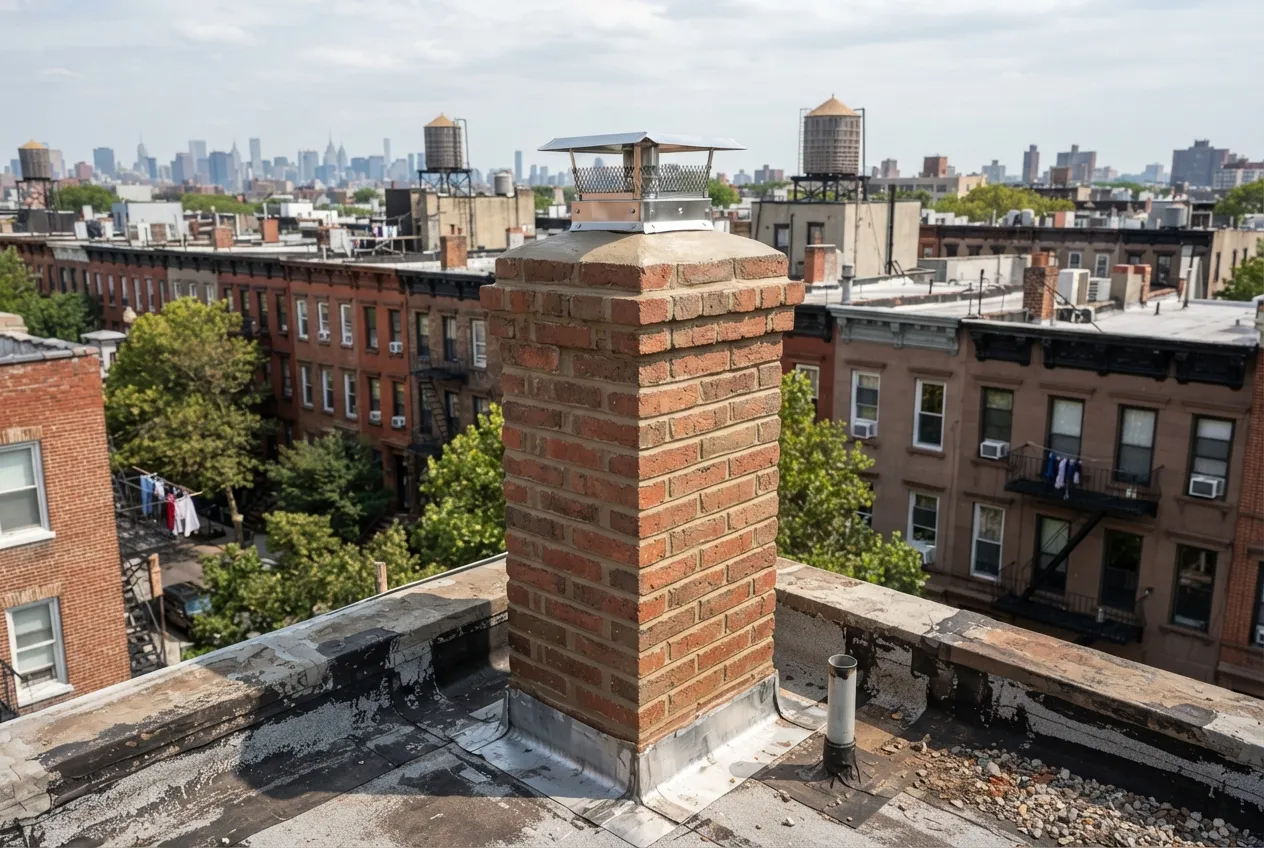
Brick and mortar are porous. Rain soaks into an exposed chimney, and in a New York winter that water freezes, expands and slowly pushes the masonry apart. Over a few seasons it shows up as flaking brick, crumbling joints, white stains and water inside the fireplace. Chimney waterproofing keeps most of that water out at the surface while still letting the masonry release moisture from inside. At SummitHearth Chimney Services, our certified technicians inspect the whole chimney first, fix the places where water is actually getting in, and then apply a vapor-permeable water repellent made for masonry. We work on rowhouses, brownstones, frame houses and small multifamily buildings across Brooklyn and nearby neighborhoods.
Signs you need it
Water damage in a chimney usually builds slowly, so the early signs are easy to miss. These are the ones homeowners most often notice, inside and outside the house:
- White, chalky staining on the outside brick or on the chimney breast inside the house
- Water, puddles or rust marks in the firebox or on the damper after rain
- Brick flakes, mortar sand or small chunks of masonry falling into the firebox
- A smoke or creosote smell that gets stronger in humid or rainy weather
- Damp spots, peeling paint or water stains on the ceiling or wall next to the chimney
- A fireplace that drafts poorly or smokes on startup after a stretch of wet weather
What's included
The same symptoms can come from a missing cap, a cracked crown or loose flashing, and a water repellent alone will not fix any of those. That is why every waterproofing job starts with an inspection and includes the small repairs that keep the treatment from being wasted. Larger repairs, such as rebuilding a crown or relining a flue, are explained and quoted separately before any work begins.
- Exterior inspection of the brick, mortar joints, crown, cap and roof flashing
- Interior check of the firebox, damper and smoke chamber, with a camera look at the flue liner where water damage is suspected
- Cleaning the masonry surface to remove dirt, moss and loose white staining
- Filling small open mortar joints and sealing hairline cracks in a sound crown
- Checking and resealing flashing where the chimney meets the roof
- Applying a vapor-permeable, masonry-rated water repellent to all exposed brick above the roofline
- A recommendation on a chimney cap if yours is missing or damaged
- Photos and written notes showing what we found and what we treated
How our crew works inside your home and on the roof
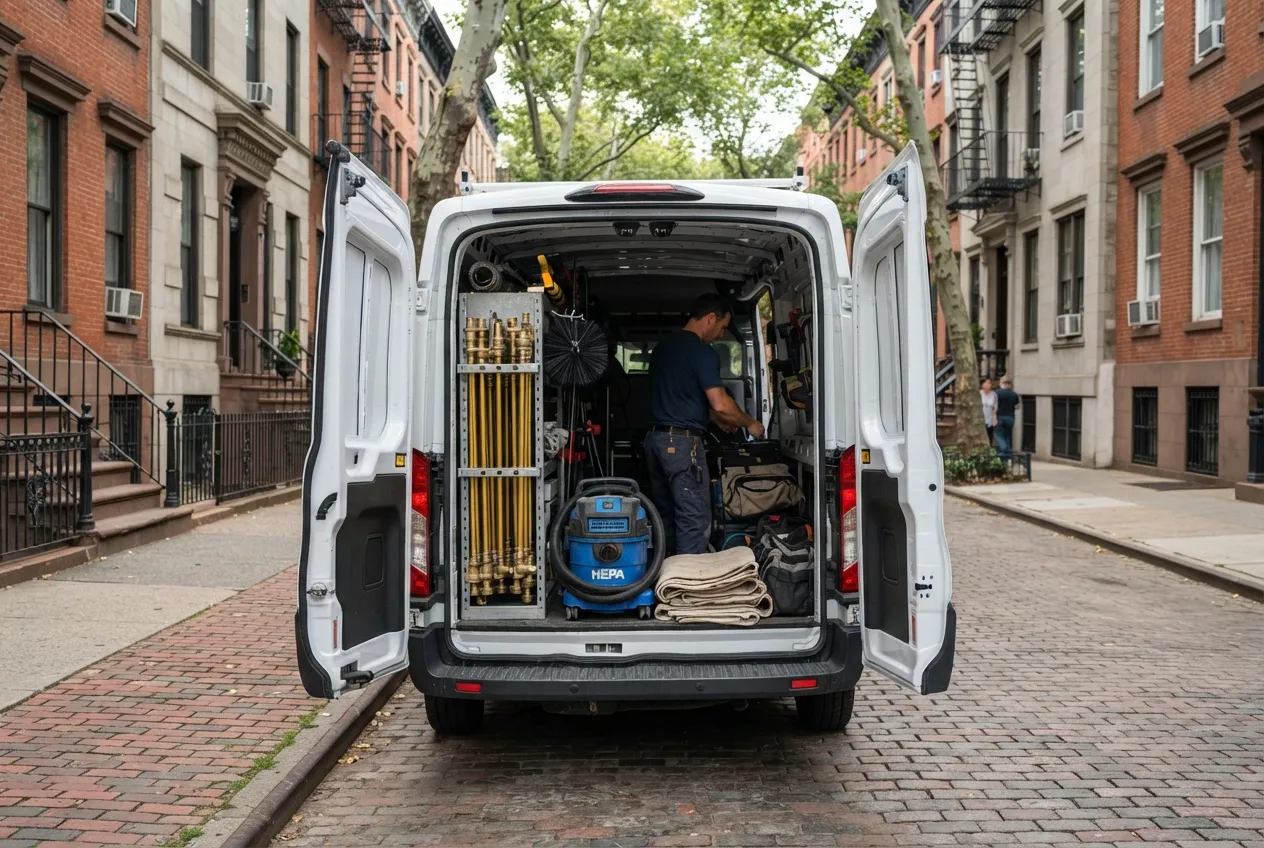
Inside, the crew lays drop cloths along the path from your door to the fireplace and covers the fireplace opening before touching anything. If the flue needs sweeping before we can inspect it, we use rotary brushes run from below or above, with HEPA vacuums running at the firebox so soot stays out of the room. Where water damage to the flue lining is a concern, we run a camera up the flue so you can see the cracks, gaps or spalling we are describing instead of taking our word for it.
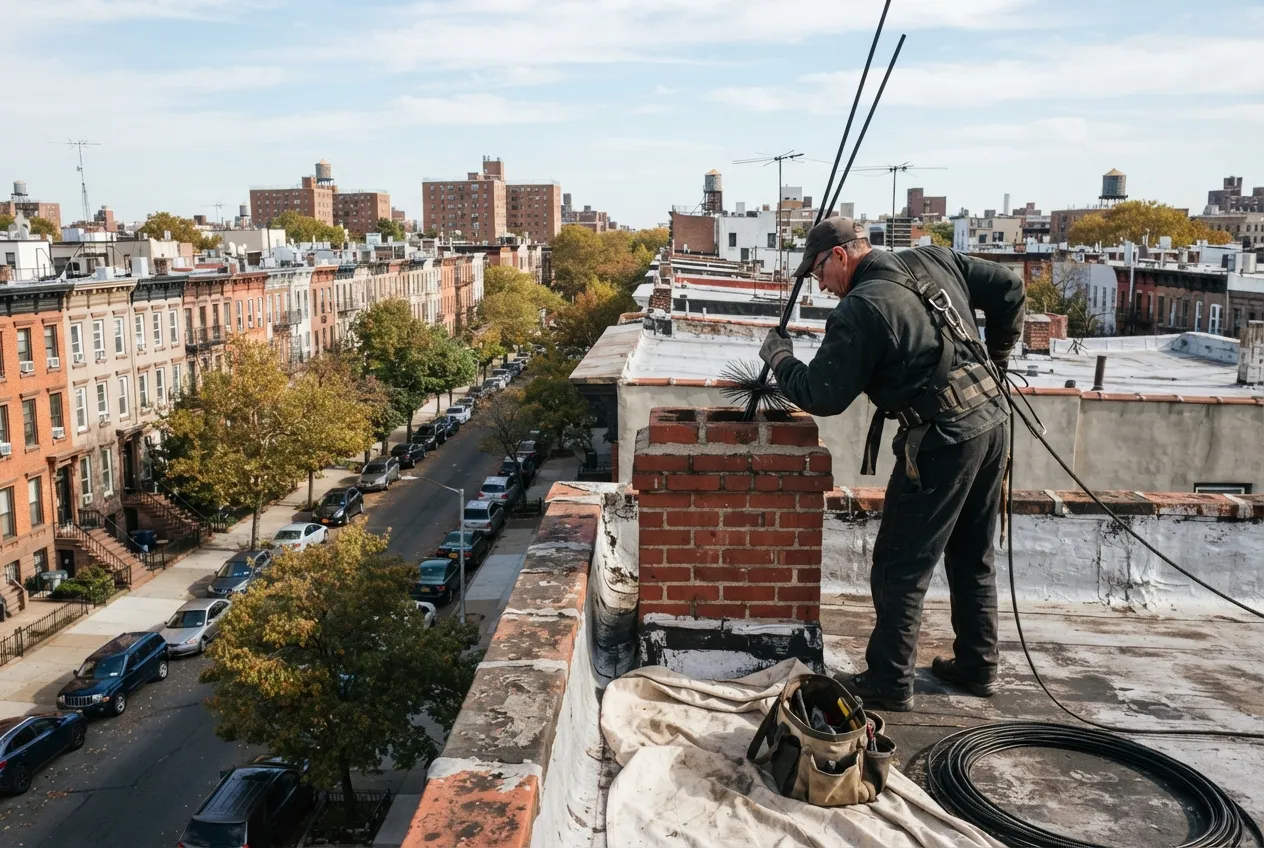
On the roof, we check the crown, cap and flashing by hand, then clean the brick and let it dry. A water repellent only works on dry masonry, so we schedule around rain and cold. The repellent goes on with a low-pressure sprayer so it soaks into the brick rather than sitting on top. On rowhouses with shared parapets and tight roofs, we protect neighboring surfaces, skylights and roofing from overspray. We do not use paint or film-forming sealers on chimney brick, because they trap moisture inside and can make spalling worse.
Time for your annual chimney check?
The standard we follow
The NFPA 211 standard calls for chimneys, fireplaces and vents to be inspected once a year. Chimney professionals use three inspection levels: Level 1 when nothing about the system has changed, Level 2 when it has (a new appliance or a switch of fuel, for example) or the home is being sold, and Level 3 when a hidden hazard has to be reached by opening part of the chimney or building. Most waterproofing visits pair with a Level 1 inspection, and we will tell you if what we see calls for more.
If your building is converting its boiler from oil to gas, the chimney has to be evaluated as part of that work in New York City. A new liner is often needed, because gas exhaust produces acidic condensate that can corrode a masonry flue. Waterproofing the outside helps, but it does not replace a liner that is needed. Since the city's heat season runs from October 1 through May 31, many owners like to have chimney work finished before the heating system is in daily use.
What affects the price
Every chimney is different, so we quote after seeing it. These are the main factors:
- Chimney height and roof access, such as a flat roof reached by a hatch versus a steep pitched roof
- How much exposed masonry there is and how many flues or chimneys share the stack
- Fuel type (wood, oil or gas), which affects what is inside the flue and whether sweeping comes first
- Flue size and condition
- How much soot or creosote buildup has to be cleaned before inspection
- The condition of the brick, mortar, crown and flashing, and how much repair is needed before treatment
- Whether a camera inspection or a larger repair is needed
How a visit works
You reach out and describe what you are seeing. We set a time, keeping the forecast in mind, since the brick must be dry for the treatment. On the day, the crew protects your floors, inspects inside and on the roof, and shows you photos or camera footage of anything that needs attention. You get a clear explanation of the waterproofing and any repairs before work starts, so nothing is a surprise. If everything is ready, we treat the chimney the same visit. If repairs come first, we schedule the waterproofing once they have cured. Before we leave, we clean up, remove the drop cloths and walk you through what was done and what to watch for.