The short answer
Yes, SummitHearth serves Brooklyn Heights, about a mile from our Brooklyn office. Our certified technicians handle chimney sweeps, inspections, liners for oil-to-gas conversions, masonry repair, waterproofing, and dryer vent and air duct cleaning for the neighborhood's brownstones, rowhouses and pre-war buildings.
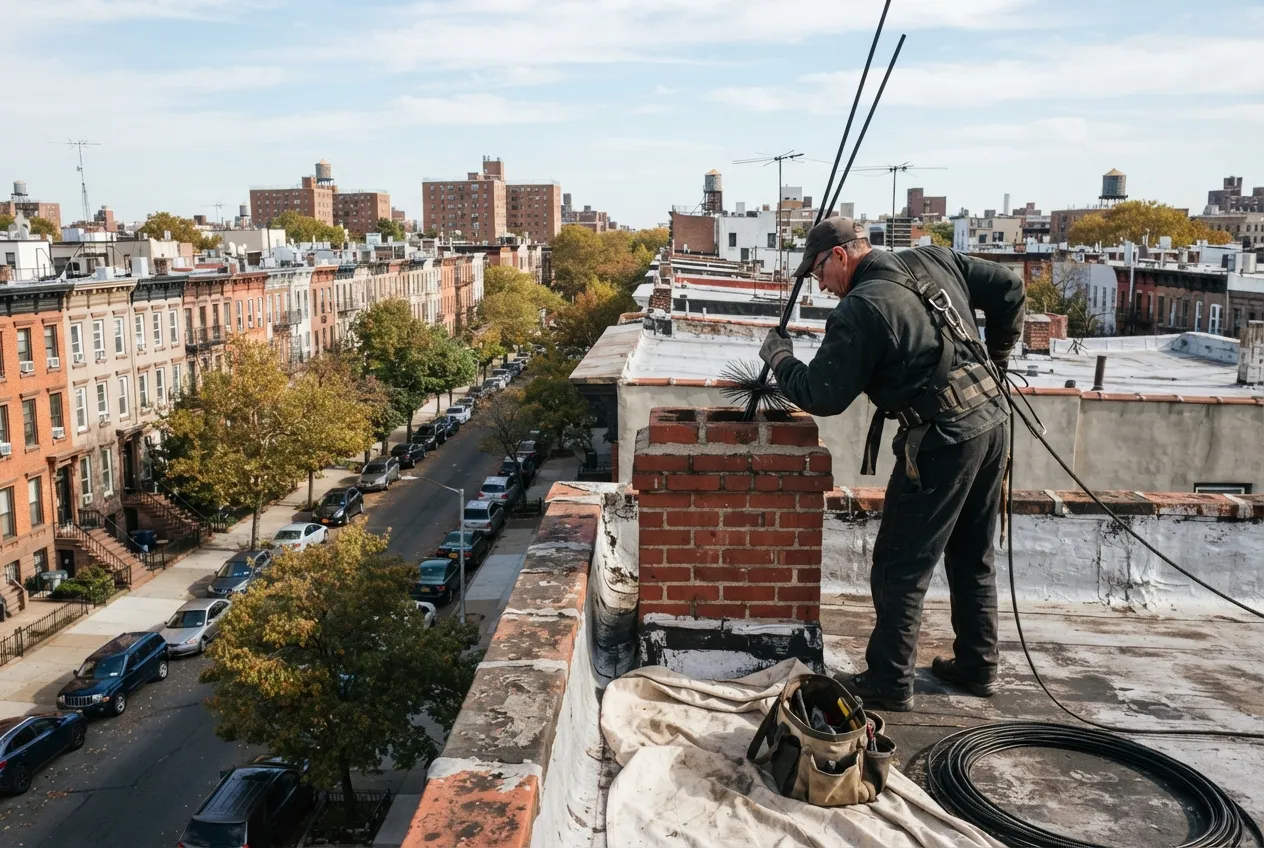
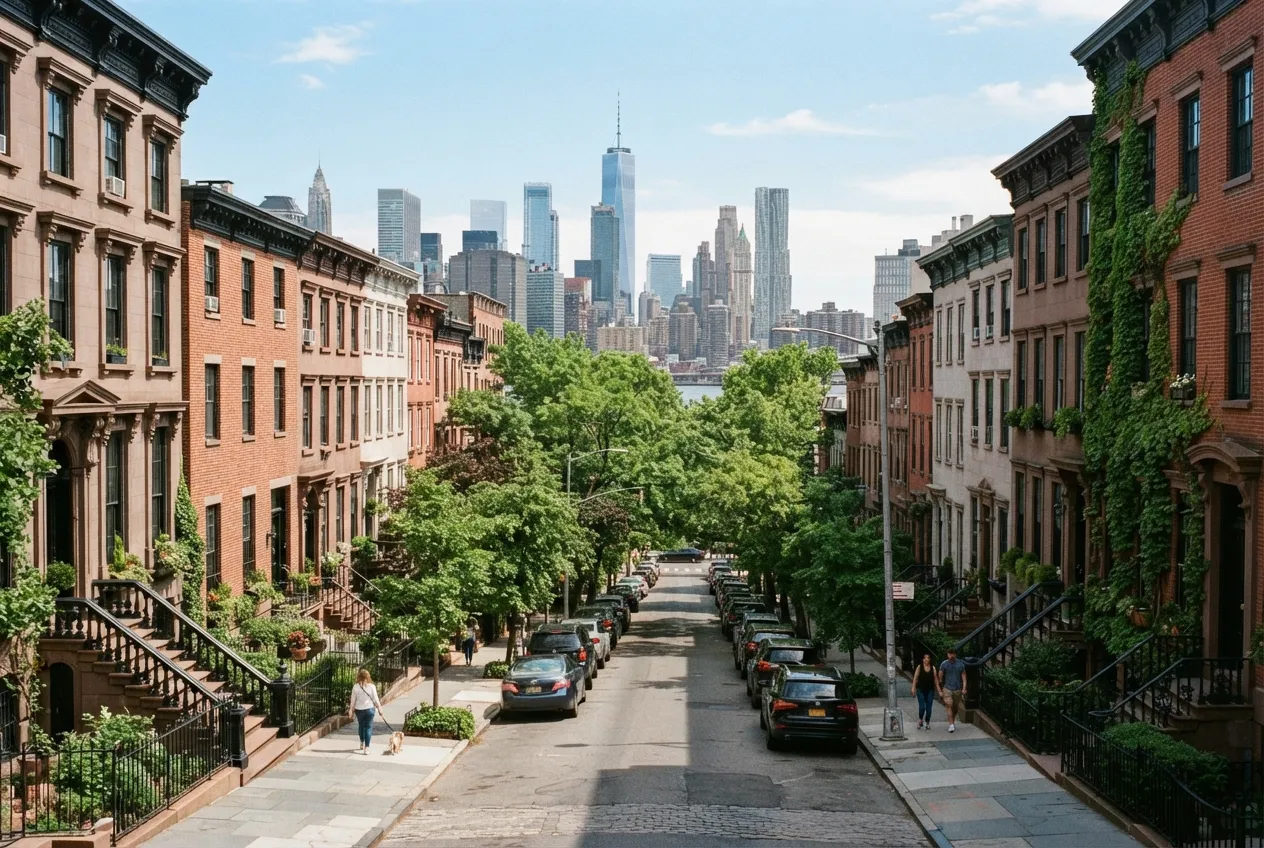
Brooklyn Heights is about a mile northwest of our Brooklyn office, so our crews can get to the neighborhood quickly for sweeps, inspections, repairs and vent cleaning. Most of the housing here is brownstones, rowhouses and pre-war apartment buildings. Many have masonry chimneys that have vented more than one kind of heating equipment over the decades. Many also have a parlor fireplace that may not have been used in years. Our certified technicians check these older systems one flue at a time. They explain what they find in plain terms and recommend only the work your chimney actually needs.
What older Brooklyn Heights chimneys tend to need
Brownstones and rowhouses in Brooklyn Heights usually have tall masonry stacks that hold several flues, often one for each fireplace plus one for the boiler. Over the decades, mortar joints wear away and clay flue tiles crack. Flues that once served a fireplace may have been closed off or reused. Before we recommend anything, we confirm which flue serves which appliance and whether each one is sound.
Boiler conversions are a common reason for a call. When a New York City building converts its boiler from oil to gas, the chimney has to be evaluated as part of the work. A new liner is often needed because gas exhaust produces acidic condensate, which can corrode a masonry flue. We inspect the flue, size a liner to the new equipment, and install it so the boiler vents safely.
- Chimney sweep for fireplaces in regular use or being brought back into service
- Chimney liner installation for oil-to-gas conversions and damaged clay tile flues
- Chimney repair, including repointing worn mortar joints
- Fireplace and damper repair for dampers that stick or no longer seal
- Chimney rebuilding when the stack above the roofline is leaning or badly deteriorated
Protecting masonry from Brooklyn winters and wet springs
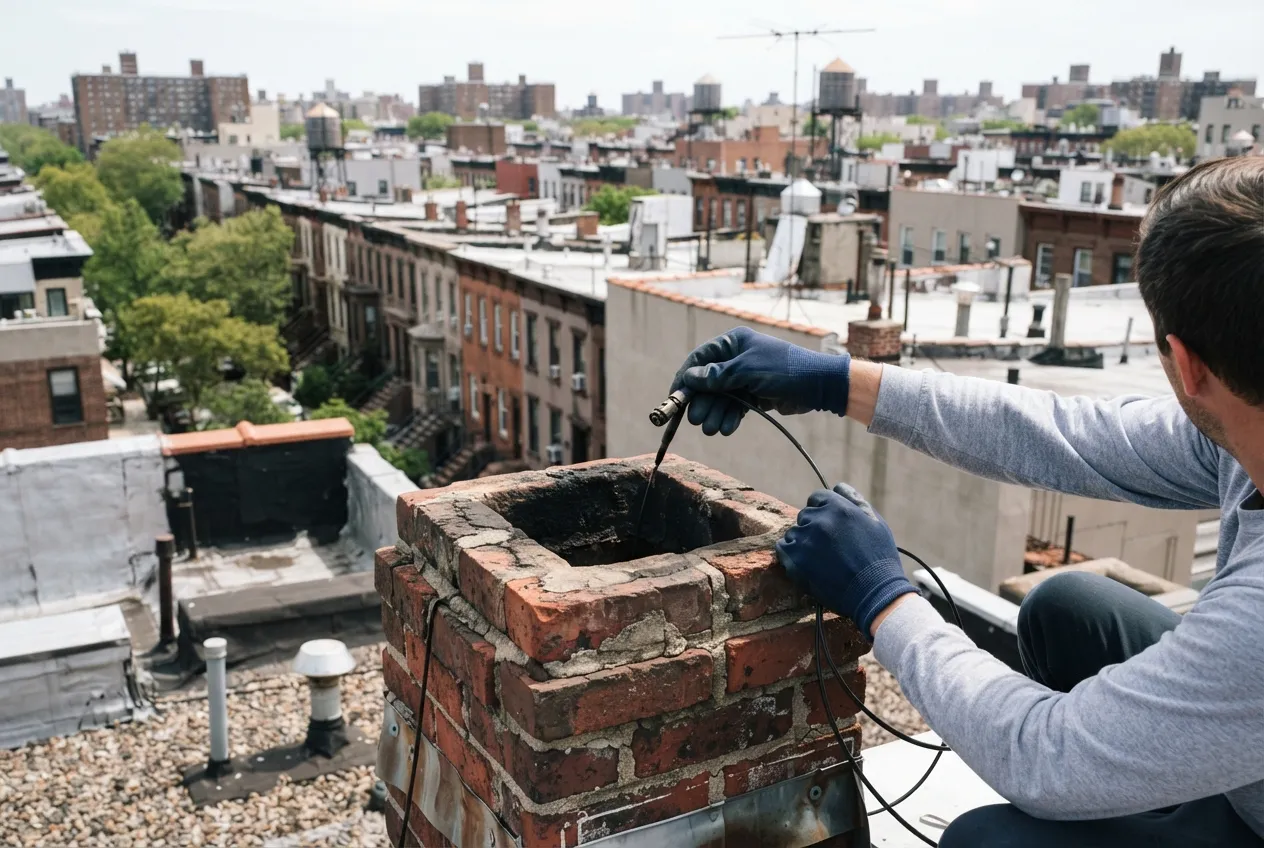
Brooklyn's weather is hard on masonry. Winters bring repeated freeze-thaw cycles. Coastal storms drive rain sideways into exposed chimneys, and summer humidity keeps damp brick from drying out. Water that soaks into brick and mortar expands when it freezes. Over time that loosens joints and flakes off brick faces, and it can let moisture reach ceilings and walls inside.
A well-fitted chimney cap keeps rain, snow, birds and debris out of the flue. Prefabricated chimneys need a sound chase cover. Where brick is absorbing water, a vapor-permeable waterproofing treatment helps the masonry shed rain while still letting moisture escape from inside.
Timing matters too. New York City's heat season runs from October 1 through May 31, and during that time building owners must keep apartments heated to the city's minimum temperatures. Booking chimney and boiler flue work in late summer or early fall helps you avoid problems once the heat is on.
Inspections: yearly checks and home sales
The NFPA 211 standard calls for chimneys, fireplaces and vents to be inspected once a year. A Level 1 inspection fits when nothing has changed. A Level 2 inspection applies when the system changes, such as a new appliance or a switch of fuel, or when the home is sold. A Level 3 inspection is for cases where a hidden hazard can only be reached by opening part of the chimney or building.
After any inspection, we go over photos of what we found with you. We separate urgent safety items from things that can wait.
Time for your annual chimney check?
Dryer vents and air ducts
In pre-war apartments and renovated townhouses, dryers are often tucked into closets or basements. Their vent runs tend to be long and full of bends, so they collect lint quickly. According to the U.S. Fire Administration, failure to clean is the leading factor contributing to clothes dryer fires in homes. Our dryer vent cleaning clears the full run, from the machine to the outside outlet.
For air ducts, we follow U.S. EPA guidance. The EPA advises cleaning ducts when there is substantial visible mold growth, vermin, or excessive dust and debris. It also notes that duct cleaning has not been shown to prevent health problems. It cautions consumers to research the process before responding to very cheap advertised offers and to be careful with chemical treatments. We'll tell you honestly whether your ducts need cleaning.
Serving Brooklyn Heights and nearby neighborhoods
Since we're about a mile away, Brooklyn Heights is part of our regular service area. We also work in Downtown Brooklyn, DUMBO, Boerum Hill, Fort Greene and Carroll Gardens. Those neighborhoods have much the same mix of brownstones, rowhouses and older apartment buildings.
Services in Brooklyn Heights
- Chimney Sweep in Brooklyn Heights
- Chimney Inspection in Brooklyn Heights
- Chimney Repair in Brooklyn Heights
- Air Duct Cleaning in Brooklyn Heights
- Chimney Liner Installation in Brooklyn Heights