The short answer
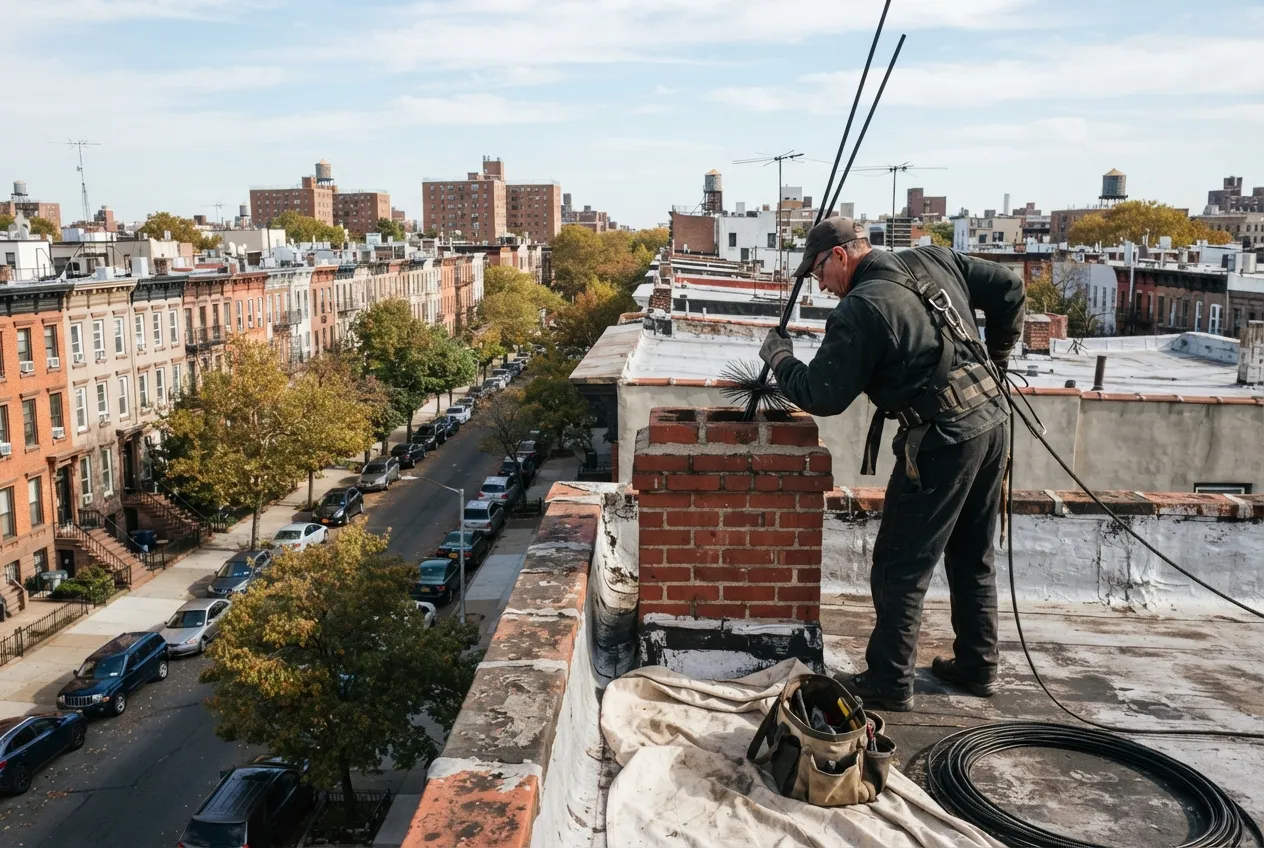
A chimney inspection in Brooklyn Heights checks that your flue, liner, masonry and connections are venting smoke and exhaust safely. The NFPA 211 standard calls for a yearly inspection. A more detailed inspection makes sense after a boiler conversion, a new appliance, or a home sale.
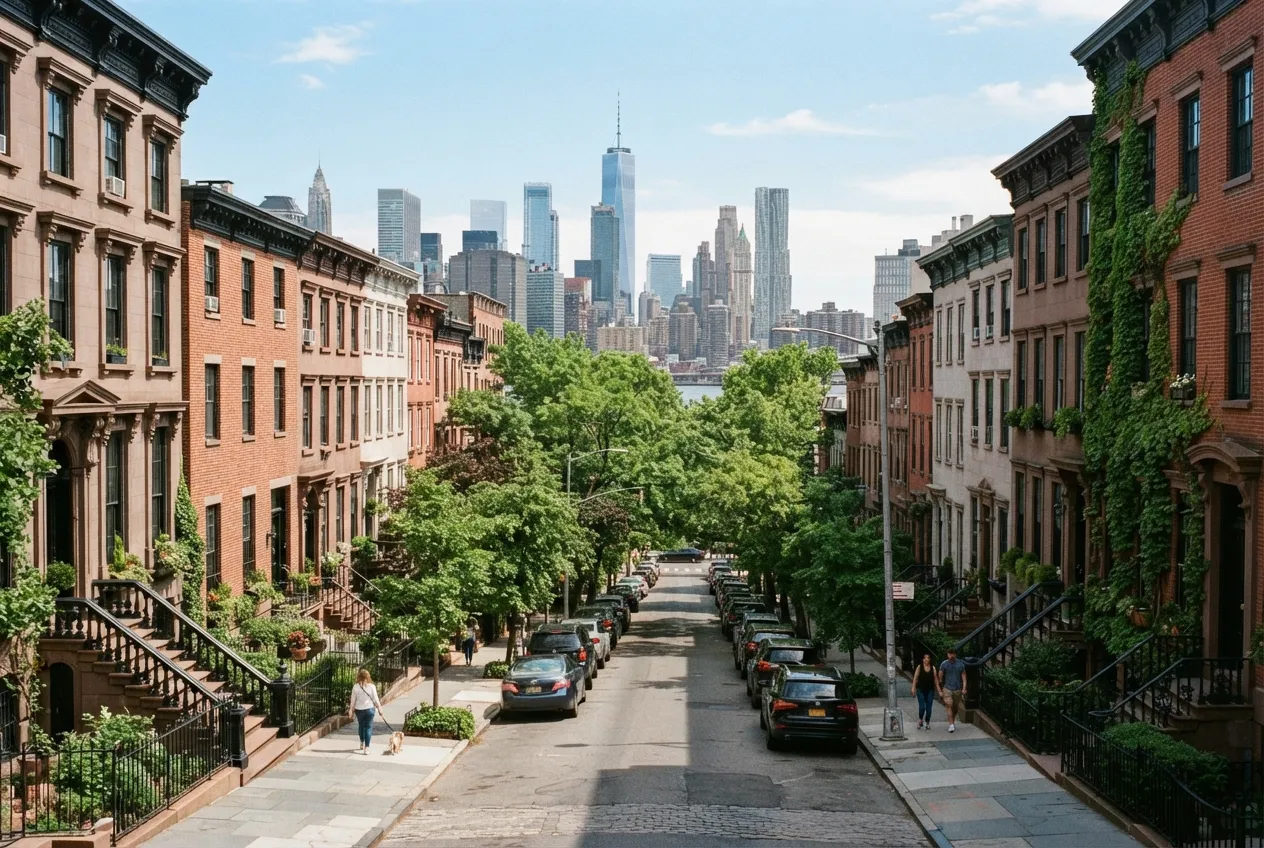
Brooklyn Heights has many brownstones, rowhouses and pre-war apartment buildings, and their chimneys are often older than the heating equipment connected to them. Over the decades, fireplaces get closed off and reopened, boilers change from oil to gas, and flues get shared, relined or capped. SummitHearth Chimney Services is based about a mile southeast of the neighborhood, and our certified technicians inspect chimneys here for owners of single-family homes, multi-unit buildings and co-ops. Each inspection gives you a clear written picture of what your chimney is doing now: whether it's venting safely, where it's wearing, and what, if anything, needs attention before you light a fire or the boiler runs all winter.
Why Older Brooklyn Heights Chimneys Need a Closer Look
Most chimneys in the neighborhood are tall masonry stacks built long before modern liners and high-efficiency boilers. Many serve more than one purpose. One flue may vent a gas boiler, a neighboring flue may serve a parlor-floor fireplace, and another may have been sealed off years ago and forgotten.
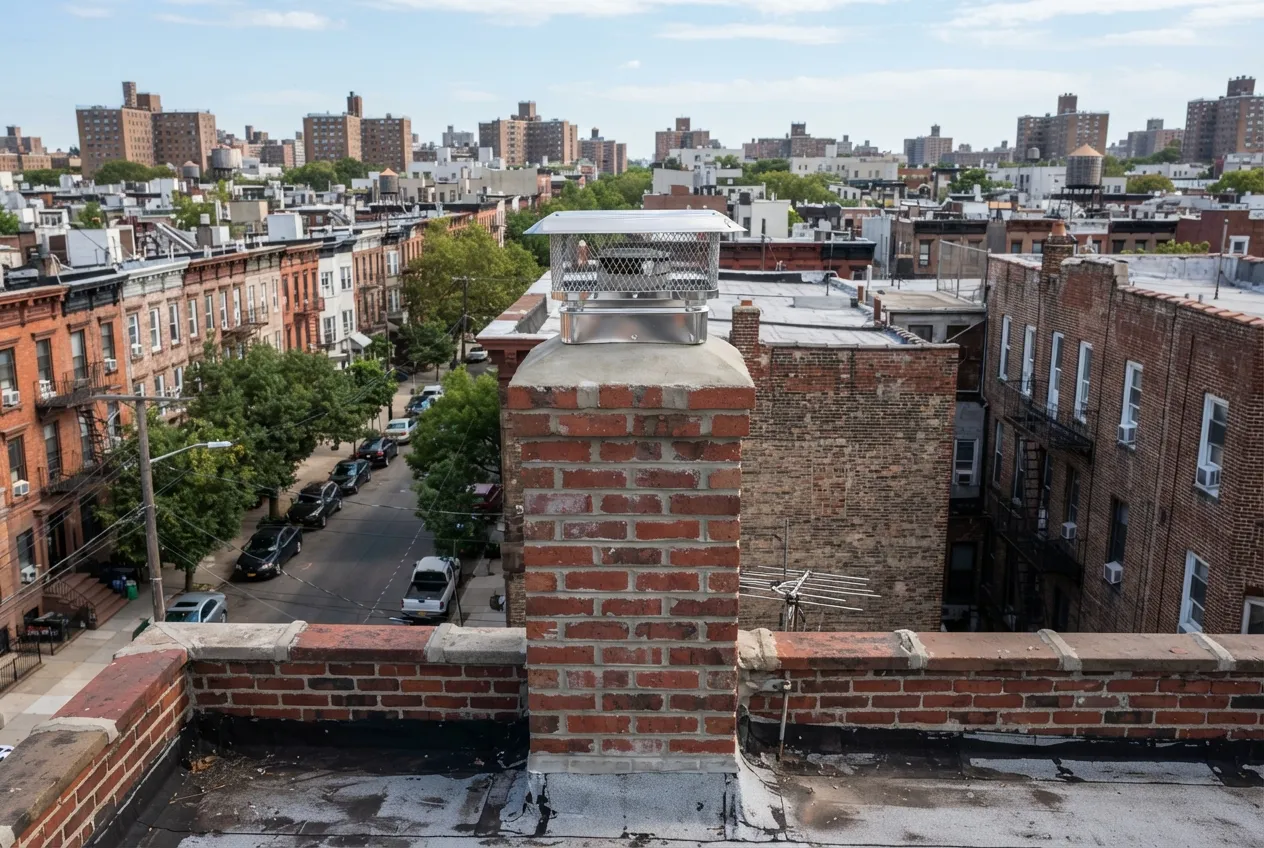
In attached rowhouses and brownstones, chimneys often sit along or near party walls. That makes it important to understand which flue belongs to which appliance and whether the masonry between flues is still sound. Mortar joints, crowns and flashing on these older stacks take a lot of weather, and problems at the roofline often show up first as stains or flaking plaster inside the top floor.
Which Inspection Level Fits Your Home
The NFPA 211 standard calls for chimneys, fireplaces and vents to be inspected once a year. Chimney professionals use three levels of inspection, and we'll tell you up front which one your situation calls for.
- Level 1: For a chimney that's in regular use with no changes. We check the readily accessible parts of the chimney, the firebox or appliance connection, and basic clearances.
- Level 2: When something has changed, such as a new boiler or water heater, a switch from oil to gas, or a fireplace being put back into use, and when a home is being sold. This includes a camera inspection of the flue's interior and accessible areas like attics and basements.
- Level 3: When a hidden hazard is suspected and the only way to reach it is to open part of the chimney or the building. This is uncommon and only recommended when lower levels point to a concealed problem.
Oil-to-Gas Conversions and Liners
Many Brooklyn Heights buildings have moved or are moving their boilers from oil to gas. When a New York City building converts its boiler from oil to gas, the chimney has to be evaluated as part of that work. A new liner is often needed, because gas exhaust produces acidic condensate that can corrode an unlined or poorly lined masonry flue.
We inspect the flue before or during a conversion so you and your plumber or heating contractor know what the chimney needs. If a liner is already in place, we check its condition, sizing and connections rather than assuming it's suitable for the new equipment.
Time for your annual chimney check?
What We Check and What You Receive
An inspection looks at the full path exhaust and smoke take out of your home. You get a written report with photos, plain explanations of what we found, and a clear separation between items that are urgent and items to keep an eye on.
- Chimney crown, cap, flashing and exterior brick and mortar
- Flue liner condition, cracks, gaps and blockages such as debris or nesting
- Creosote buildup in wood-burning fireplaces
- Damper, smoke chamber and firebox condition
- Boiler and water heater connector pipes and their entry into the chimney
- Signs of water intrusion inside the home near the chimney
Timing Around the Heating Season
New York City's heat season runs from October 1 through May 31. During that time, building owners must keep apartments heated to the city's minimum temperatures. For owners of multi-unit buildings, that makes late summer and early fall the practical window to inspect, since problems found then can be addressed before the boiler has to run steadily.
We also serve nearby Downtown Brooklyn, DUMBO, Boerum Hill, Fort Greene and Carroll Gardens. That makes it easy to schedule inspections for owners with properties in more than one of these neighborhoods.
More services in Brooklyn Heights
- Chimney Sweep in Brooklyn Heights
- Chimney Repair in Brooklyn Heights
- Air Duct Cleaning in Brooklyn Heights
- Chimney Liner Installation in Brooklyn Heights