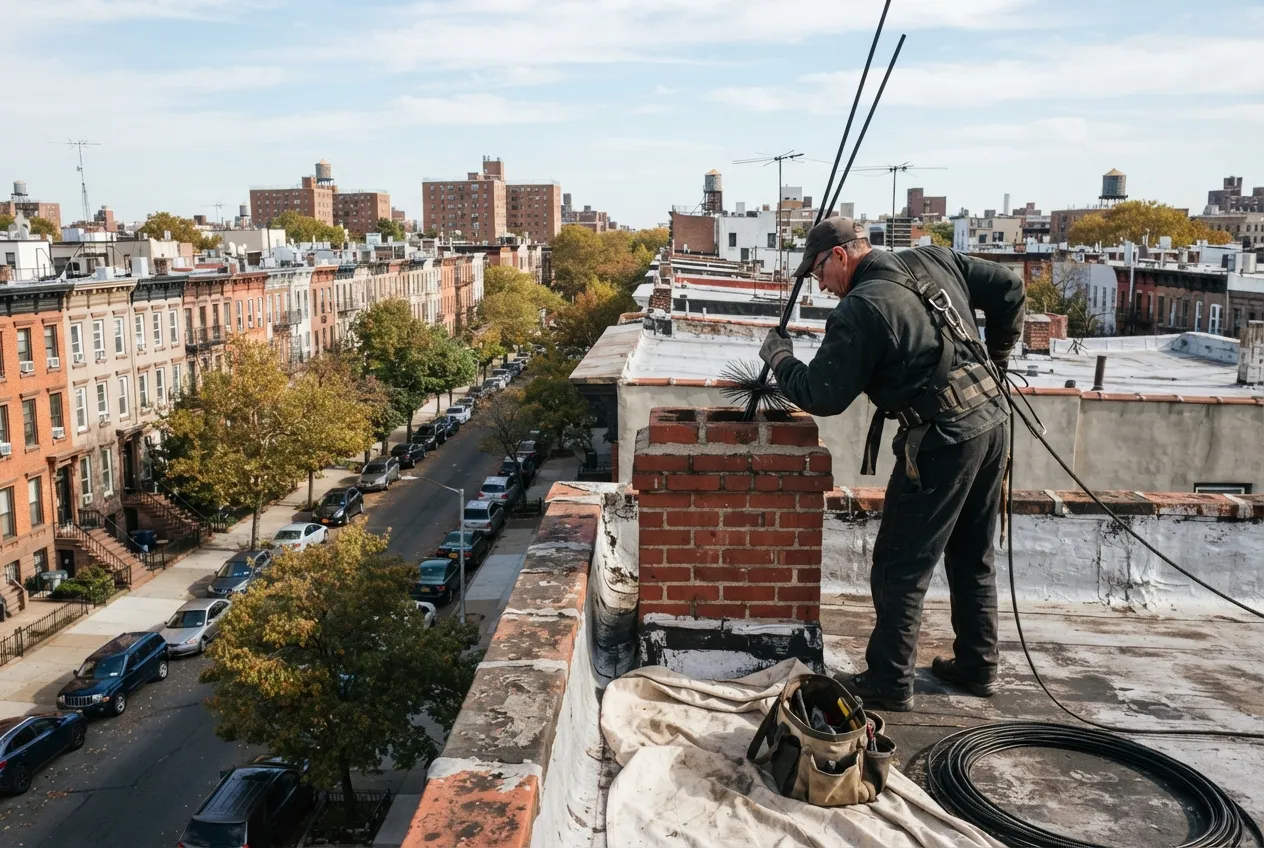
The short answer
SummitHearth repairs chimneys in Brooklyn Heights, including brownstones, rowhouses, and pre-war buildings. We fix crowns, mortar joints, flashing, flue liners, dampers, and caps after an inspection shows what is actually wrong. The best time to schedule is before New York City's heat season begins on October 1.
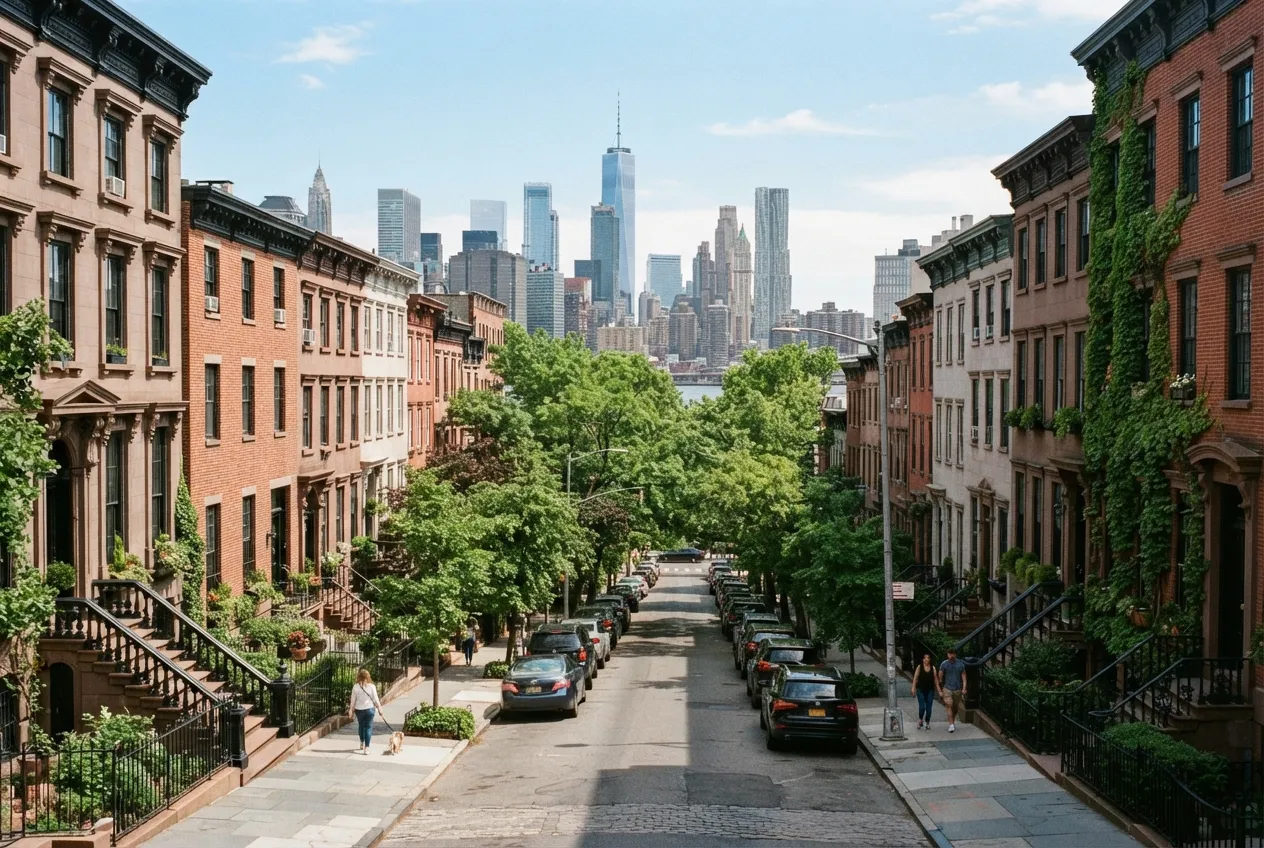
Many homes in Brooklyn Heights have chimneys that have been in service for generations. Brownstones, rowhouses, and pre-war apartment buildings put brick, mortar, and clay flue tiles through decades of freeze-thaw cycles, wind off the water, and steady use. SummitHearth Chimney Services is based in Brooklyn, about a mile southeast of the neighborhood, so our certified technicians can reach Brooklyn Heights homes without a long trip across the borough. We repair masonry, crowns, flashing, liners, dampers, and caps. We explain what we find and why it matters, then let you decide what to fix now and what can wait.
Common Chimney Problems in Brooklyn Heights Homes
Older masonry chimneys usually wear out in predictable places. Water causes most of the damage. It gets in through a cracked crown, worn mortar joints, or gaps in the flashing where the chimney meets the roof. Then it freezes and expands, and over time it loosens brick and breaks down the clay flue tiles inside.
On attached homes, a chimney is often shared with or right next to the neighboring building. That makes leaks harder to trace and repairs more important to get right the first time.
- Cracked or crumbling chimney crowns that let rain into the flue
- Eroded mortar joints and spalling brick that flakes or pops off the face
- Failed flashing that causes leaks on top-floor ceilings and walls
- Cracked or missing flue tiles that no longer contain heat and gases safely
- Rusted, warped, or stuck fireplace dampers
- Missing or damaged chimney caps that let in water, debris, and animals
How We Handle a Chimney Repair
Every repair starts with an inspection. The NFPA 211 standard calls for chimneys, fireplaces, and vents to be inspected once a year. It also defines three inspection levels. A Level 1 inspection covers a system that hasn't changed. A Level 2 applies when something changes, such as a new appliance or a switch of fuel, or when the home is sold. A Level 3 is used when a hidden hazard can only be reached by opening part of the chimney or building.
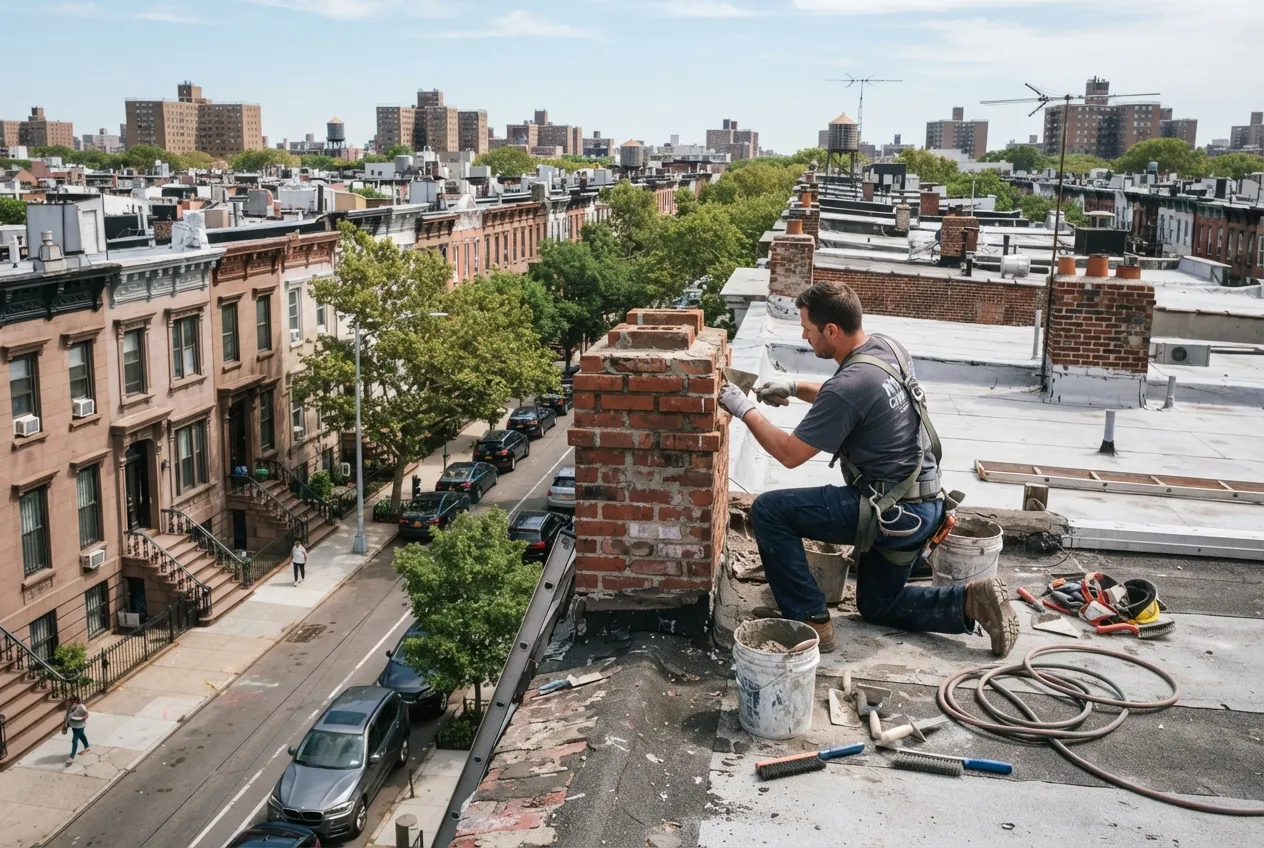
After the inspection, we walk you through what we found, show you photos where we can, and separate the urgent safety issues from the maintenance items. Repairs may include repointing mortar, rebuilding a crown, resealing or replacing flashing, installing a cap, repairing a damper, or relining the flue. We match the scope to the actual condition of your chimney, not to a standard package.
Oil-to-Gas Conversions and Flue Liners
Many pre-war buildings and larger brownstones in Brooklyn Heights still heat with oil, and owners are converting to gas. In New York City, the chimney has to be evaluated as part of an oil-to-gas boiler conversion. A new liner is often needed. Gas exhaust produces acidic condensate, and that condensate can corrode a masonry flue that was built for a different fuel.
If you are planning a conversion, bring us in early. We can assess the flue, tell you whether relining is likely, and coordinate with your heating contractor so the chimney work doesn't hold up the project.
Time for your annual chimney check?
Timing Repairs Around Heat Season
New York City's heat season runs from October 1 through May 31. During those months, building owners must keep apartments heated to the city's minimum temperatures. A chimney problem found in the middle of winter can put a boiler out of service when tenants need heat.
For homeowners and small-building owners, late spring through early fall is the best window for repairs. Masonry work also goes better in mild, dry weather, and you'll start the season knowing your heating system can vent safely.
Serving Brooklyn Heights and Nearby Neighborhoods
Our office is close to Brooklyn Heights, and we also repair chimneys in Downtown Brooklyn, DUMBO, Boerum Hill, Fort Greene, and Carroll Gardens. These neighborhoods share much of the same housing: attached masonry homes, converted multi-family buildings, and pre-war apartment buildings with chimneys that have seen a lot of use. Whether you own a single brownstone or manage a small building, we'll give you a clear explanation and a repair plan that fits your chimney.
More services in Brooklyn Heights
- Chimney Sweep in Brooklyn Heights
- Chimney Inspection in Brooklyn Heights
- Air Duct Cleaning in Brooklyn Heights
- Chimney Liner Installation in Brooklyn Heights