The short answer
Dryer vent cleaning removes the lint that builds up between your dryer and the outside of your home. The U.S. Fire Administration identifies failure to clean as the leading factor in home clothes dryer fires, so if loads take longer to dry or the dryer runs hot, have the vent cleaned.
A clothes dryer pushes hot, damp, lint-filled air through a duct to the outside of your home. Over time, lint slips past the trap and settles along that duct, especially at bends, long horizontal runs, and the exterior hood. In Brooklyn row houses, brownstones, and multi-family buildings, dryer vents often travel through tight joist bays, behind finished walls, or up to a roof cap, which makes them easy to forget and hard to clean on your own. SummitHearth Chimney Services cleans the full length of the vent, from the back of the dryer to the termination outside, so air can move freely and lint has fewer places to collect. Our certified technicians work carefully inside occupied homes, protect your floors, and explain what they found before they leave.
Signs you need it
Most homeowners notice a dryer vent problem through the laundry itself before they ever look at the duct. When lint narrows the vent, the dryer cannot exhaust moist air efficiently, so it runs longer and hotter to do the same job. Some signs show up outside the house or on the roof instead.
If you notice more than one of these, stop using the dryer for long cycles until the vent has been checked.
- Clothes still damp after a normal cycle, or loads that need a second run
- The dryer cabinet or the clothes feel unusually hot to the touch
- A burning or scorched smell while the dryer runs
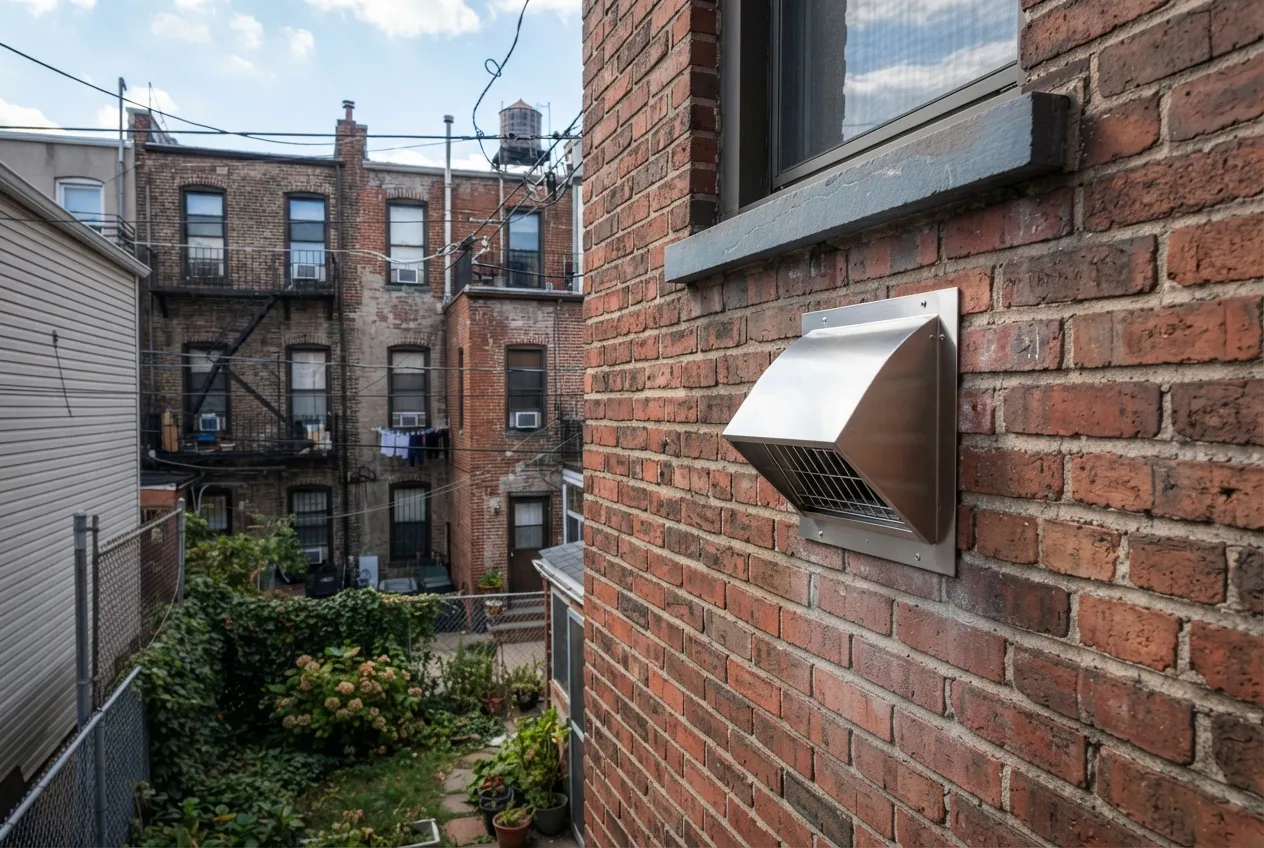
- Lint collecting around the back of the dryer, on the floor, or at the exterior hood
- The exterior flap barely opens or does not open at all when the dryer is on
- Extra humidity, condensation, or a musty smell in the laundry area
- Chirping, scratching, or nesting material at the exterior vent, which can mean birds or rodents have moved in
- Lint that blows back into the room or a vent hose that is crushed or disconnected
What's included
Every dryer vent cleaning covers the entire exhaust path, not just the section you can reach behind the machine. We look at how the vent is routed, what it is made of, and whether it ends where it should.
If we find a problem we cannot fix during the visit, such as a duct that is crushed inside a wall or a run that is longer than the dryer manufacturer allows, we show you what we found and explain your options before any further work.
- Pulling the dryer out and disconnecting it from the vent
- Cleaning the transition hose behind the dryer, or recommending a replacement if it is plastic, foil, or damaged
- Brushing and vacuuming the full duct run from inside to the exterior termination
- Clearing lint, nests, and debris from the exterior hood, wall cap, or roof cap
- Checking that the exterior damper or flap opens and closes freely
- Vacuuming the lint trap housing and the area around and under the dryer
- Reconnecting the dryer and confirming airflow at the exterior with the dryer running
- A camera look inside the duct where the route is hidden or a blockage is suspected
- A plain-language summary of the vent's condition and any recommended repairs
How our crew works in your home and on the roof
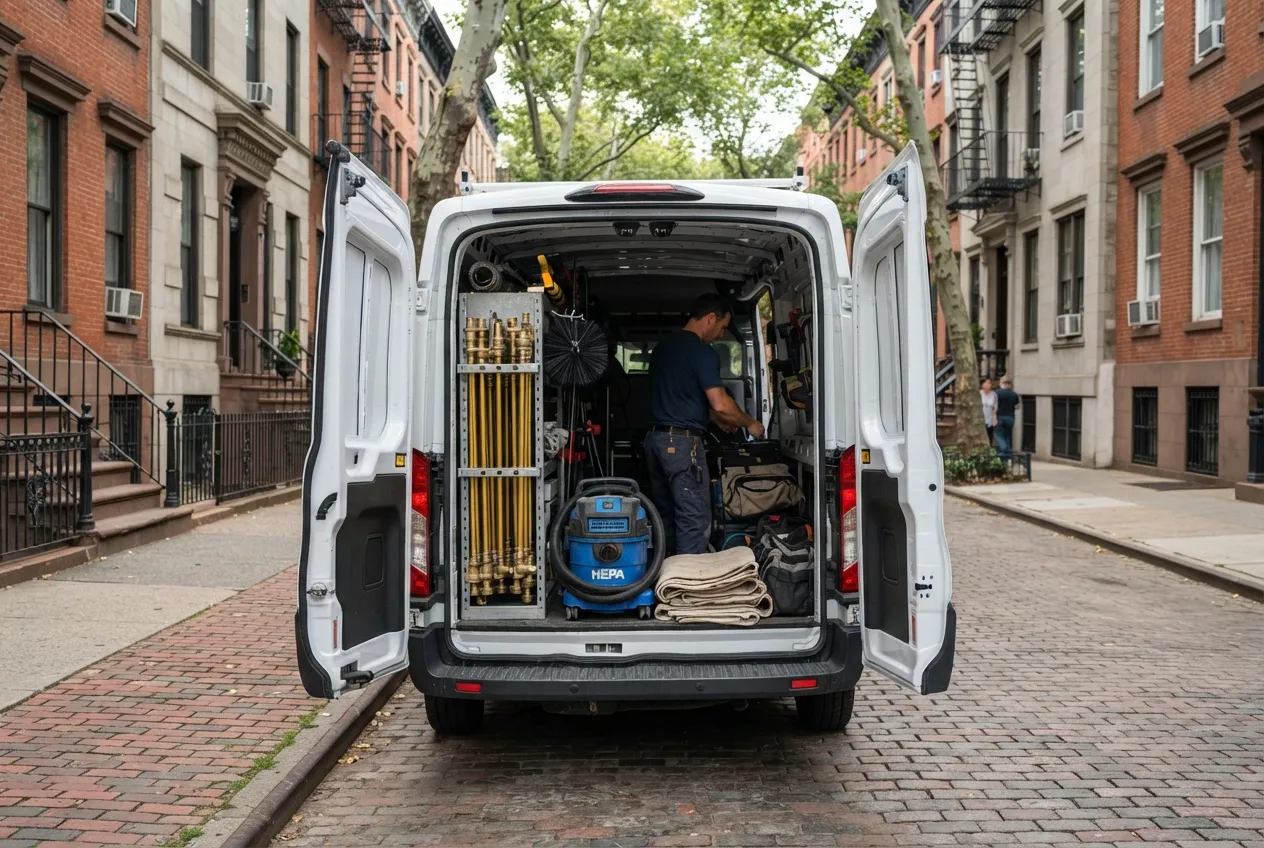
Inside, we lay drop cloths from the entry to the laundry area and around the dryer before moving anything. We use HEPA-filtered vacuums so the fine lint and dust we remove are captured instead of spread through the room. The duct is cleaned with rotary brushes on flexible rods that spin through the run and loosen packed lint at bends and seams, while the vacuum pulls the debris out.
Where the vent route is hidden inside walls or ceilings, or where airflow stays weak after cleaning, we use a camera to see the inside of the duct and locate crushed sections, disconnected joints, or nests we could not reach.
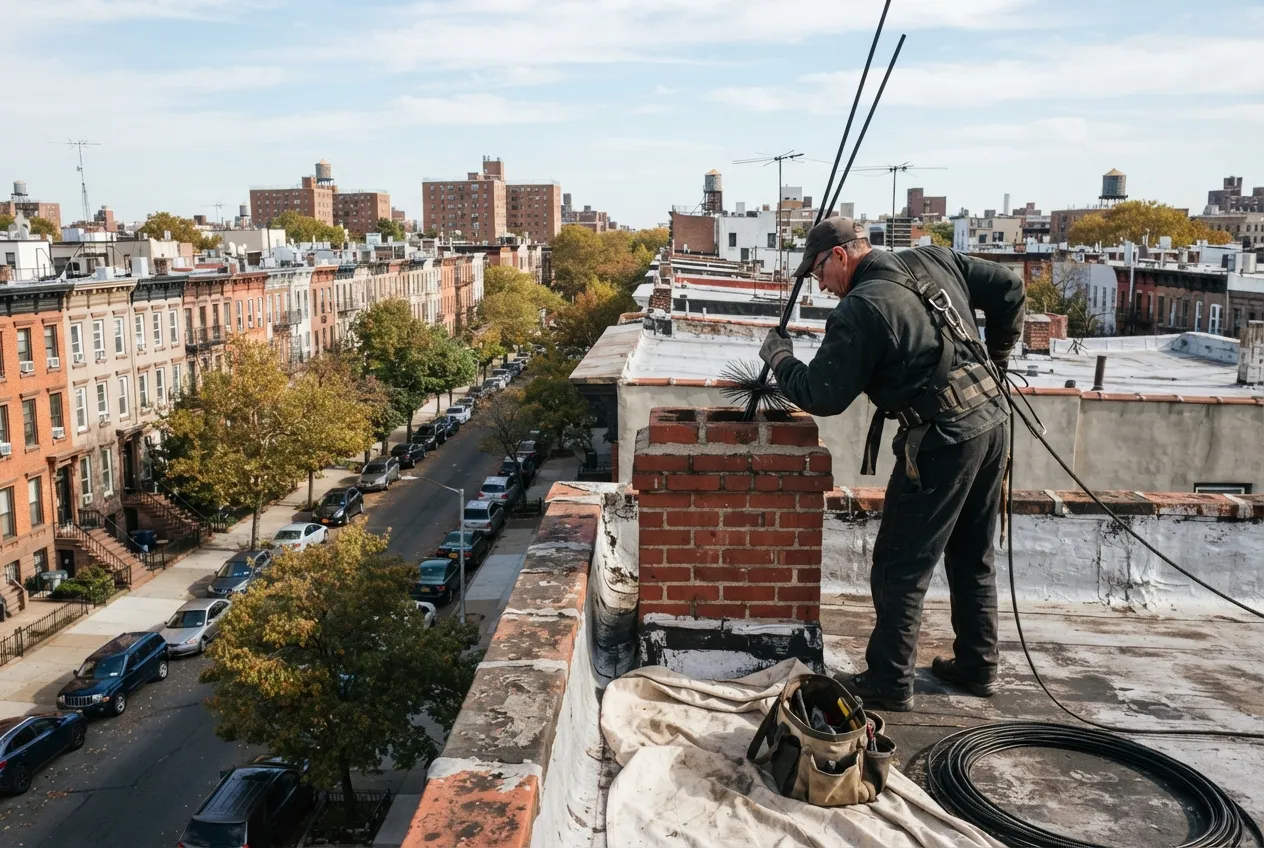
Many Brooklyn dryer vents end on the roof rather than a side wall. When that is the case, a technician goes up to clean the roof cap, remove any screen that traps lint, and clear bird or rodent nesting. We check that the cap is secure and that lint is not building up on the roof surface around it. We only go up when the roof can be reached safely, and we will tell you in advance if access needs to be arranged with a neighbor or building manager.
Time for your annual chimney check?
Why dryer vent cleaning matters
Lint is lightweight and burns easily, and a dryer produces both heat and a steady supply of it. According to the U.S. Fire Administration, failure to clean is the leading factor contributing to clothes dryer fires in homes. Emptying the lint trap after every load helps, but it does not reach the lint that settles further down the duct.
A clear vent also lets the dryer do its job with less strain. When moist air leaves the house quickly, loads dry in fewer minutes and humidity stays out of your laundry room and walls. If you have a gas dryer, a blocked vent can also keep combustion exhaust from leaving the home properly, which is another reason to keep the run open. Households that run frequent loads, have long or winding vent routes, or vent to the roof generally benefit from more frequent cleaning.
What affects the price
Every vent is different, so we quote after we understand your setup. The main factors are:
- Length of the vent run and the number of bends
- Where the vent ends: a ground-level wall, an upper floor, or the roof
- Roof height and how easily and safely the roof can be reached
- Fuel type, gas or electric, and the condition of the connection
- Duct size, material, and condition, including crushed or plastic sections
- How much lint has built up and whether nests or animals are present
- Whether a camera inspection is needed to trace a hidden route
- Whether repairs or replacement sections are needed after cleaning
How a visit works
When you contact us, we ask where your dryer is, roughly where the vent exits, and whether you have noticed any of the warning signs. That helps us bring the right equipment and estimate how long the work will take.
On the day of the visit, please clear a path to the laundry area and, if you can, empty the dryer. Our technician will walk through the route with you, protect the work area, and then clean the vent from the dryer to the exterior. Most homes do not need to leave or shut off anything other than the dryer itself.
Before we finish, we run the dryer to confirm strong airflow at the exterior, clean up the work area, and go over what we found. If repairs are recommended, we explain why and let you decide on next steps.