The short answer
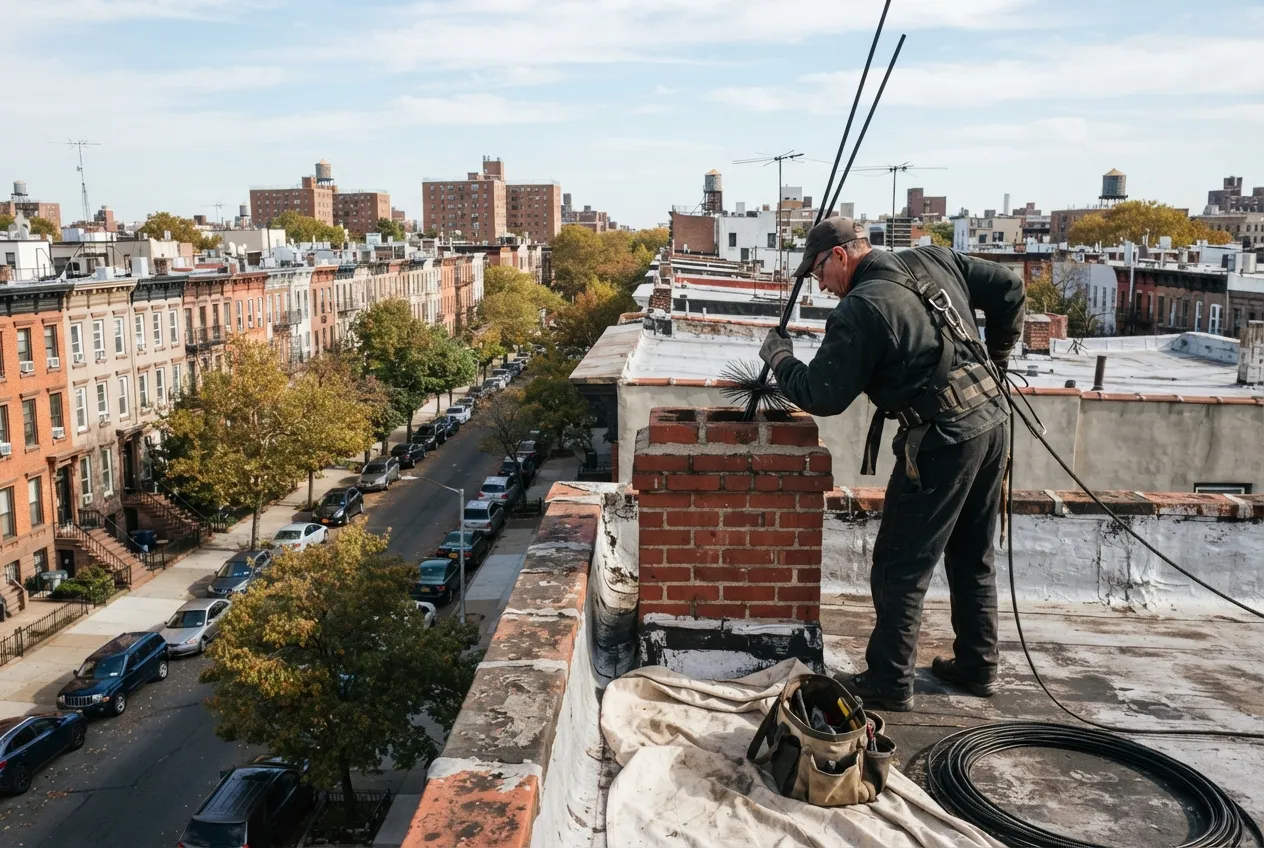
A chimney sweep in Fort Greene removes creosote, soot and debris from your flue, and we pair it with the yearly inspection that the NFPA 211 standard calls for. Our certified technicians work on brownstone fireplaces, rowhouse flues and boiler chimneys in pre-war buildings throughout ZIP code 11205 and nearby neighborhoods.
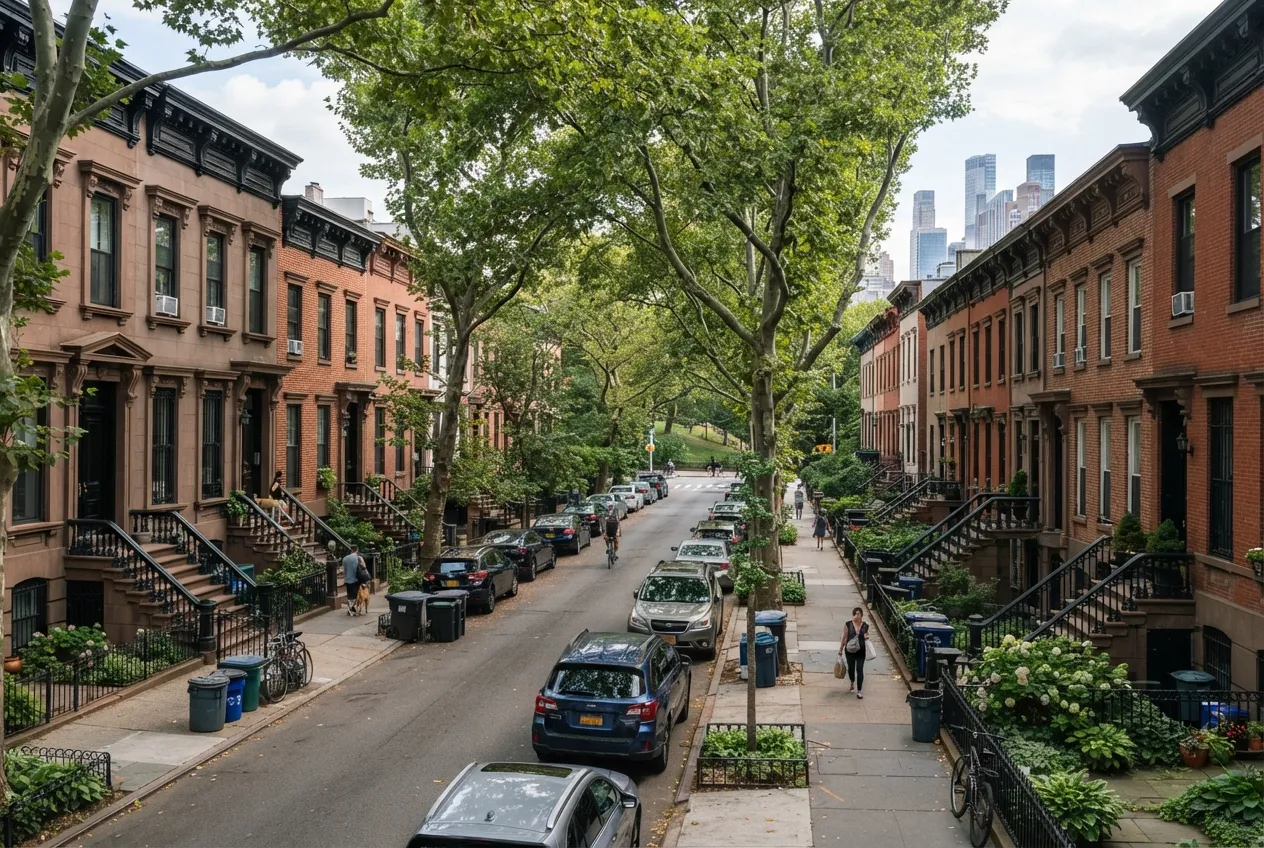
Fort Greene's brownstones, rowhouses and pre-war apartment buildings are full of working fireplaces, old masonry flues and boiler chimneys that have served several generations of heating systems. SummitHearth Chimney Services sends certified technicians to Fort Greene from our Brooklyn office, about a mile to the west, to sweep and inspect those chimneys. You might burn wood on winter weekends, rely on a gas boiler all heat season, or have just bought a house with a fireplace you're unsure about. In each case, a sweep shows you what's inside the flue and whether it's safe to use.
What a Chimney Sweep Involves in a Fort Greene Home
A sweep removes creosote, soot and debris from the flue, smoke chamber and firebox. Creosote is the tar-like residue that wood smoke leaves behind, and it can catch fire. It can build up quickly in older Brooklyn masonry chimneys, especially when fires burn cool or the flue is oversized for the fireplace.
Before we start, we cover floors and furniture. Brushes and vacuums keep soot out of the room while we clean, and we look over the whole system as we work.
- We clean and check the firebox, damper and smoke chamber.
- We brush the flue from the bottom, the top or both, depending on roof and interior access.
- We note how much creosote is in the flue so you know how fast it's building up.
- We point out cracks, missing mortar, loose bricks or liner damage that we can see.
- We check the chimney cap and crown for blockages, nests and water getting in.
- You get notes and photos showing what we found.
Brownstones, Rowhouses and Shared Chimney Stacks
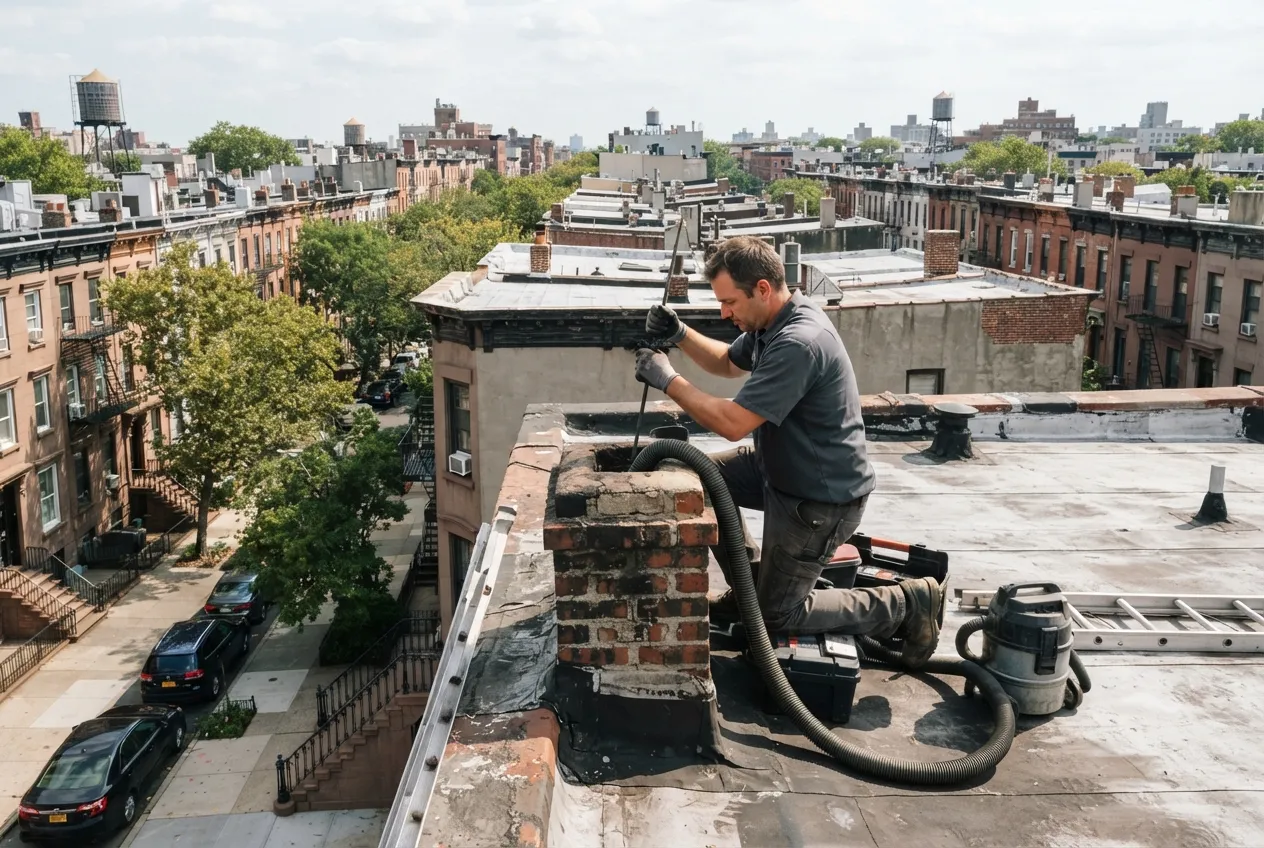
Many Fort Greene rowhouses were built with fireplaces stacked floor over floor. Each fireplace has its own flue, and those flues run up a shared chimney mass. Over the decades, some were sealed off, some were converted to gas logs, and some still burn wood. We check each flue you use and tell you which ones are lined, which are open to bare masonry, and which shouldn't be used until they're repaired.
In pre-war apartment buildings and multi-family homes, the main chimney often serves the boiler. New York City's heat season runs from October 1 through May 31, and building owners must keep apartments heated to the city's minimums during that time. That means the boiler flue needs to vent properly for eight months of the year. Early fall is a good time to have it cleaned and checked before the heat comes on.
Why We Sweep and Inspect on the Same Visit
The NFPA 211 standard calls for chimneys, fireplaces and vents to be inspected once a year. A clean flue lets us see the masonry and liner clearly, so we usually do both jobs on the same visit. Chimney professionals use three inspection levels:
Most Fort Greene homeowners need a Level 1 each year. If you're buying a brownstone or rowhouse, plan on a Level 2, because a house that's changing hands often has flues the seller hasn't used in years.
- Level 1 is for a chimney in regular use when nothing about the system has changed.
- Level 2 is for when you add a new appliance, switch fuels, or buy or sell the home.
- Level 3 is for when a suspected hidden hazard can only be reached by opening part of the chimney or building.
Time for your annual chimney check?
Oil-to-Gas Conversions and Older Flues
Many Brooklyn buildings have switched their boilers from oil to gas. When a New York City building makes that change, the chimney has to be evaluated as part of the work, and a new liner is often needed. Gas exhaust produces acidic condensate that can corrode a masonry flue, even one that held up fine under oil.
Your building may have converted without anyone looking at the chimney since, or you may be planning a conversion now. Either way, we can sweep out old oil soot and inspect the flue so you and your heating contractor know what you're working with.
Signs Your Chimney Needs a Sweep Now
A yearly visit is the baseline, but don't wait if you notice any of these:
- Smoke drifts into the room when you light a fire.
- A strong, sooty smell comes from the fireplace, especially in humid summer weather.
- Black flakes or crumbly deposits fall into the firebox.
- Fires are slow to draw or hard to keep going.
- You hear scratching or chirping inside the chimney.
- Water stains appear on the wall or ceiling near the chimney breast.
- A fireplace hasn't been used in years and you'd like to start using it.
Serving Fort Greene and Nearby Brooklyn Neighborhoods
We sweep chimneys throughout Fort Greene and ZIP code 11205. Because our office is close by, we also serve Clinton Hill, Downtown Brooklyn, DUMBO, Boerum Hill and Prospect Heights, where many homes have the same kinds of masonry chimneys and boiler flues.
More services in Fort Greene
- Chimney Inspection in Fort Greene
- Chimney Repair in Fort Greene
- Air Duct Cleaning in Fort Greene
- Chimney Liner Installation in Fort Greene