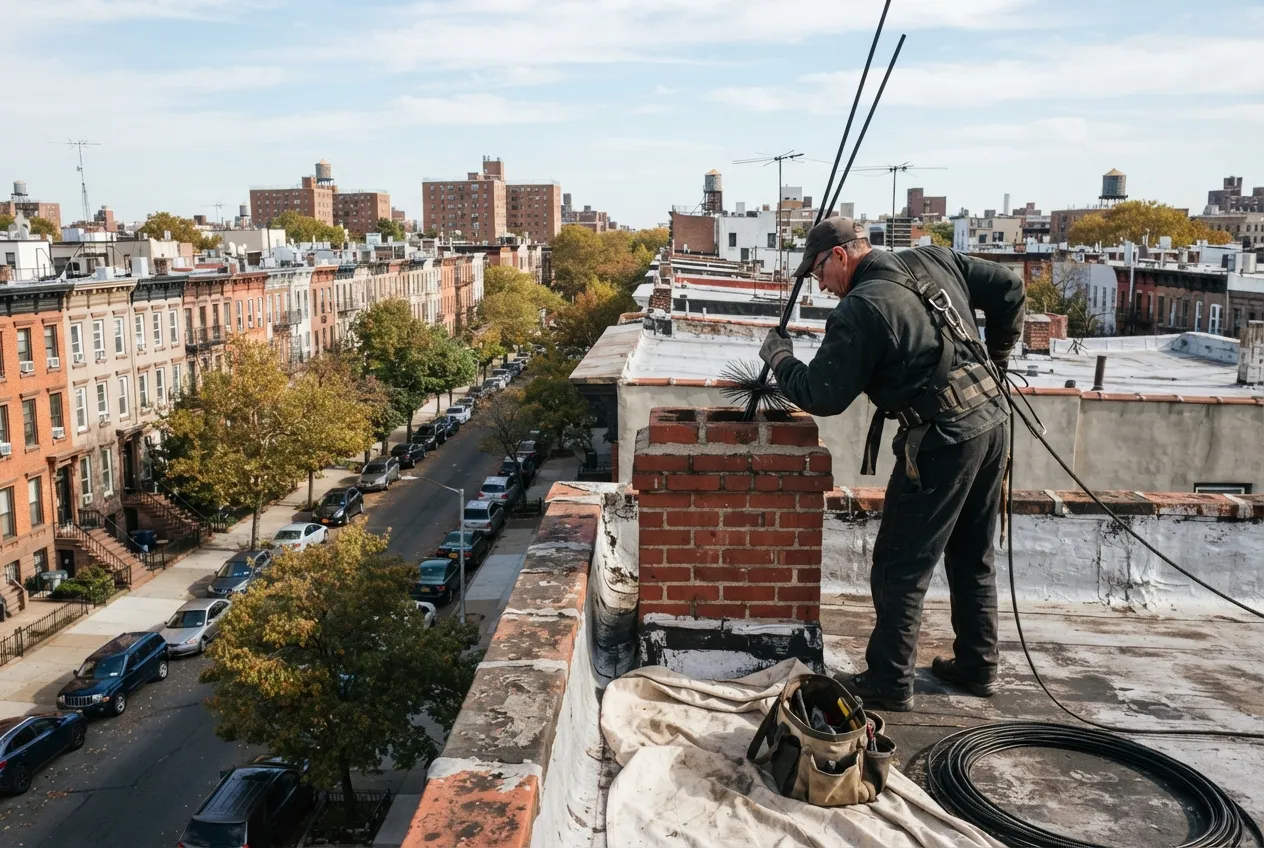
The short answer
A chimney liner is a sleeve inside the flue that contains heat and exhaust and protects the masonry around it. Fort Greene's older brownstones and rowhouses often have unlined, cracked or undersized flues, especially after a boiler is converted from oil to gas. A new liner, matched to your appliance and checked during an inspection, fixes the problem.
Many Fort Greene homes were built long before modern furnaces, boilers and water heaters existed. Their chimneys were designed for coal or wood, and many flues now carry exhaust they were never built to handle. A properly sized liner protects the masonry, helps the appliance vent safely, and keeps combustion gases out of your living space. SummitHearth Chimney Services is about a mile from Fort Greene, so our certified technicians can easily reach brownstones, rowhouses and pre-war apartment buildings throughout ZIP code 11205. This page explains how liner installation works in this neighborhood and what to expect.
Why Older Fort Greene Chimneys Often Need New Liners
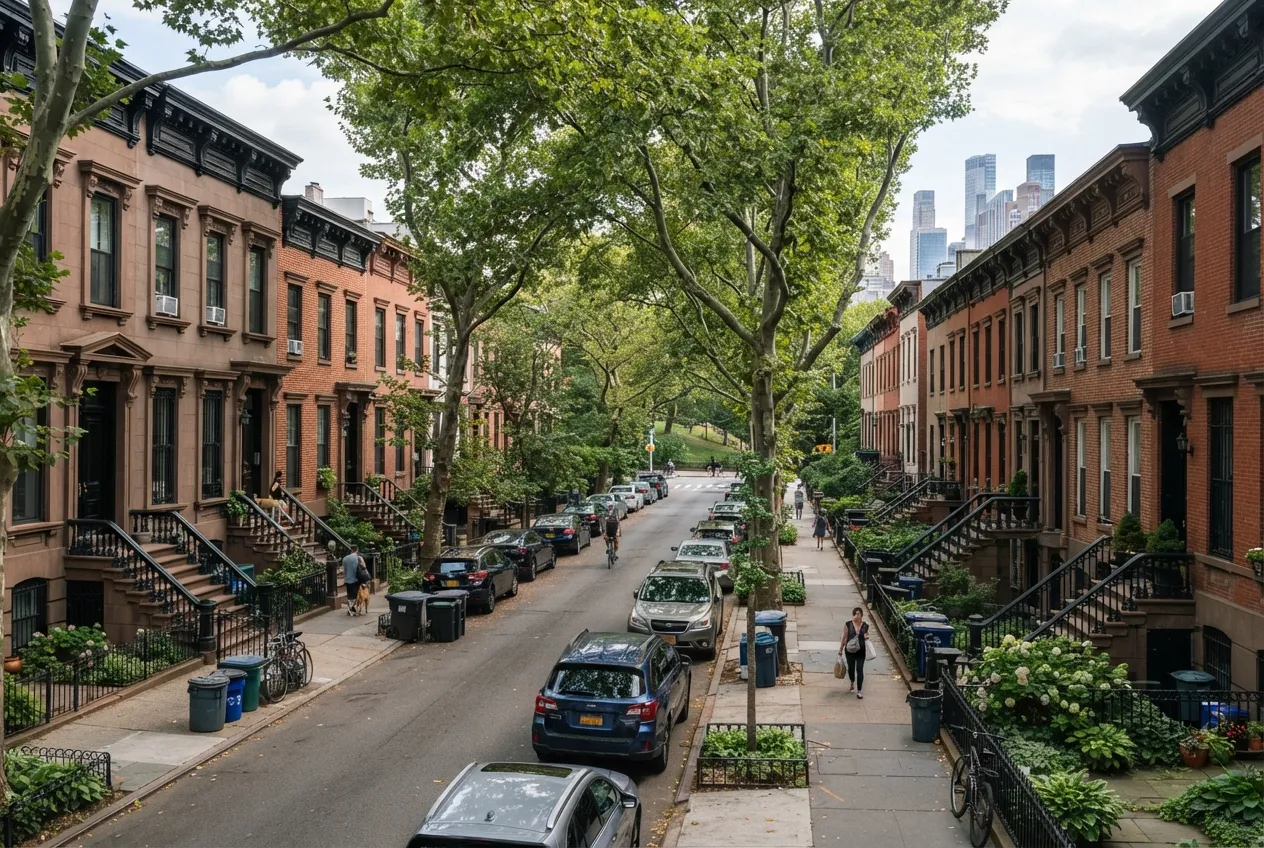
Much of Fort Greene's housing is brownstones, brick rowhouses and pre-war apartment buildings. Their chimneys typically have either no liner at all or original clay tiles that have cracked, shifted or lost mortar at the joints over many decades. Exhaust can leak through those gaps into the brick, into neighboring flues in shared chimney stacks, or into the house.
Fuel changes are a common trigger. When a New York City building converts its boiler from oil to gas, the chimney has to be evaluated as part of the work. A new liner is often needed because gas exhaust produces acidic condensate that can corrode a masonry flue. Moisture stains on interior walls, crumbling brick on the chimney exterior, and debris falling into the boiler's base are all signs that this damage has started.
Choosing the Right Liner for Your Home
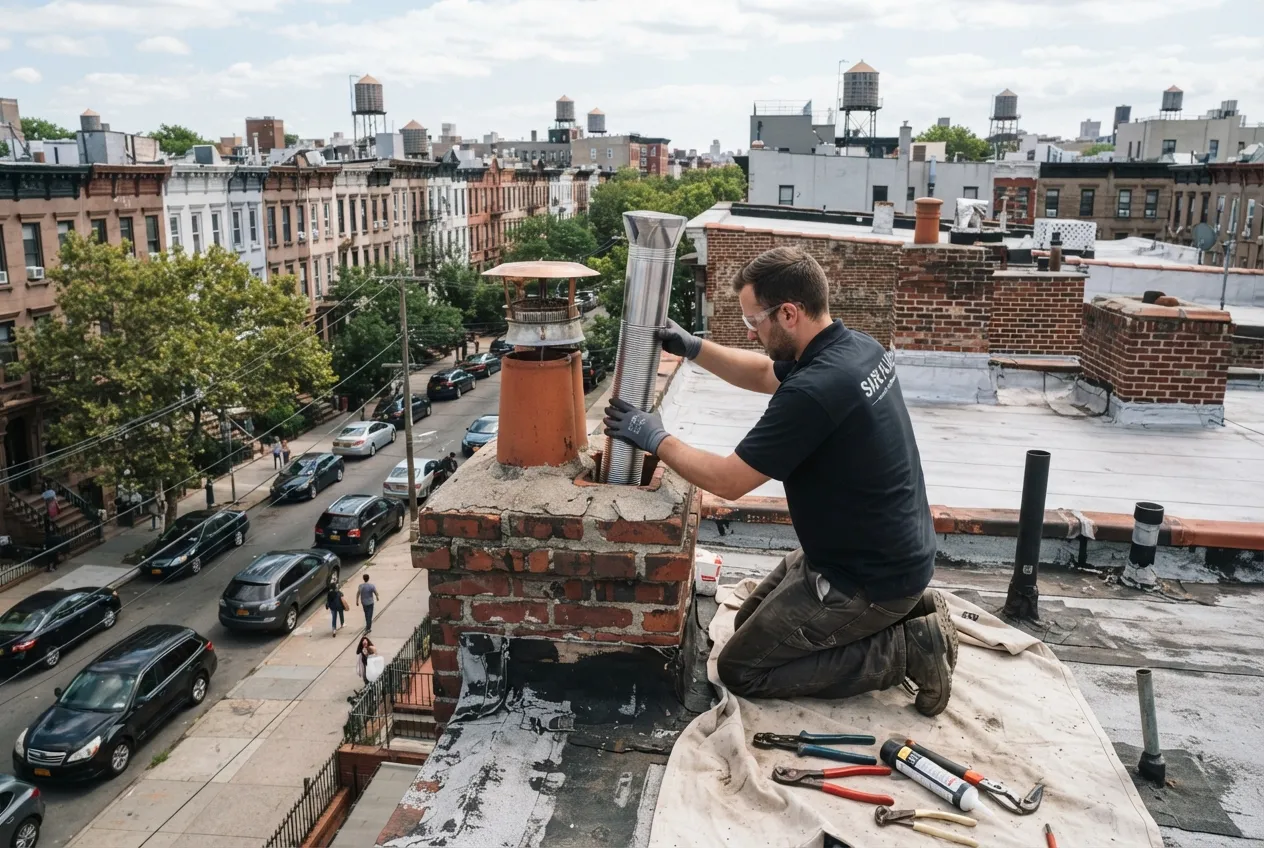
Your liner has to match the appliance it serves, not just fit the chimney. The size of the flue affects draft. A liner that is too large can let exhaust cool and condense, and one that is too small can restrict venting. We look at the appliance's venting requirements, the height and shape of the chimney, and whether the flue has bends before recommending a material.
- Stainless steel liners: the most common choice for gas and oil boilers, furnaces and water heaters, and an option for many wood-burning fireplaces. They come in rigid or flexible forms and can follow offsets inside older chimneys.
- Cast-in-place liners: a mortar-based material poured or formed inside the existing flue. This can strengthen deteriorated masonry in some older chimneys.
- Clay tile liners: the traditional option, usually practical only when a chimney is being rebuilt or extensively opened up.
How Liner Installation Works
Every job starts with an inspection. The NFPA 211 standard describes three inspection levels. A Level 2 inspection is called for when the system changes, such as a new appliance or a switch of fuel, which is why it usually comes before a liner installation. A Level 3 inspection is needed only if a hidden problem can't be reached without opening part of the chimney or building.
- Inspect the flue, often with a camera, and document its condition
- Measure the flue and confirm the correct liner size for the appliance
- Clean the flue and clear any obstructions or loose debris
- Install the liner from the top of the chimney, with insulation where it's needed
- Connect the liner to the appliance and fit a cap at the top
- Check that the appliance drafts properly once the work is finished
Time for your annual chimney check?
Planning Around Heat Season
New York City's heat season runs from October 1 through May 31. During those months, building owners must keep apartments heated to the city's minimum temperatures. If you own a multi-unit brownstone or a small apartment building in Fort Greene, a boiler that has to be shut down for chimney work affects your tenants as well as you.
If possible, schedule liner work and oil-to-gas conversions in late spring or summer. If a problem appears in the middle of winter, we will explain what has to happen and how to keep the downtime short. If an inspection finds a venting hazard, the safe choice is to keep the appliance off until the flue is fixed.
Signs Your Chimney May Need a Liner
Some warning signs are easy to spot from inside the home. Others only show up during an inspection. Call us to take a look if you notice any of the following:
- Your boiler or furnace was recently converted from oil to gas, or replaced with a new unit
- Brown or white staining on walls next to the chimney
- Pieces of tile or brick collecting at the base of the flue
- A carbon monoxide alarm going off, or exhaust odors inside
- Water heaters or boilers that have trouble drafting, or soot around the vent connector
More services in Fort Greene
- Chimney Sweep in Fort Greene
- Chimney Inspection in Fort Greene
- Chimney Repair in Fort Greene
- Air Duct Cleaning in Fort Greene