The short answer
SummitHearth repairs chimneys in Fort Greene's brownstones, rowhouses and pre-war buildings, from repointing and crown repair to new flue liners. We start with an inspection, explain what is failing and why, and plan the work around your heating needs.
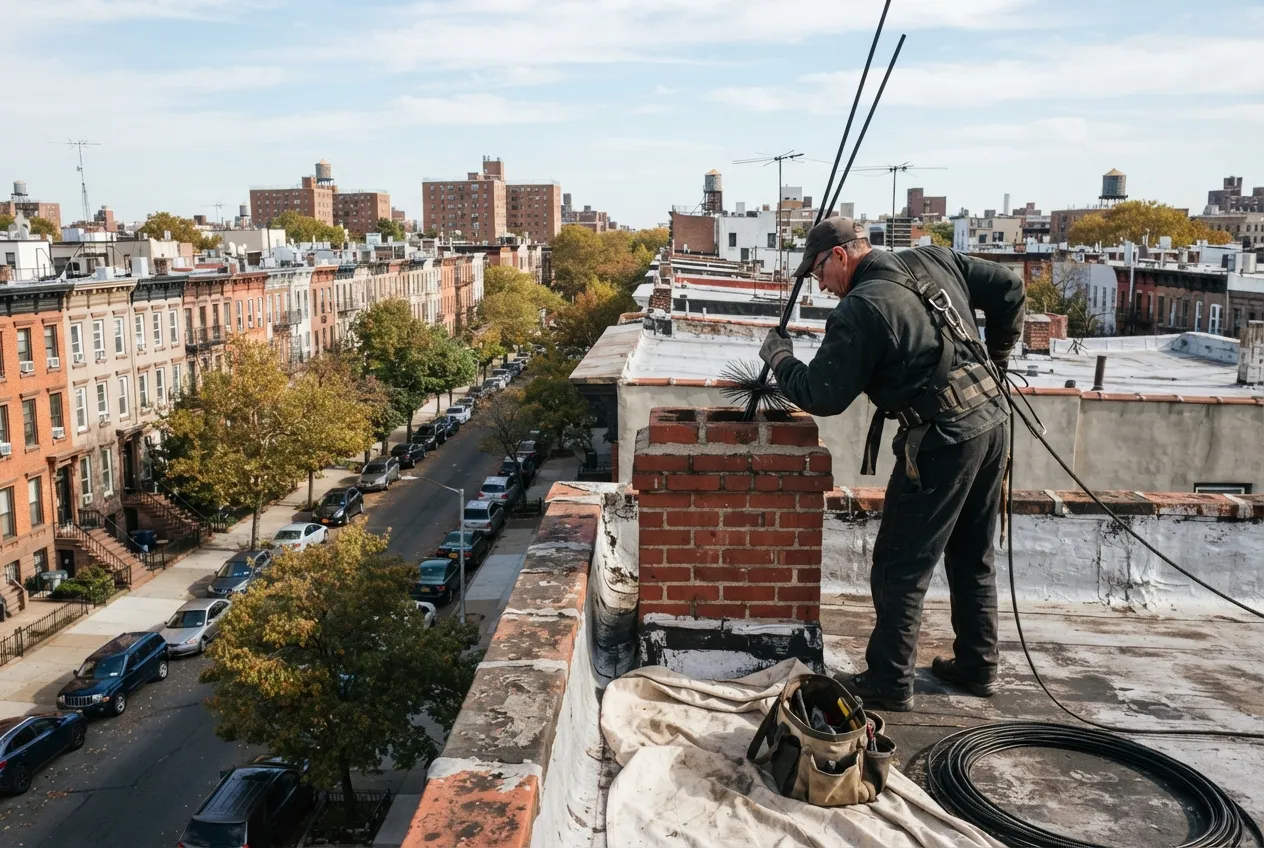
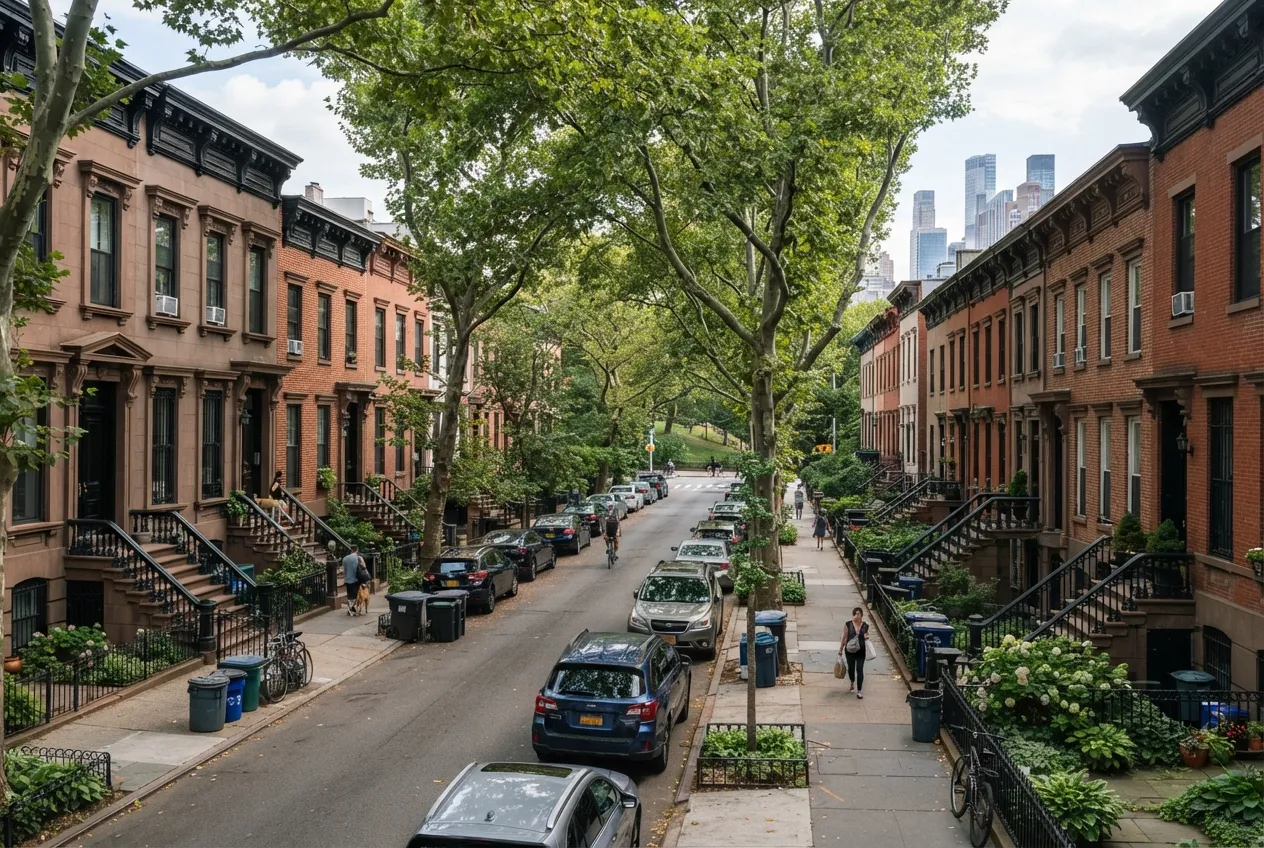
Most homes in Fort Greene were built when coal and wood heated every room, and many still have their original brick chimneys. Brownstones, brick rowhouses and pre-war apartment buildings all have chimneys that have spent decades taking rain, wind and New York winters. SummitHearth Chimney Services repairs chimneys throughout Fort Greene and the 11205 ZIP code, about a mile east of our Brooklyn office. Our certified technicians find what is actually failing, explain it in plain terms, and fix it so your chimney vents safely and keeps water out of your home.
Chimney Problems in Fort Greene's Older Homes
An old masonry chimney rarely fails all at once. Water gets into a small crack, freezes, expands and pushes the gap wider. Over a few seasons, that becomes loose bricks, crumbling mortar or a leak that shows up as a stain on a top-floor ceiling or on the wall beside a fireplace. Many Fort Greene chimneys sit on flat or low-slope roofs, so this damage often can't be seen from the street.
Repairs we handle on rowhouses, brownstones and apartment buildings include:
- Repointing: removing failed mortar joints and replacing them with mortar suited to older brick
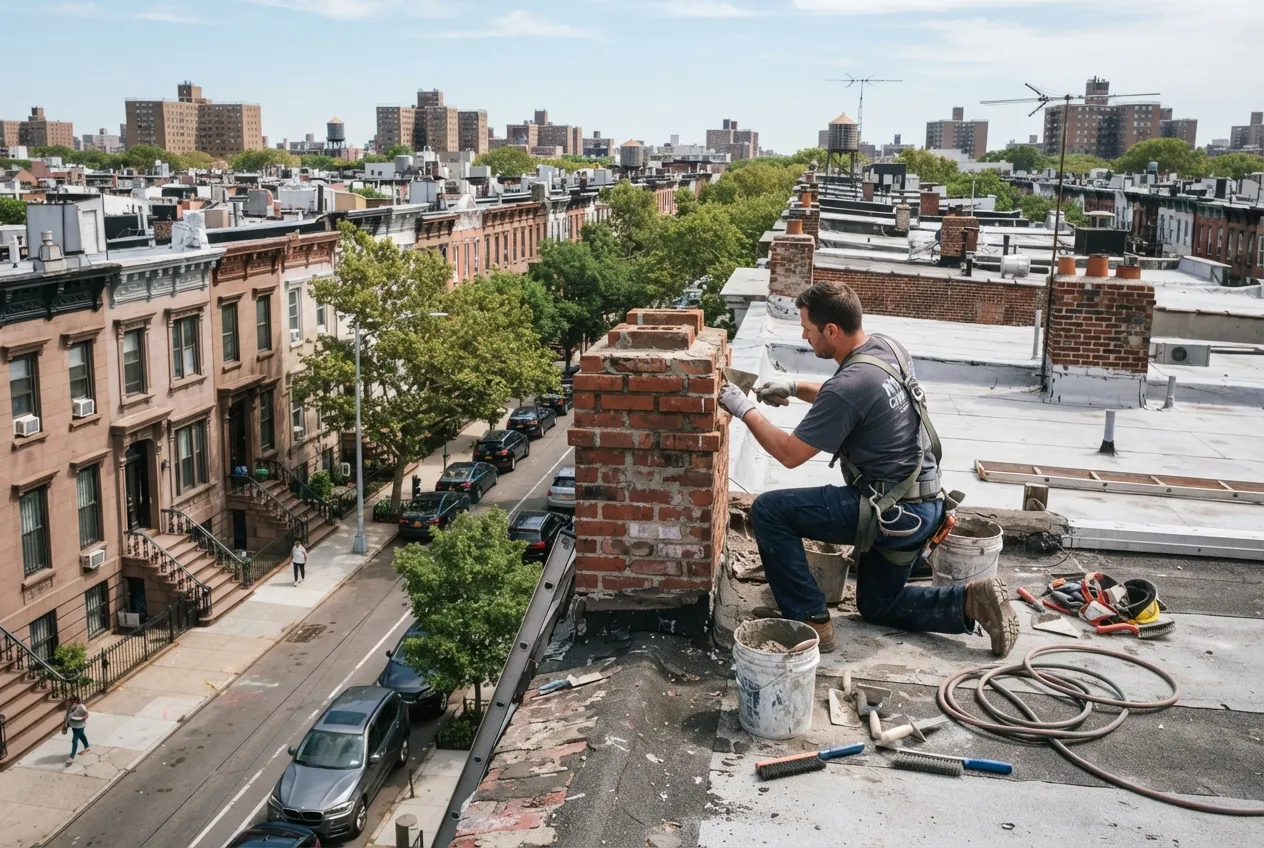
- Rebuilding the top of a chimney when bricks are loose, cracked or spalling
- Repairing or replacing a cracked chimney crown so water runs off instead of soaking in
- Installing or replacing chimney caps to keep out rain, birds and debris
- Resealing or replacing flashing where the chimney meets the roof
- Relining flues that have cracked or missing clay tiles
- Repairing damaged dampers and smoke chambers in working fireplaces
Flue Liners and Oil-to-Gas Conversions
Many Fort Greene buildings have switched from oil heat to gas, or plan to. When a New York City building converts its boiler from oil to gas, the chimney has to be evaluated as part of the work. A new liner is often needed because gas exhaust produces acidic condensate that can corrode a masonry flue from the inside.
That corrosion is easy to miss. The outside of the chimney may look fine while the flue tiles crack and the mortar between them washes out. We inspect the flue and check whether the existing liner can safely serve the new appliance. If it can't, we install a properly sized liner so exhaust leaves the building the way it should. If you are replacing a boiler or water heater, have the chimney checked before the new equipment goes in, not after.
How a Chimney Repair Visit Works
The NFPA 211 standard calls for chimneys, fireplaces and vents to be inspected once a year, and chimney professionals use three inspection levels. Level 1 is for a system where nothing has changed. Level 2 applies when the system changes, such as a new appliance or a switch of fuel, or when the home is sold. Level 3 is used when a hidden hazard can only be reached by opening part of the chimney or building. We will tell you which level fits your situation and why.
- We inspect the chimney from the roof and from inside the home, including a camera check of the flue when needed
- We explain what we found, show you photos, and separate urgent repairs from ones that can wait
- We schedule the work, protect your floors and furnishings, and clean up when we're done
- After the repair, we walk you through what was done and what to watch for
Time for your annual chimney check?
Planning Repairs Around Heat Season
New York City's heat season runs from October 1 through May 31. During that time, building owners must keep apartments heated to the city's minimum temperatures. If you own a multi-unit rowhouse or apartment building, you can't simply take the boiler chimney out of service for several days in January. Repairs need to be planned.
Late spring and summer are the easiest times for liner work and major masonry repairs. The heating system can be shut down, and mortar cures more reliably in warm weather. If a problem turns up in midwinter, we will talk through what can be done safely now and what should wait until the weather allows. Some masonry work can be done in cold weather under the right conditions, but we won't rush work that needs time to set.
Serving Fort Greene and Nearby Neighborhoods
Fort Greene's attached houses often share chimney stacks or sit wall to wall with their neighbors, so a repair to one flue can involve shared masonry. Before we recommend any work, we look at how your chimney is built and connected. If a problem seems to start on the other side of a party wall, we will tell you.
We are about a mile away, which makes it easy to come by for inspections, follow-up visits and leak checks after heavy rain. We also repair chimneys in Clinton Hill, Downtown Brooklyn, DUMBO, Boerum Hill and Prospect Heights.
More services in Fort Greene
- Chimney Sweep in Fort Greene
- Chimney Inspection in Fort Greene
- Air Duct Cleaning in Fort Greene
- Chimney Liner Installation in Fort Greene