The short answer
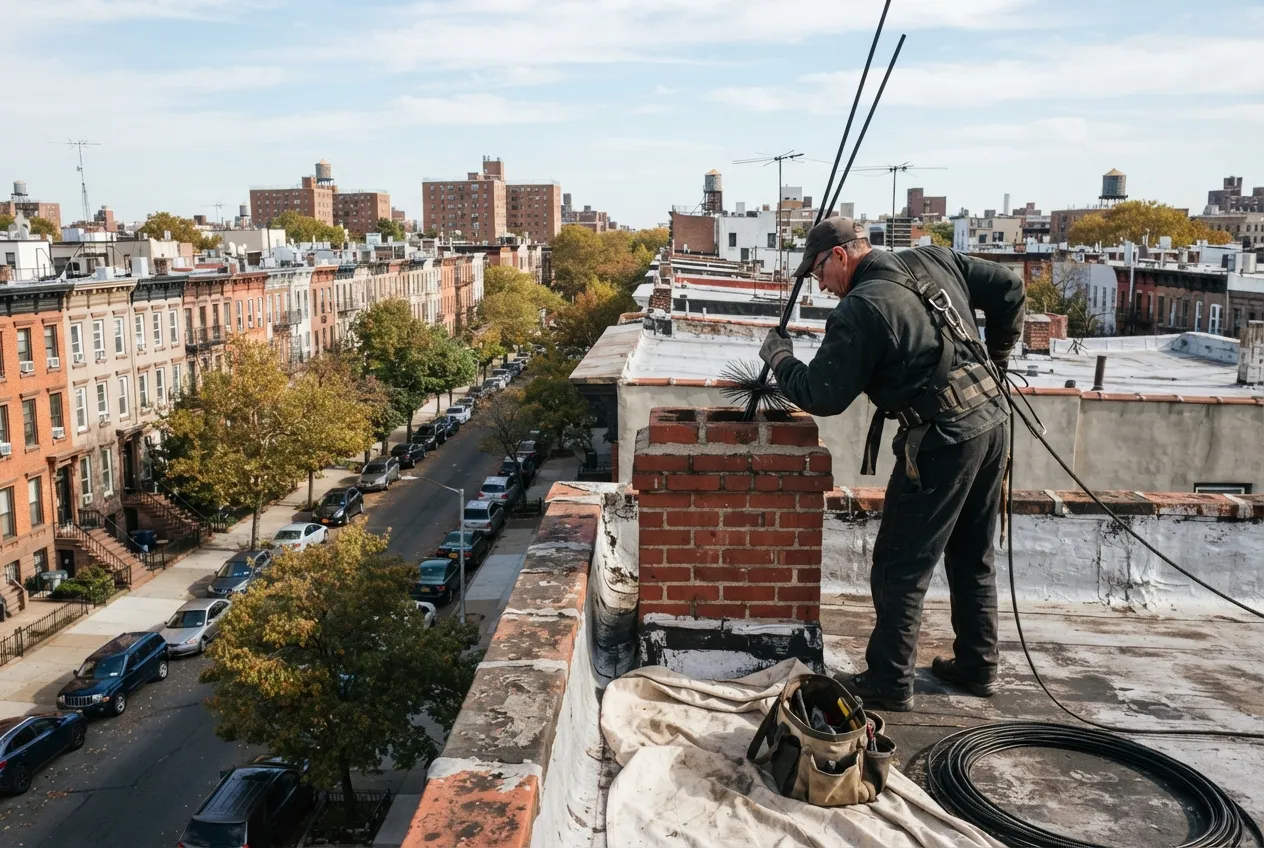
A chimney sweep clears soot, creosote and debris from your flue and checks that the chimney can vent safely. In Downtown Brooklyn, SummitHearth sweeps fireplace and boiler chimneys in brownstones, rowhouses and pre-war buildings. The best time to schedule is before heat season starts on October 1.
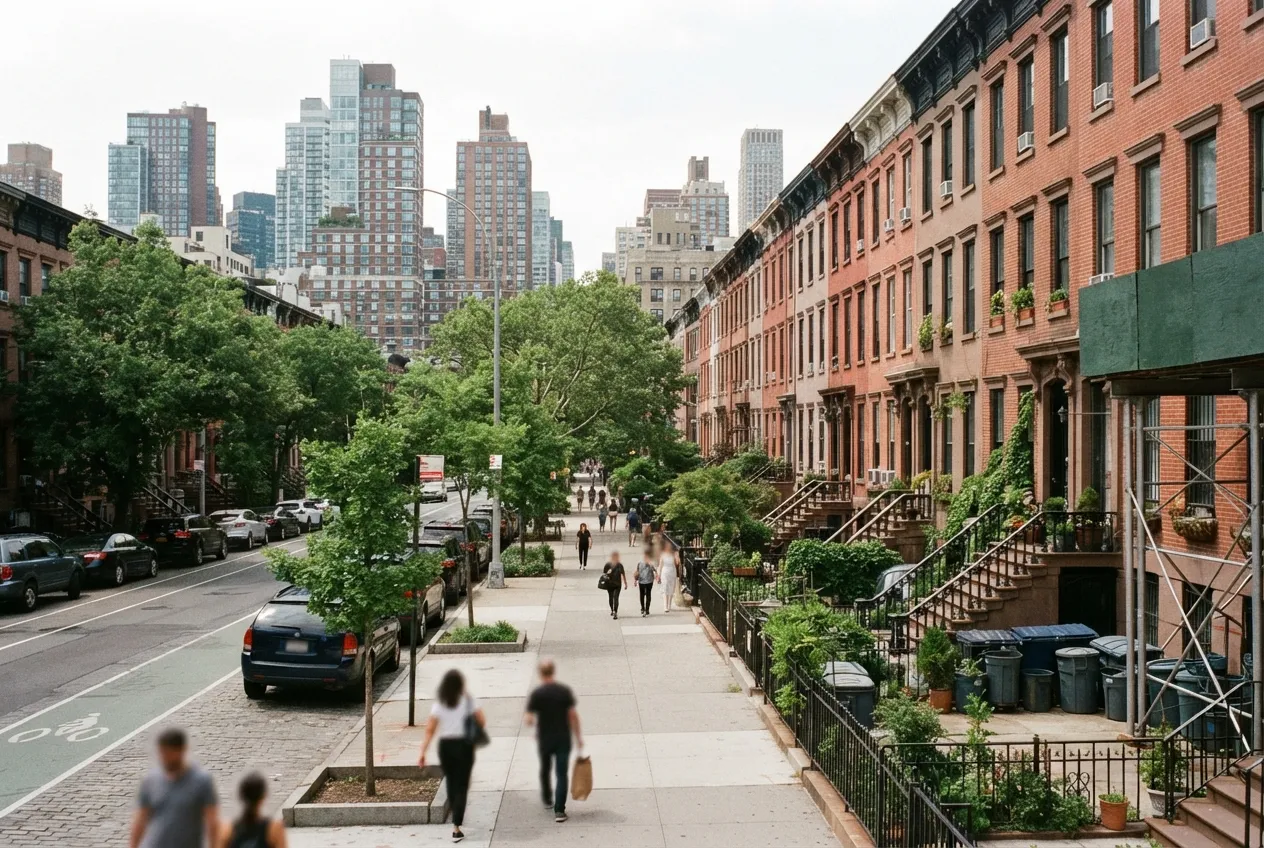
Downtown Brooklyn mixes older brownstones and rowhouses with pre-war apartment buildings and newer towers, and the chimneys inside them vary just as much. Some carry wood smoke from a parlor fireplace, some vent a gas boiler or water heater, and some haven't been used in decades. A chimney sweep removes the soot, creosote and debris that build up in those flues and checks that the chimney can still carry exhaust safely out of your home. Our office is at 451 Fulton St, so we regularly work in this neighborhood and the ones around it.
What a Chimney Sweep Includes
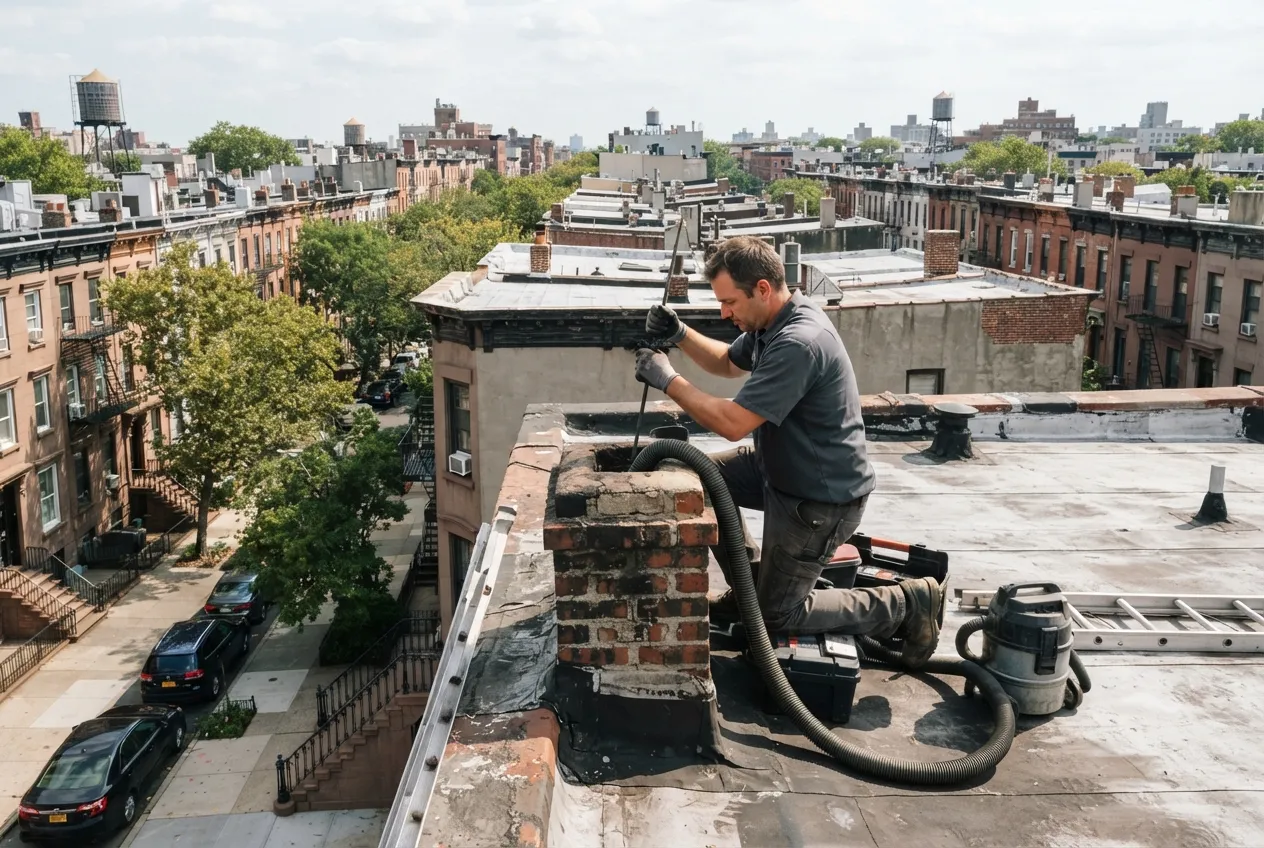
A sweep starts with a look at the fireplace or appliance connection and the visible parts of the flue. Our certified technicians cover the floor and furniture around the opening. Then they use brushes and vacuum equipment sized to your flue to clear out what has collected inside. When the sweep is done, we tell you what we found and whether anything needs a closer look.
- Removing soot and creosote from the firebox, smoke chamber and flue liner
- Clearing nests, leaves and fallen mortar that can block the flue
- Checking that the damper opens, closes and seals
- Looking for cracked flue tiles, gaps in the liner and worn mortar joints
- Noting the condition of the chimney cap and crown where they can be reached safely
Chimneys in Brownstones, Rowhouses and Pre-War Buildings
Many brownstones and rowhouses in Downtown Brooklyn were built with fireplaces on more than one floor. Each fireplace has its own flue, and the flues run up the same chimney stack. Over the years, some of those fireplaces were closed off, turned decorative or reopened by a new owner. Before anyone lights a fire in an older fireplace, the flue should be swept and checked. A flue that sat unused for years can hold debris, nests or damaged tile that you can't see from the room.
In attached homes, chimneys often sit along or near shared walls. Smoke that drifts into the wrong room, or odors that show up on another floor, are worth tracking down early rather than living with.
Pre-war apartment buildings and many houses also have a chimney that vents the boiler or water heater. When a New York City building converts its boiler from oil to gas, the chimney has to be evaluated as part of the work. A new liner is often needed, because gas exhaust produces acidic condensate that can corrode a masonry flue. If your building has switched fuels, or plans to, a sweep and inspection is a sensible first step.
When to Schedule a Sweep
The NFPA 211 standard calls for chimneys, fireplaces and vents to be inspected once a year. Whether the flue also needs sweeping depends on what the inspection finds and how much the chimney is used. Homes that burn wood often tend to build up creosote faster, so a yearly visit that combines the inspection and a sweep makes sense for them.
Chimney professionals use three inspection levels. Level 1 is used when nothing has changed. Level 2 applies when the system changes, such as a new appliance or a switch of fuel, or when the home is sold. Level 3 is for a hidden hazard that can only be reached by opening part of the chimney or building.
Timing matters too. New York City's heat season runs from October 1 through May 31, when building owners must keep apartments heated to the city's minimum temperatures. If you book a sweep in late summer or early fall, the boiler flue and fireplaces get checked before the heat runs every day.
Time for your annual chimney check?
Signs Your Chimney Needs Attention
Call for a sweep before your yearly visit if you notice any of the following:
- A smoky room, or smoke that rolls back out of the fireplace
- A strong campfire or tar smell, especially on humid days
- Black, flaky or shiny deposits inside the firebox or on the damper
- Bits of tile, mortar or debris falling into the firebox
- Animal sounds or nesting material in the chimney
- Water stains or crumbling masonry around the fireplace or chimney
Serving Downtown Brooklyn and Nearby Neighborhoods
Our office is at 451 Fulton St in Downtown Brooklyn, ZIP code 11201. Besides Downtown Brooklyn, we sweep chimneys in DUMBO, Boerum Hill, Brooklyn Heights, Fort Greene and Clinton Hill. Homes in those neighborhoods, from brownstones and rowhouses to older apartment buildings, raise many of the same chimney questions. You might own a single-family rowhouse, manage a small building or plan to reopen a fireplace that hasn't been used in years. In each case, we can sweep the flue, explain what we see and help you decide on next steps.
More services in Downtown Brooklyn
- Chimney Inspection in Downtown Brooklyn
- Chimney Repair in Downtown Brooklyn
- Air Duct Cleaning in Downtown Brooklyn
- Chimney Liner Installation in Downtown Brooklyn