The short answer
The NFPA 211 standard calls for chimneys, fireplaces and vents to be inspected once a year. A more detailed Level 2 inspection is called for when you sell a home, add a new appliance or switch fuels. Our certified technicians inspect homes throughout Downtown Brooklyn from our office at 451 Fulton St and provide a written report with photos.
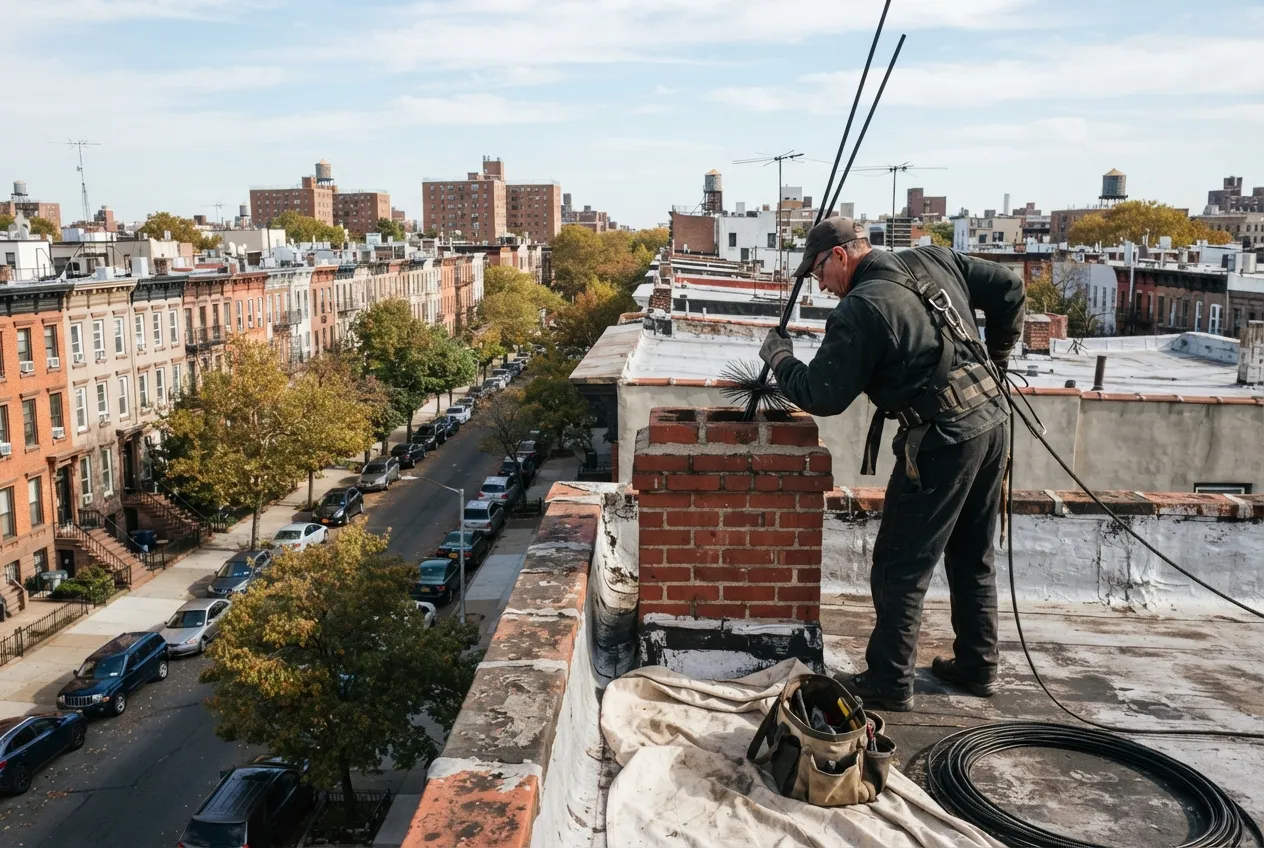
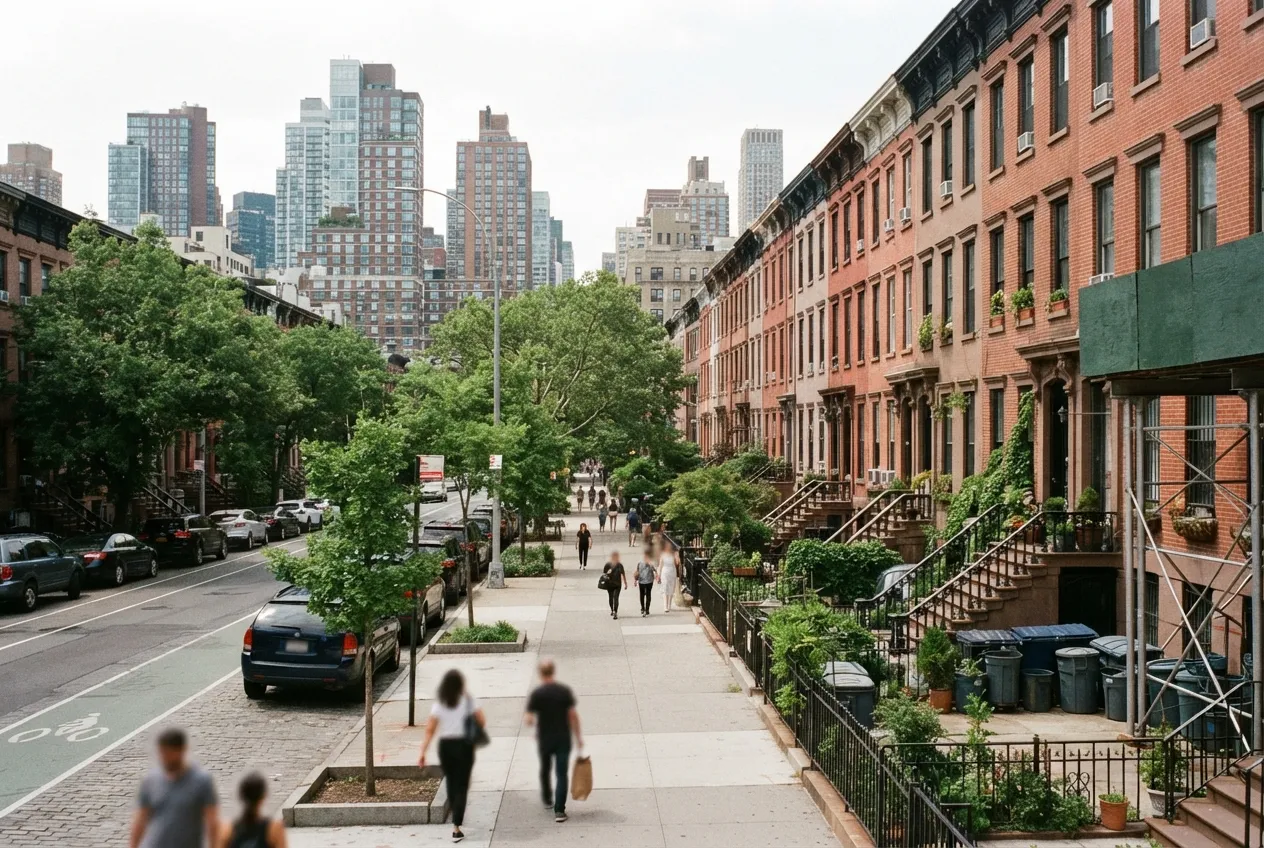
Our office is at 451 Fulton St, so Downtown Brooklyn is our home neighborhood. We inspect chimneys, fireplaces and vents in the area's brownstones, rowhouses, pre-war apartment buildings and newer condo buildings with fireplaces or gas appliances. Our certified technicians check the whole venting system and explain what they find in plain terms. You get a written report to keep for your records, share with a buyer, or hand to a contractor. If something needs attention, we tell you what it is, why it matters and how urgent it is.
Why a yearly inspection matters in Downtown Brooklyn homes
The NFPA 211 standard calls for chimneys, fireplaces and vents to be inspected once a year. That applies whether you burn wood in a parlor-floor fireplace a few times each winter or rely on a gas boiler that vents through the chimney every day. Many chimneys in this part of Brooklyn are original masonry. Age, weather and years of use wear on mortar joints, flue tiles and crowns in ways you can't see from inside the room.
Timing matters too. New York City's heat season runs from October 1 through May 31, and building owners must keep apartments heated to the city's minimum temperatures during that time. You want to find a blocked or damaged flue before the season begins, not in the middle of it. Late summer and early fall are good times to schedule, though we inspect year-round.
Level 1, 2 or 3: which inspection you need
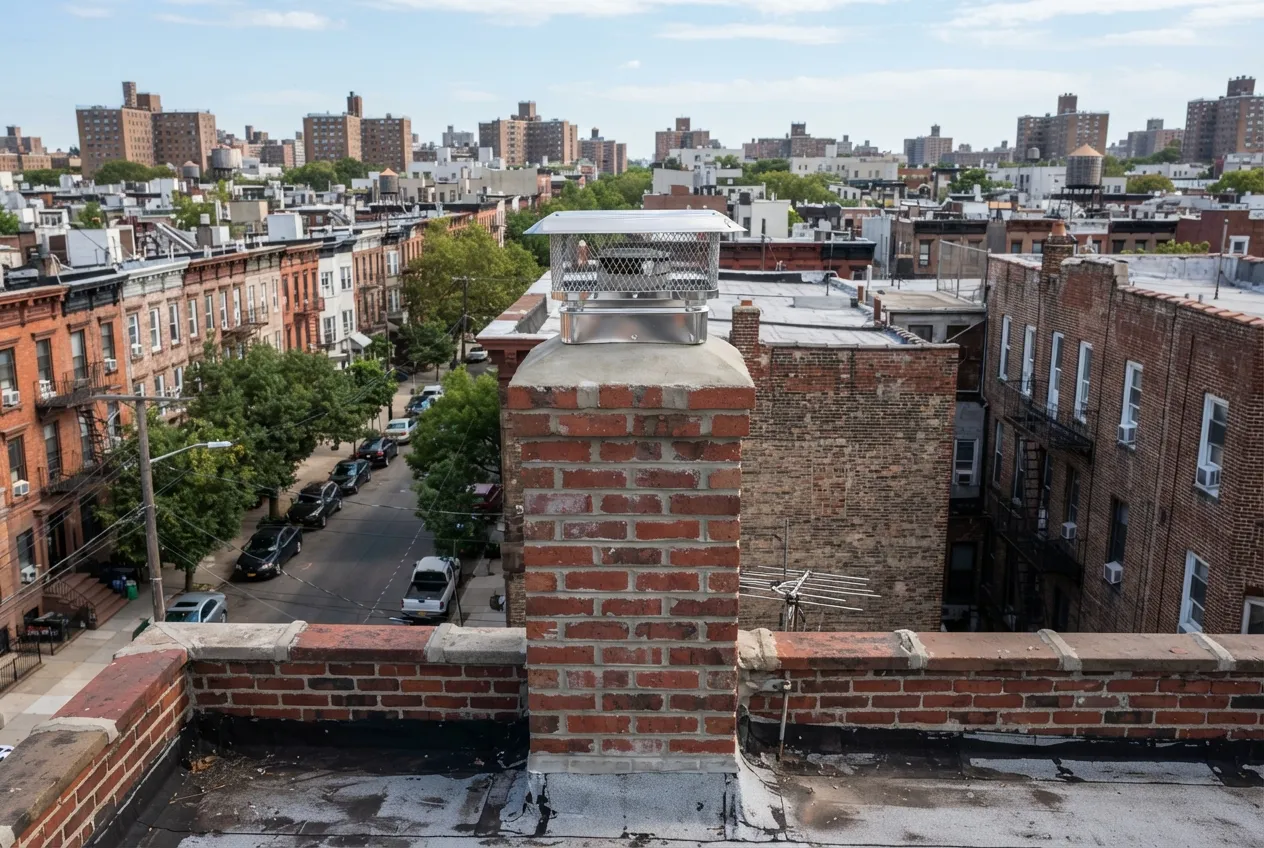
Chimney professionals use three inspection levels. We recommend one based on your situation and explain why before any work starts.
Brownstones and rowhouses in the neighborhood change hands often, and buyers and sellers commonly ask for a Level 2 inspection as part of the sale.
- Level 1: for a system that hasn't changed and is in regular use. We examine the readily accessible parts of the chimney, the fireplace or appliance connection, and the exterior.
- Level 2: for a change to the system, such as a new appliance or a switch of fuel, or when the home is sold. This adds a camera scan of the flue interior and a look at attics, basements and the roof where access allows.
- Level 3: for a hidden hazard that can only be reached by opening part of the chimney or building. We recommend it only when an earlier inspection points to a concern that can't be confirmed any other way.
Oil-to-gas conversions in older Brooklyn buildings
When a New York City building converts its boiler from oil to gas, the chimney has to be evaluated as part of the work. A new liner is often needed. Gas exhaust produces acidic condensate that can corrode a masonry flue, even one that worked fine for oil.
If you own a brownstone or a small pre-war building and plan to convert, we can inspect the chimney early. That way you and your heating contractor know what the flue needs before the new equipment goes in. We document the flue size, its condition and any existing liner, so the plan is based on what's actually there.
Time for your annual chimney check?
What we check during an inspection
Every inspection covers the full venting path, not just the fireplace opening.
You get a written report with photos. It flags anything that affects safe use and separates the repairs that can wait from the ones that shouldn't.
- Chimney crown, cap and flashing, where water often gets into older masonry
- Exterior brick and mortar joints, including spalling or loose brick
- Flue liner condition, plus cracks, gaps and blockages such as nests or debris
- Creosote buildup in wood-burning fireplaces
- Smoke chamber, damper and firebox
- Connections from boilers, furnaces and water heaters to the chimney
- Clearances between the chimney and nearby wood framing, where we can reach them
Serving Downtown Brooklyn and nearby neighborhoods
Our office is at 451 Fulton St, so homes in the 11201 ZIP code are close by and easy to schedule. We also inspect chimneys in DUMBO, Boerum Hill, Brooklyn Heights, Fort Greene and Clinton Hill. You'll find many of the same building types there: brownstones, rowhouses, converted lofts, and pre-war apartment buildings with shared or individual flues.
In larger buildings, we work with owners, managers and boards to inspect flues that serve several units or the central boiler.
More services in Downtown Brooklyn
- Chimney Sweep in Downtown Brooklyn
- Chimney Repair in Downtown Brooklyn
- Air Duct Cleaning in Downtown Brooklyn
- Chimney Liner Installation in Downtown Brooklyn