The short answer
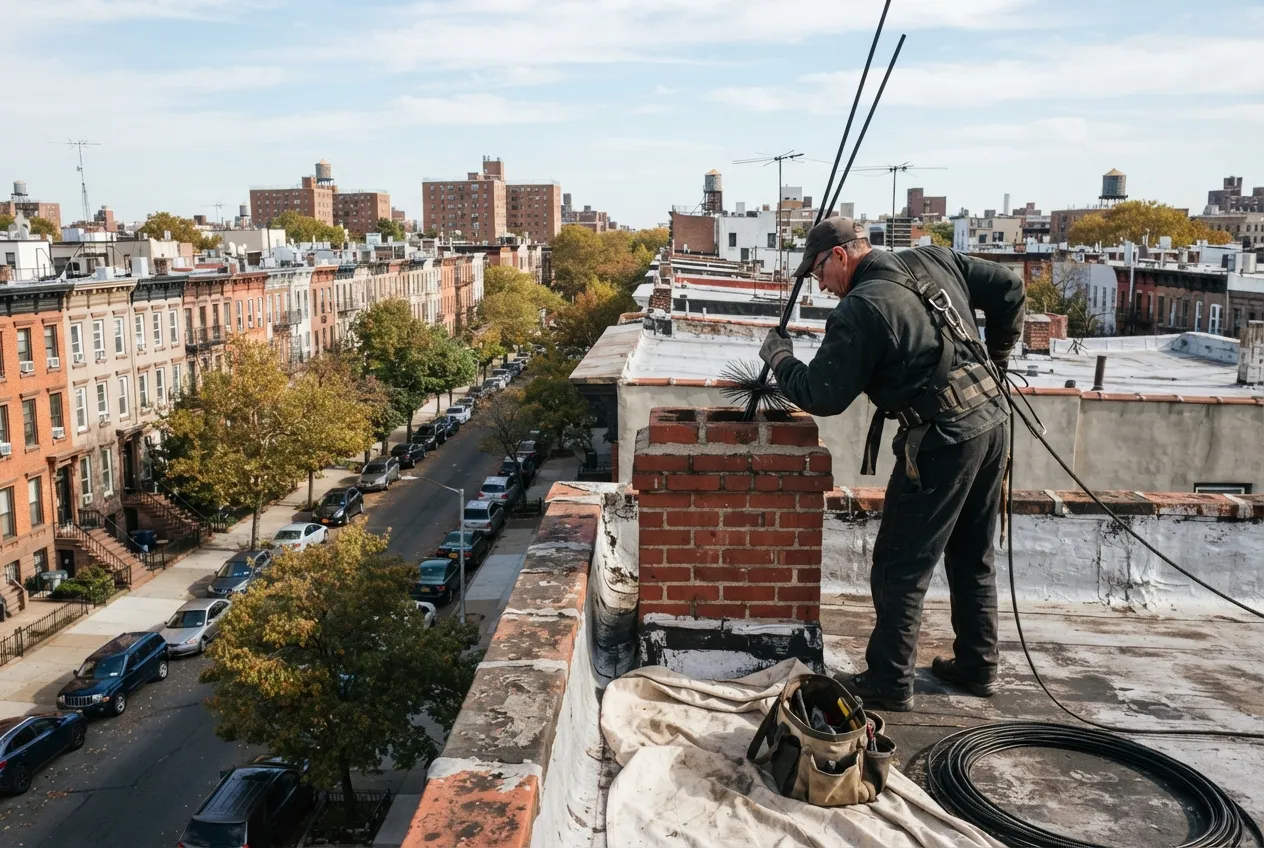
Chimney repair in Downtown Brooklyn usually means fixing water damage to aging brick: worn mortar, cracked crowns, failed flashing and damaged flue liners. SummitHearth works from our 451 Fulton St office, inspects first to find the real problem, and handles masonry repairs and relining for homes in 11201 and nearby neighborhoods.
Chimneys in Downtown Brooklyn have a hard job. Many serve brownstones, rowhouses and pre-war apartment buildings where the masonry has been through many New York winters, and some flues now vent appliances they were never built for. SummitHearth's office is at 451 Fulton St, in the neighborhood itself, so our certified technicians can reach homes in the 11201 ZIP code and nearby DUMBO, Boerum Hill, Brooklyn Heights, Fort Greene and Clinton Hill without a long trip across the borough. This page covers what chimney repair actually involves for homes here and how we approach it.
What wears out on Downtown Brooklyn chimneys
Most chimneys in the area are brick, and brick chimneys tend to fail from the top down. Water gets into cracked crowns and worn mortar joints, freezes, expands and pushes the masonry apart. Over time that shows up as loose or flaking brick on the roof, stains on interior walls next to the chimney breast, or bits of mortar and brick falling into the firebox.
Attached houses add their own complications. In a row of brownstones or rowhouses, chimney stacks often sit on or near a shared party wall, and a single stack may hold several flues serving different floors or units. Pre-war apartment buildings may have a tall masonry chimney carrying boiler exhaust for the whole building. Good repairs account for how the flues are arranged and what each one serves, not just the brick you can see from the street.
Chimney repairs we handle
We start every job by confirming what is actually wrong, then fix that. Typical repair work includes:
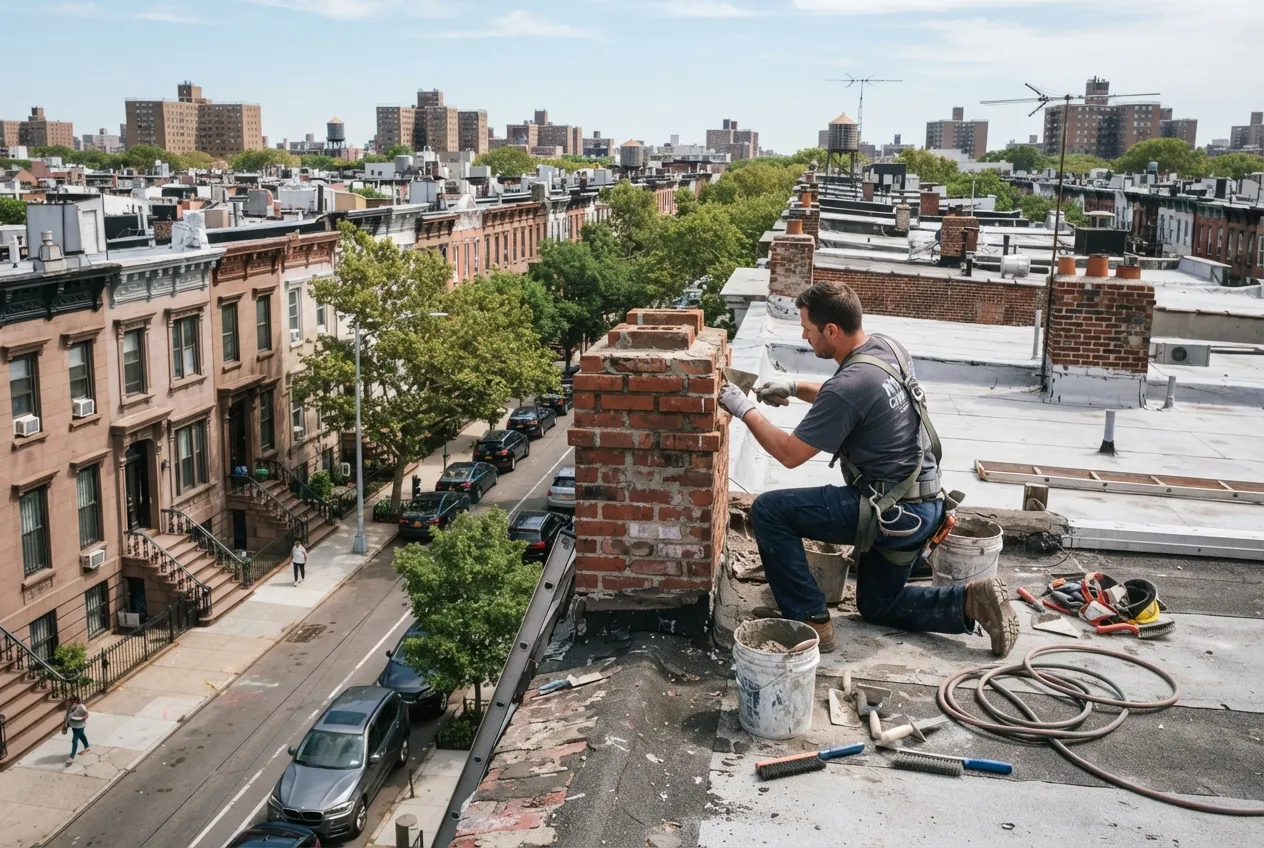
- Repointing: grinding out failed mortar joints and packing them with fresh mortar
- Rebuilding or resurfacing cracked chimney crowns so water runs off instead of soaking in
- Replacing loose or spalled brick near the top of the stack
- Resealing or replacing flashing where the chimney meets the roof
- Installing or replacing chimney caps to keep out rain, birds and debris
- Repairing damaged dampers, smoke chambers and firebox masonry
- Relining flues when the existing liner is cracked, missing or wrong for the appliance it serves
Converting from oil to gas? The chimney is part of the job
Many older Brooklyn buildings have moved, or are planning to move, from oil to gas heat. In New York City, the chimney has to be evaluated as part of that conversion. The reason is practical: gas exhaust produces acidic condensate that can corrode an old masonry flue, so a new liner is often needed.
If you are planning a boiler conversion, bring us in early. We can examine the flue, tell you whether the existing liner can stay or needs to be replaced, and work around your heating contractor's schedule so the chimney work does not hold up the new boiler.
Time for your annual chimney check?
How we figure out what needs fixing
The NFPA 211 standard calls for chimneys, fireplaces and vents to be inspected once a year, and chimney professionals use three inspection levels. A Level 1 inspection fits when nothing about the system has changed. A Level 2 inspection applies when something has changed, such as a new appliance or a switch in fuel, or when the home is being sold. A Level 3 inspection is for cases where a hidden hazard can only be reached by opening part of the chimney or the building.
For most repair calls, we inspect first so we can show you what we found, explain which repairs matter for safety and which can wait, and give you a clear scope of work before anything begins.
Plan repairs around heat season
New York City's heat season runs from October 1 through May 31, and building owners must keep apartments heated to the city's minimum temperatures during that time. If you own a multi-unit building, a chimney that has to be taken out of service in January is a real problem.
Late spring and summer are the easiest times to schedule masonry work and relining, since the heating system can be shut down without affecting tenants and mortar cures well in mild weather. If you notice damage in the middle of winter, contact us anyway. We can assess whether the system is safe to keep using and plan the repair from there.
More services in Downtown Brooklyn
- Chimney Sweep in Downtown Brooklyn
- Chimney Inspection in Downtown Brooklyn
- Air Duct Cleaning in Downtown Brooklyn
- Chimney Liner Installation in Downtown Brooklyn