The short answer
Under the NFPA 211 standard, Red Hook homeowners should have their chimneys inspected once a year, and swept whenever creosote, soot or debris builds up. SummitHearth's certified technicians sweep fireplace, stove and boiler flues in 11231. The best time to book is before heat season starts on October 1.
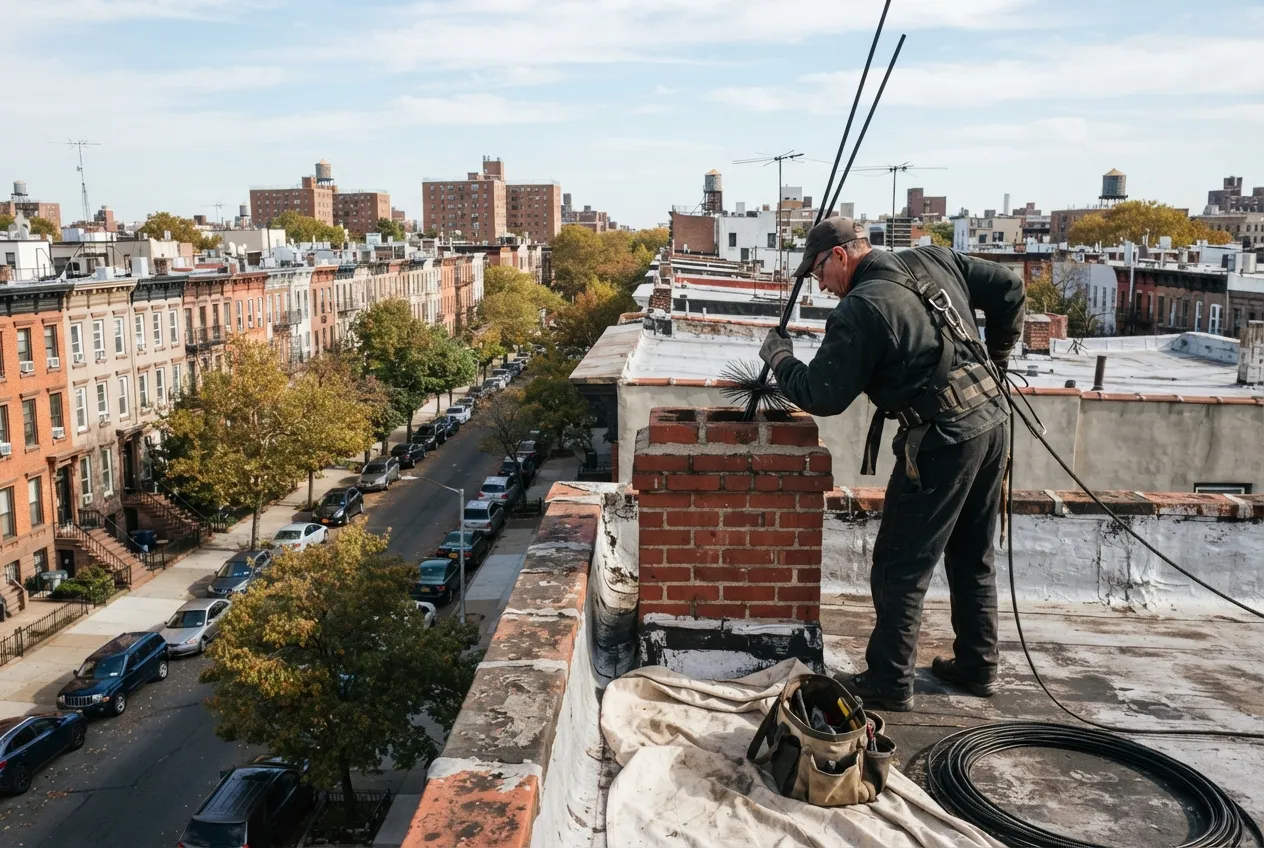
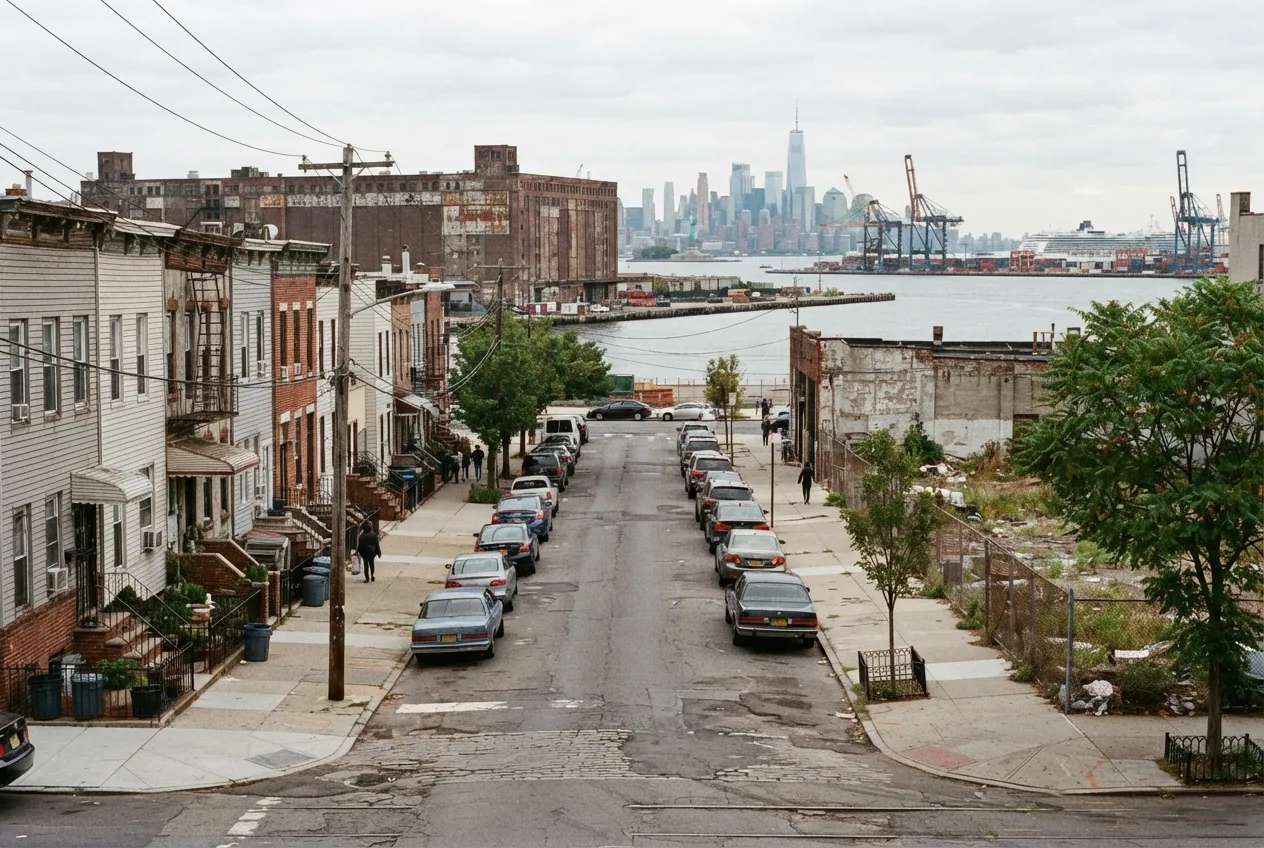
Red Hook's housing runs from brick rowhouses and older frame houses to small multi-family buildings. Many of them still have working fireplaces, wood stoves or masonry flues that vent a boiler. SummitHearth Chimney Services sends certified technicians to Red Hook (ZIP 11231), about a mile southwest of our Brooklyn office, to sweep those chimneys and check that they vent the way they should. This page covers what a sweep involves, how it fits a yearly inspection schedule, and what Red Hook owners should watch for.
What a Chimney Sweep Actually Removes
A sweep clears creosote, soot and debris from the flue so smoke and exhaust can leave the house freely. Creosote is the tar-like residue wood smoke leaves behind as it cools on its way up. It builds in layers, and thick deposits can catch fire inside the flue. Soot and loose debris also narrow the passage and can push smoke back into the room.
Fireplaces aren't the only thing we sweep. Boiler and water heater flues collect scale and pieces of crumbling masonry. Older chimneys can also hold nesting material, leaves or parts of a damaged cap. Any of these can restrict draft. That matters most when the appliance is a gas or oil burner, because those produce carbon monoxide.
Chimneys in Red Hook Homes
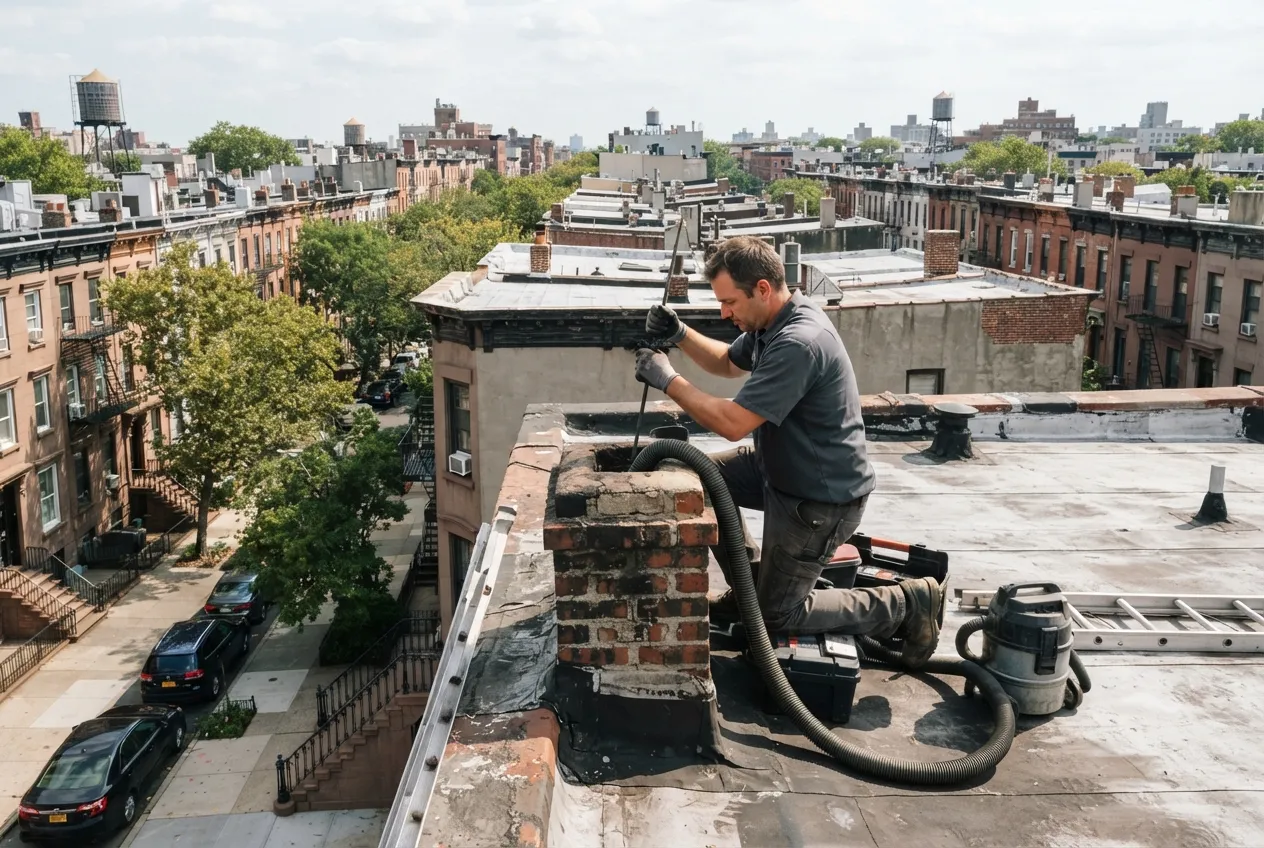
Most chimneys in the neighborhood are brick, and many were built long before modern liners were standard. In a rowhouse, one chimney stack may carry several flues side by side. For example, it might serve a parlor fireplace, an upstairs fireplace that has been closed off, and the heating system. Owners often don't know which flue serves what, or whether a sealed fireplace was ever properly closed at the top.
Small apartment buildings and converted multi-family homes add another layer. A shared boiler flue serves every unit, so one blockage affects everyone in the building. When we sweep, we identify each flue, note what it connects to, and tell you what condition it's in.
How Often to Sweep and When to Book
The NFPA 211 standard calls for chimneys, fireplaces and vents to be inspected once a year. How often a chimney needs sweeping depends on what the inspection finds and how much the fireplace is used. A fireplace lit most winter weekends will need sweeping more often than one used a few times a season.
Timing matters in New York City. Heat season runs from October 1 through May 31, and during that period building owners must keep apartments heated to the city's minimum temperatures. If you own a multi-family building, schedule boiler flue work for late summer or early fall. That way, a problem found during the sweep won't leave tenants without heat.
Chimney inspections come in three levels. A Level 1 inspection fits a chimney where nothing has changed. A Level 2 inspection is needed when the system changes, such as a new appliance or a switch of fuel, or when the home is sold. A Level 3 inspection is for hidden hazards that can only be reached by opening part of the chimney or the building.
Time for your annual chimney check?
Sweeping Before an Oil-to-Gas Conversion
Some Red Hook buildings still burn heating oil. When a New York City building converts its boiler from oil to gas, the chimney has to be evaluated as part of the work. A new liner is often needed, because gas exhaust produces acidic condensate that can corrode a masonry flue. Sweeping the flue before that evaluation gives a clear view of the walls, so the liner decision rests on the flue's actual condition.
What Happens During a Visit
Our technicians protect the area around the fireplace or appliance, work through the flue, and then explain what they found in plain terms.
- Drop cloths and covers to keep soot out of the room
- Brushing the flue, smoke chamber and firebox, or the boiler connection
- Removing creosote, soot and debris with a HEPA-filtered vacuum
- Checking the liner, mortar joints, damper and cap
- A plain-language summary of each flue's condition and any repairs worth considering
Nearby Neighborhoods We Serve
Along with Red Hook, we sweep chimneys in Carroll Gardens, Cobble Hill, Gowanus, Park Slope and Brooklyn Heights. Homes in these neighborhoods tend to have chimneys much like Red Hook's: brick stacks, multiple flues and heating systems that share space with old fireplaces.
More services in Red Hook
- Chimney Inspection in Red Hook
- Chimney Repair in Red Hook
- Air Duct Cleaning in Red Hook
- Chimney Liner Installation in Red Hook