The short answer
Red Hook homes usually need a new chimney liner when the existing flue is cracked, deteriorated, or wrong for the appliance it serves, which often happens after an oil-to-gas boiler conversion. We inspect the flue first, then fit a liner sized to your boiler, furnace, water heater or fireplace so exhaust vents safely.
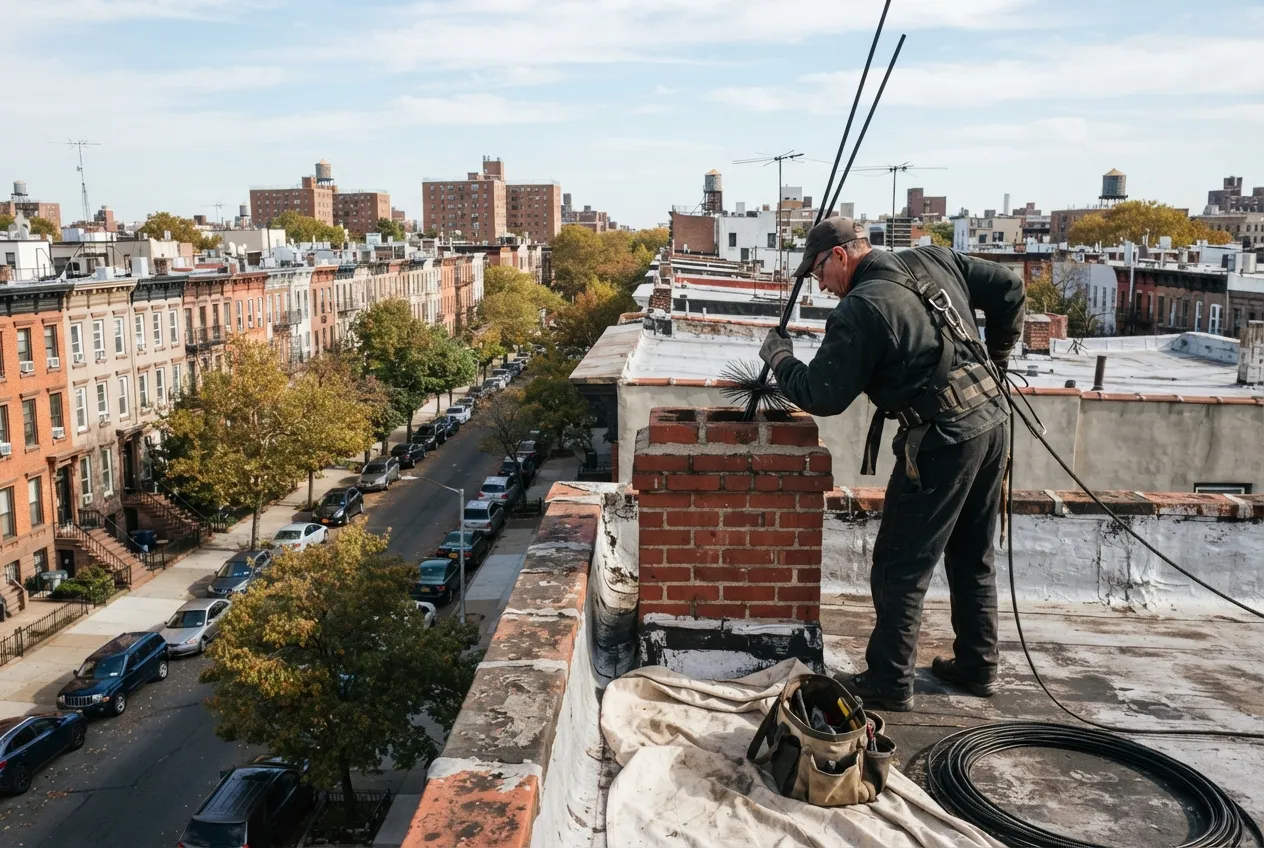
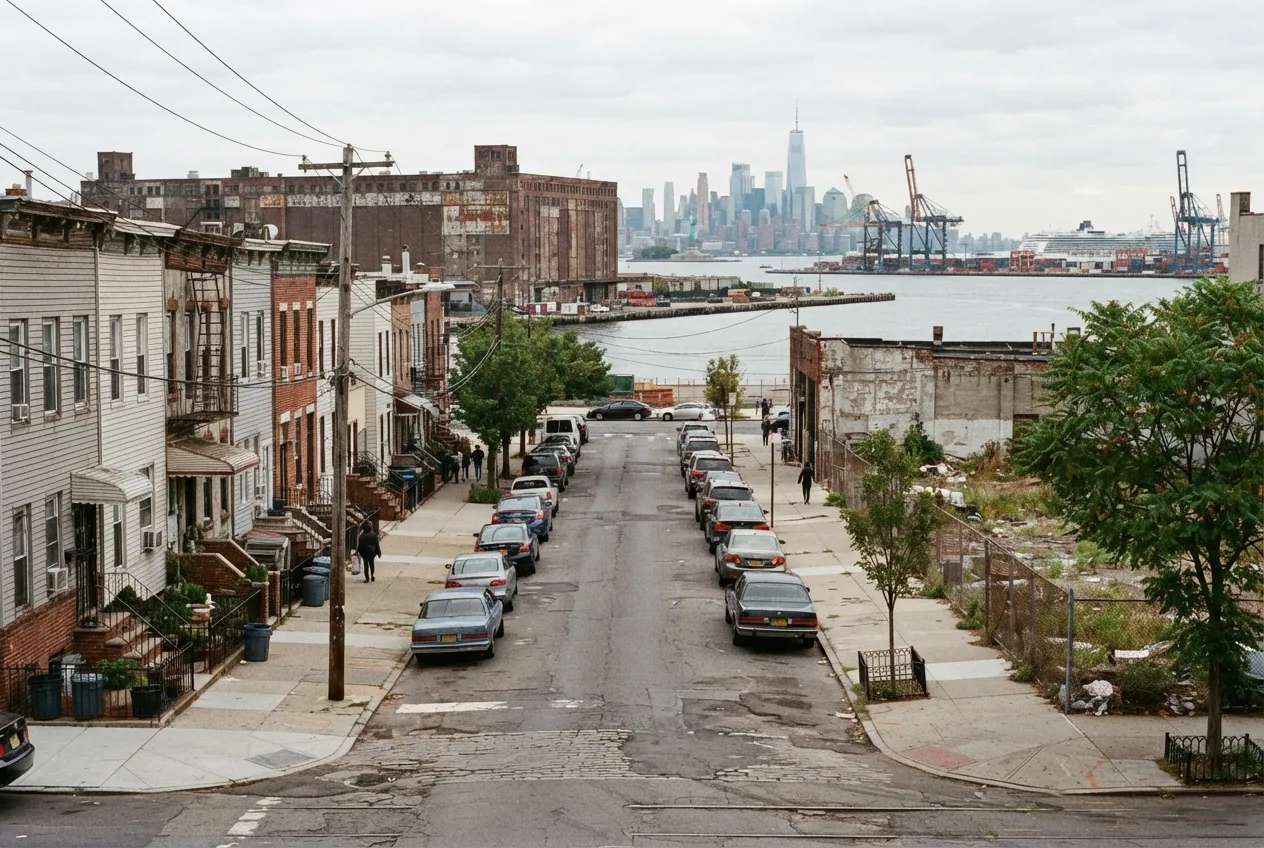
Many homes in Red Hook were built long before modern heating equipment, and their chimneys were often built with clay tile flues or bare brick. Over decades of use, and especially after a change in heating fuel, those flues can crack, crumble or corrode. A properly sized liner gives exhaust a sound, continuous path out of the house and protects the masonry around it. SummitHearth's certified technicians install chimney liners for rowhouses, small frame homes and pre-war apartment buildings throughout ZIP code 11231, about a mile southwest of our Brooklyn office.
Why Liners Matter in Older Red Hook Buildings
The flue is the passage inside your chimney that carries smoke and combustion gases outside. In older Brooklyn masonry, that passage may be lined with clay tile that has shifted or cracked, or it may have no liner at all. Gaps let heat reach nearby wood framing and let gases, including carbon monoxide, seep into living space or into a neighboring unit in an attached building.
Red Hook's mix of attached rowhouses and multi-unit buildings means chimneys often share walls with the house next door. A damaged flue is not only a problem for one household, so getting it right matters.
Signs Your Chimney Needs a Liner
A liner is not always the answer, which is why we start with an inspection. These are the situations where one is commonly needed:
- Your boiler is being converted from oil to gas. In New York City, the chimney has to be evaluated as part of that work, and a new liner is often required because gas exhaust produces acidic condensate that can corrode a masonry flue.
- You are installing a new boiler, furnace or water heater whose venting needs differ from the old unit.
- An inspection found cracked, missing or displaced flue tiles.
- You see crumbling mortar, flakes of tile, or debris collecting at the base of the chimney.
- Water stains, white mineral deposits, or a damp smell appear on walls near the chimney.
- You want to start using a fireplace that has sat unused for years.
Choosing the Right Liner for Your Home
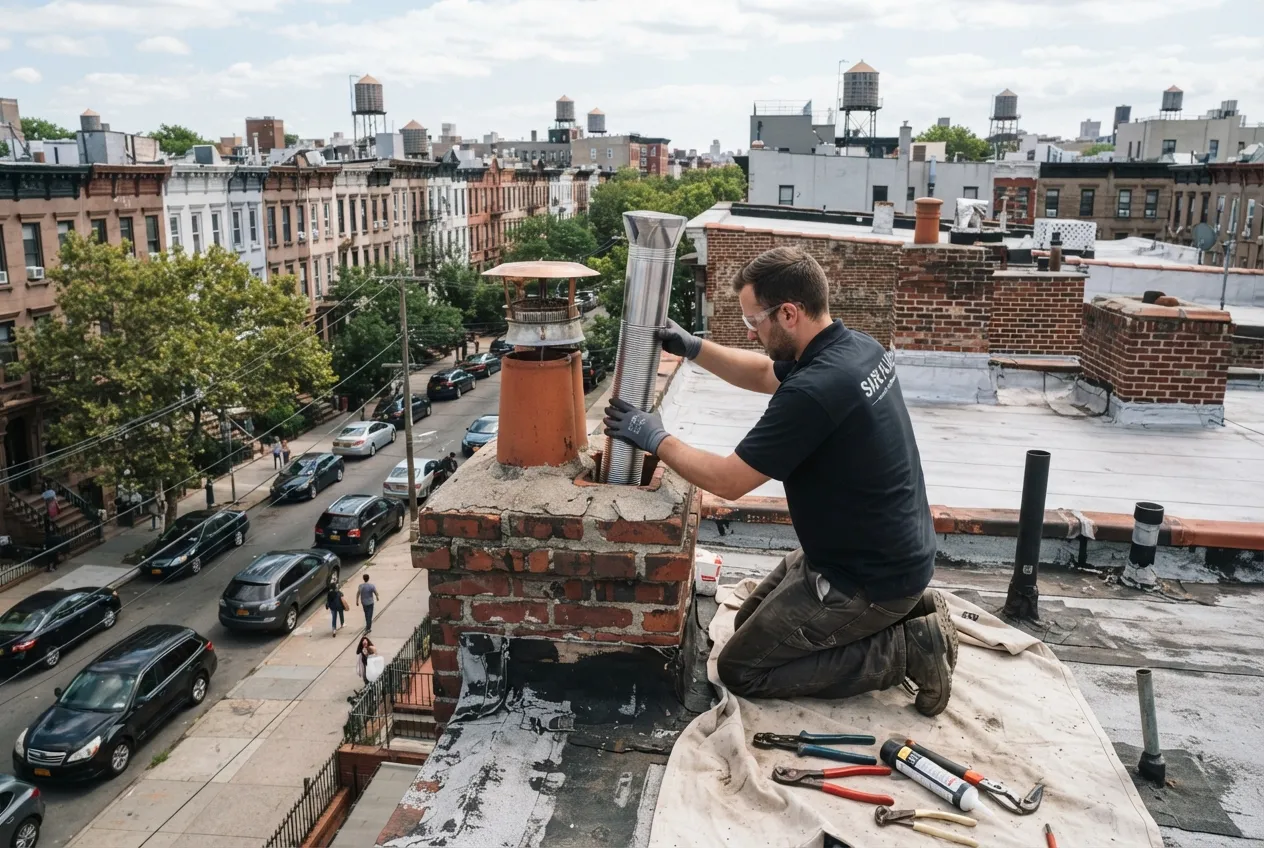
The right liner depends on what is venting into the chimney and how the flue is shaped. Stainless steel liners are the most common choice for gas and oil appliances because they resist corrosion and can be sized closely to the appliance. Rigid liners suit straight flues, while flexible stainless steel works well in the slight offsets common in older Brooklyn chimneys. Damaged masonry fireplace flues may call for a different approach, and we explain the options before any work begins.
Sizing is just as important as material. A liner that is too large or too small can cause poor draft, condensation and backdrafting, so we match the liner diameter to the appliance specifications.
Time for your annual chimney check?
What Installation Looks Like
Most liner jobs follow the same basic sequence, though older chimneys sometimes need extra preparation.
We begin with a camera inspection of the flue to document its condition and measure it. Next, we clean out soot and loose debris and remove obstructions or broken tile that would block the new liner. The liner is then lowered from the roof, connected to the appliance at the bottom, and capped at the top to keep out rain and animals. Where needed, we add insulation around the liner to help exhaust stay warm and draft properly. Before we leave, we check that the system vents correctly and walk you through what we found and did.
Timing Around Heat Season
New York City's heat season runs from October 1 through May 31, and building owners must keep apartments at the city's minimum temperatures during that time. If you own a multi-unit building in Red Hook, planning a liner installation or boiler conversion for the warmer months helps you avoid a heating outage when tenants depend on it. If a problem turns up mid-winter, we work to coordinate the job so heat is restored as quickly as is safely possible.
After installation, keep up with yearly inspections. The NFPA 211 standard calls for chimneys, fireplaces and vents to be inspected once a year. We also serve nearby Carroll Gardens, Cobble Hill, Gowanus, Park Slope and Brooklyn Heights.
More services in Red Hook
- Chimney Sweep in Red Hook
- Chimney Inspection in Red Hook
- Chimney Repair in Red Hook
- Air Duct Cleaning in Red Hook