The short answer
Chimneys in Cobble Hill homes should be swept when soot or creosote builds up and inspected once a year, as the NFPA 211 standard calls for. SummitHearth's certified technicians clean fireplace and boiler flues in brownstones, rowhouses and pre-war buildings, then explain what they found in plain terms.
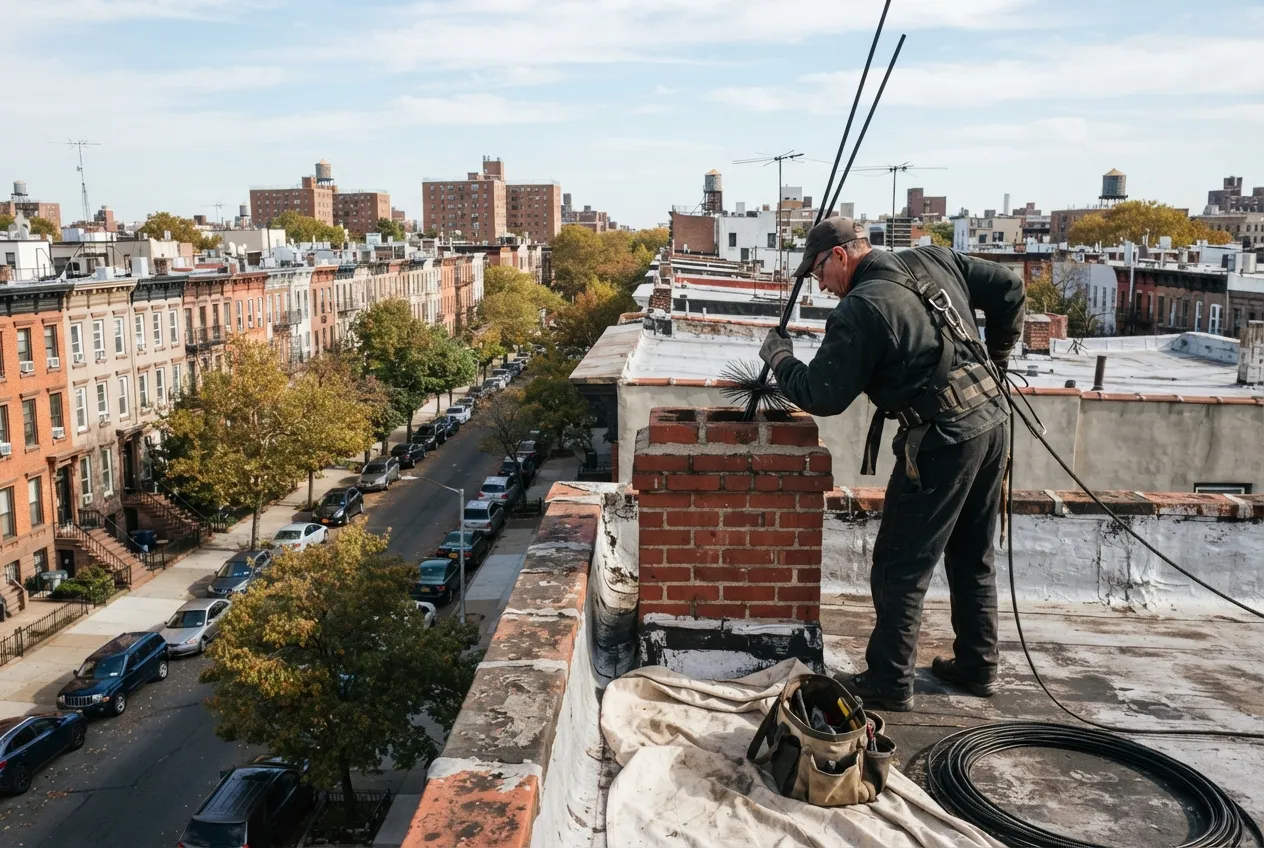
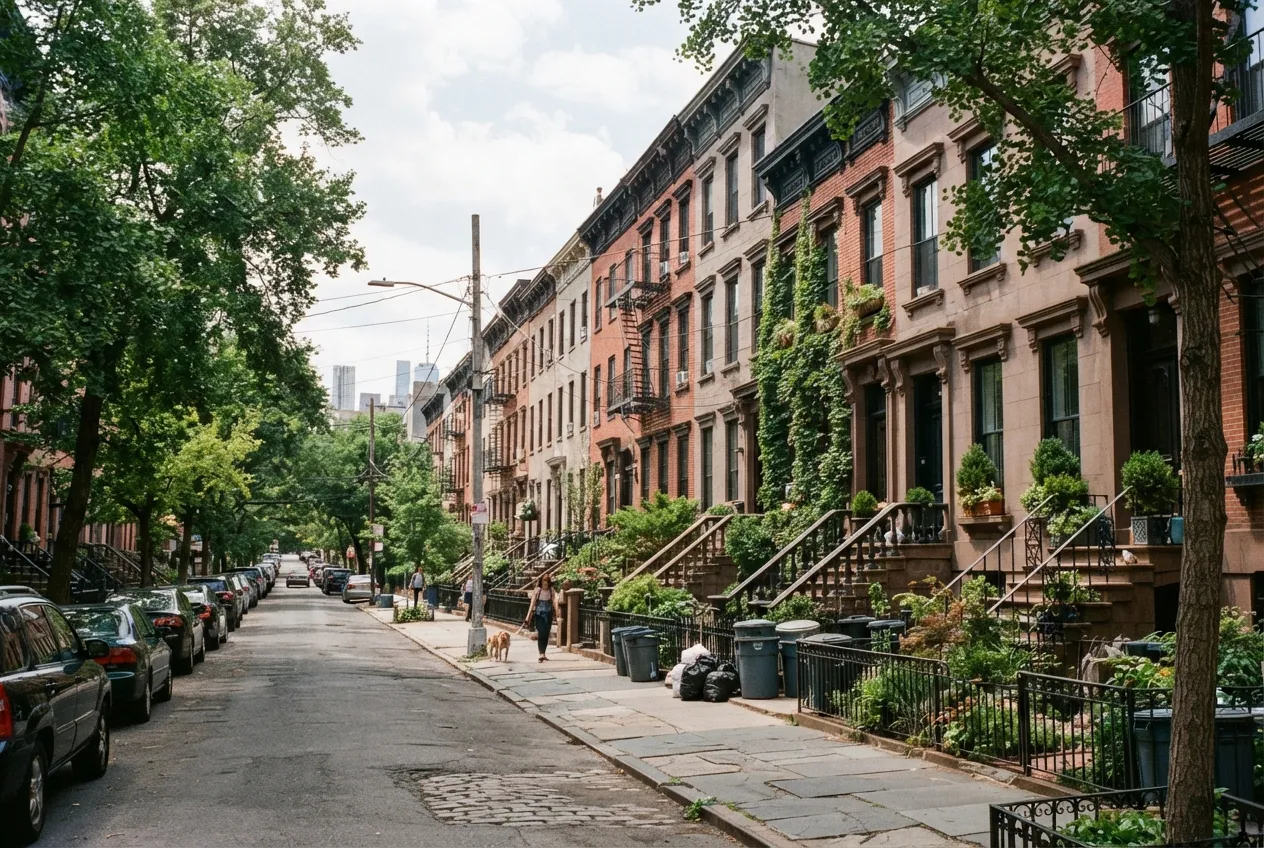
Cobble Hill is a neighborhood of brownstones, brick rowhouses and pre-war apartment buildings. Many still have working fireplaces, flues that once burned coal and now burn wood or gas, or chimneys that vent a boiler in the cellar. SummitHearth Chimney Services sends certified technicians from our Brooklyn office, about a mile away, to sweep and inspect chimneys throughout the 11231 ZIP code. This page explains what a sweep involves in older Cobble Hill homes, what our technicians look for, and when it makes sense to schedule one.
Why Cobble Hill Chimneys Need Regular Sweeping
Many houses in Cobble Hill were built with several fireplaces stacked floor over floor, each with its own flue running up a shared masonry stack. Over the decades, those flues have been used for coal, wood or gas, or simply closed off and forgotten. Each situation leaves its own problems behind.
Burning wood coats the inside of a flue with soot and creosote, a tar-like residue that can ignite if it builds up. Flues that sit unused tend to collect bird nests, leaves and loose mortar, which can block the draft and push smoke or exhaust back into the room. A sweep removes that buildup so the chimney works as intended and so the inside of the flue can actually be seen and checked.
The NFPA 211 standard calls for chimneys, fireplaces and vents to be inspected once a year. Sweeping and inspection usually happen in the same visit, because a clean flue shows the true condition of the liner and the brick.
What a Chimney Sweep Visit Includes
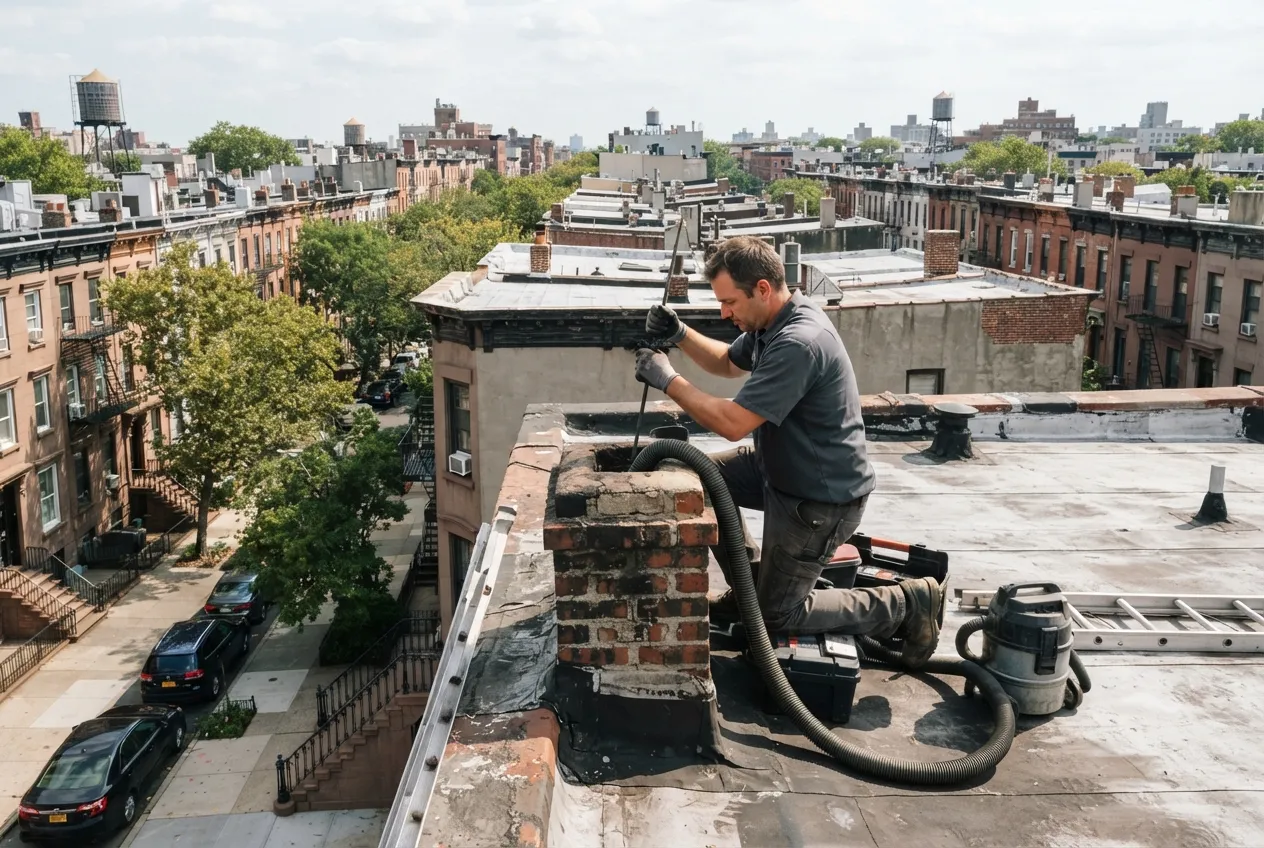
Older Brooklyn interiors often have original mantels, plaster and wood floors, so we set up carefully before any brushing starts. A typical visit covers the following:
- Drop cloths and a sealed setup at the hearth to keep soot out of the room
- Brushing the flue from the firebox, the roof, or both, depending on access
- Removing soot, creosote and debris from the firebox, smoke shelf and smoke chamber
- Checking that the damper opens, closes and seals properly
- Looking at the crown, cap and flashing from the roof when it can be reached
- A camera look inside the flue when the liner condition is in question
- A plain-language rundown of what we found, with photos
Inspection Levels and When Each One Applies
Chimney professionals use three inspection levels. Level 1 is the routine yearly check when nothing about the system has changed. Level 2 applies when the system changes, such as a new appliance or a switch of fuel, or when the home is sold. Level 3 is used when a hidden hazard has to be reached by opening part of the chimney or the building.
In Cobble Hill, a home sale and a fuel change are the two most common reasons a homeowner needs more than a Level 1 check. If you are buying a brownstone with fireplaces you plan to use, it is worth knowing their condition before the first fire.
Time for your annual chimney check?
Boiler Chimneys and Oil-to-Gas Conversions
Many pre-war apartment buildings and converted rowhouses vent their boilers through a masonry chimney. These flues need sweeping and inspection just like fireplace flues, since soot and debris can restrict exhaust from the heating system.
When a New York City building converts its boiler from oil to gas, the chimney has to be evaluated as part of the work. A new liner is often needed, because gas exhaust produces acidic condensate that can corrode a masonry flue. We can look at the existing flue and tell you what we see before or during a conversion.
New York City's heat season runs from October 1 through May 31, when building owners must keep apartments heated to the city's minimum temperatures. Scheduling boiler chimney work before October avoids taking the heat offline during the months it is required.
When to Schedule a Sweep in Cobble Hill
Late spring and summer are the easiest times to book, since fireplaces and boilers are idle and any repairs can be handled before cold weather. You should not wait for the yearly visit, though, if you notice any of these signs: a smoky or musty smell from the fireplace, smoke drifting into the room, black flakes in the firebox, animal sounds inside the chimney, or water stains on walls or ceilings near the stack.
Along with Cobble Hill, our technicians sweep chimneys in nearby Carroll Gardens, Gowanus, Red Hook, Park Slope and Brooklyn Heights.
More services in Cobble Hill
- Chimney Inspection in Cobble Hill
- Chimney Repair in Cobble Hill
- Air Duct Cleaning in Cobble Hill
- Chimney Liner Installation in Cobble Hill