The short answer
Many older Cobble Hill chimneys have cracked clay tile liners or no liner at all, and they often need a new one after an oil-to-gas boiler conversion or an appliance change. SummitHearth inspects the flue, sizes a stainless steel or cast-in-place liner to the appliance, and installs it from the roof, usually without opening walls.
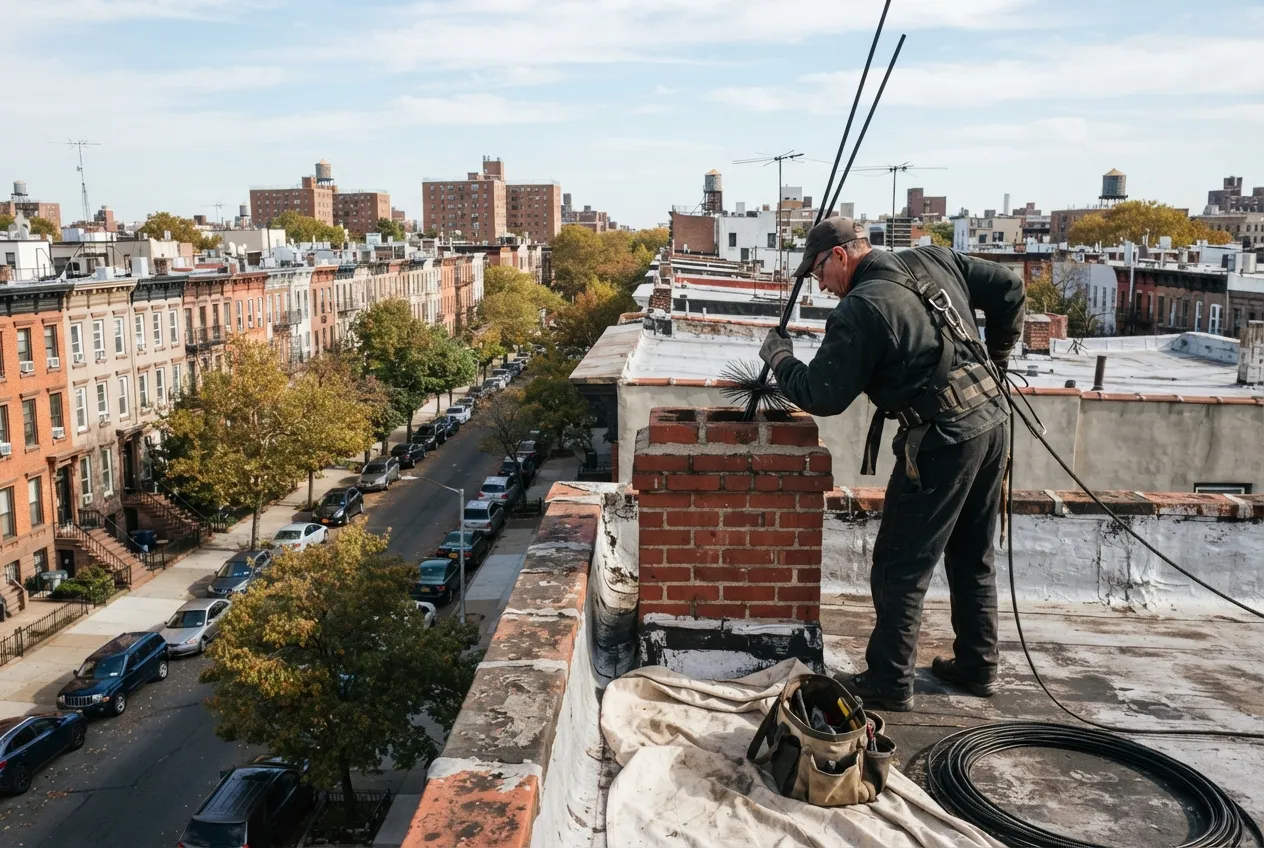
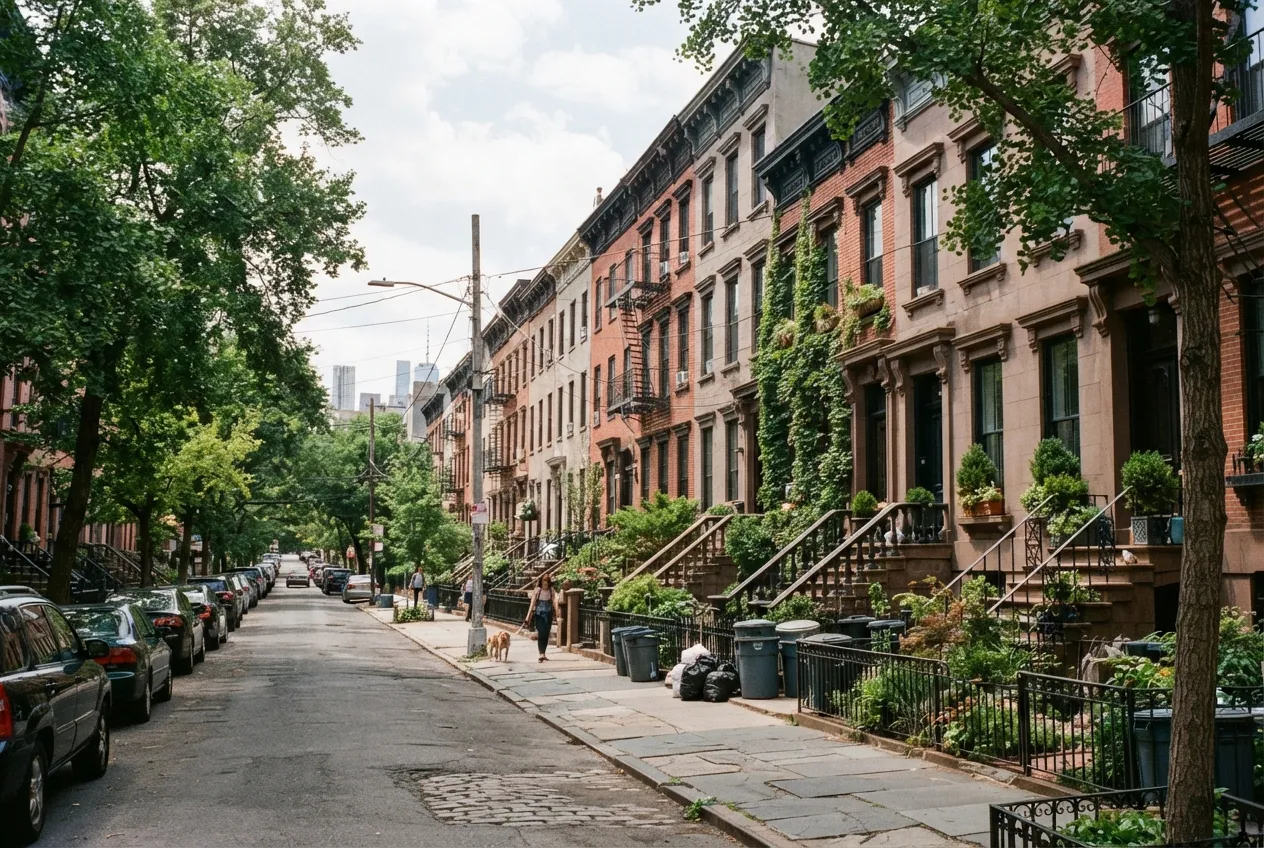
Most of Cobble Hill's brownstones, rowhouses and pre-war apartment buildings have masonry chimneys built for coal or wood. Many of them now vent gas boilers, water heaters and fireplace inserts instead. A chimney liner is the protective channel inside the flue. It keeps heat away from the surrounding brick and wood framing, guides exhaust up and out of the house, and resists the acidic moisture that modern appliances produce. SummitHearth installs liners throughout Cobble Hill (11231) from our Brooklyn office about a mile away. Our certified technicians handle the inspection, sizing and installation as one job.
Why Older Cobble Hill Chimneys Often Need a Liner
Many chimneys in the neighborhood were built with clay tile liners, or with no liner at all, long before today's appliances existed. Over the decades, mortar joints erode and tiles crack and shift. Rowhouses also share walls, so a flue problem in one house can affect the house next door.
The most common reason for a new liner is a change in what the chimney serves. When a New York City building converts its boiler from oil to gas, the chimney has to be evaluated as part of the work. A new liner is often needed because gas exhaust produces acidic condensate that can corrode a masonry flue.
Watch for these signs that your liner may need attention:
- Crumbling mortar, flaking brick or white staining on the outside of the chimney
- Tile fragments or masonry debris collecting at the base of the flue
- Water stains or damp plaster near the chimney inside the house
- A new boiler or water heater, or a switch from oil to gas
- Plans to use a fireplace that has sat unused for years
How We Decide Which Liner Your Chimney Needs
Every liner job starts with an inspection. The NFPA 211 standard calls for chimneys to be inspected once a year. It calls for a more thorough Level 2 inspection when the system changes, such as a new appliance or a fuel switch, or when a home is sold. A Level 2 inspection includes a camera survey of the flue, which shows whether the existing liner can be repaired or needs to be replaced.
From there, we match the liner to the appliance and the condition of the chimney:
- Stainless steel liners for gas and oil boilers, water heaters and many wood-burning setups
- Aluminum liners for certain gas appliances, where the manufacturer allows them
- Cast-in-place liners, which form a new insulated shell inside a damaged masonry flue
- Insulation around the liner where needed, to keep exhaust warm and limit condensation
Getting the Size Right
Sizing matters as much as material. A liner that is too large for a modern high-efficiency boiler lets exhaust cool and condense on the way up. A liner that is too small restricts draft and can push fumes back into the house. We size every liner from the appliance manufacturer's specifications.
Time for your annual chimney check?
What Installation Looks Like in a Rowhouse or Brownstone
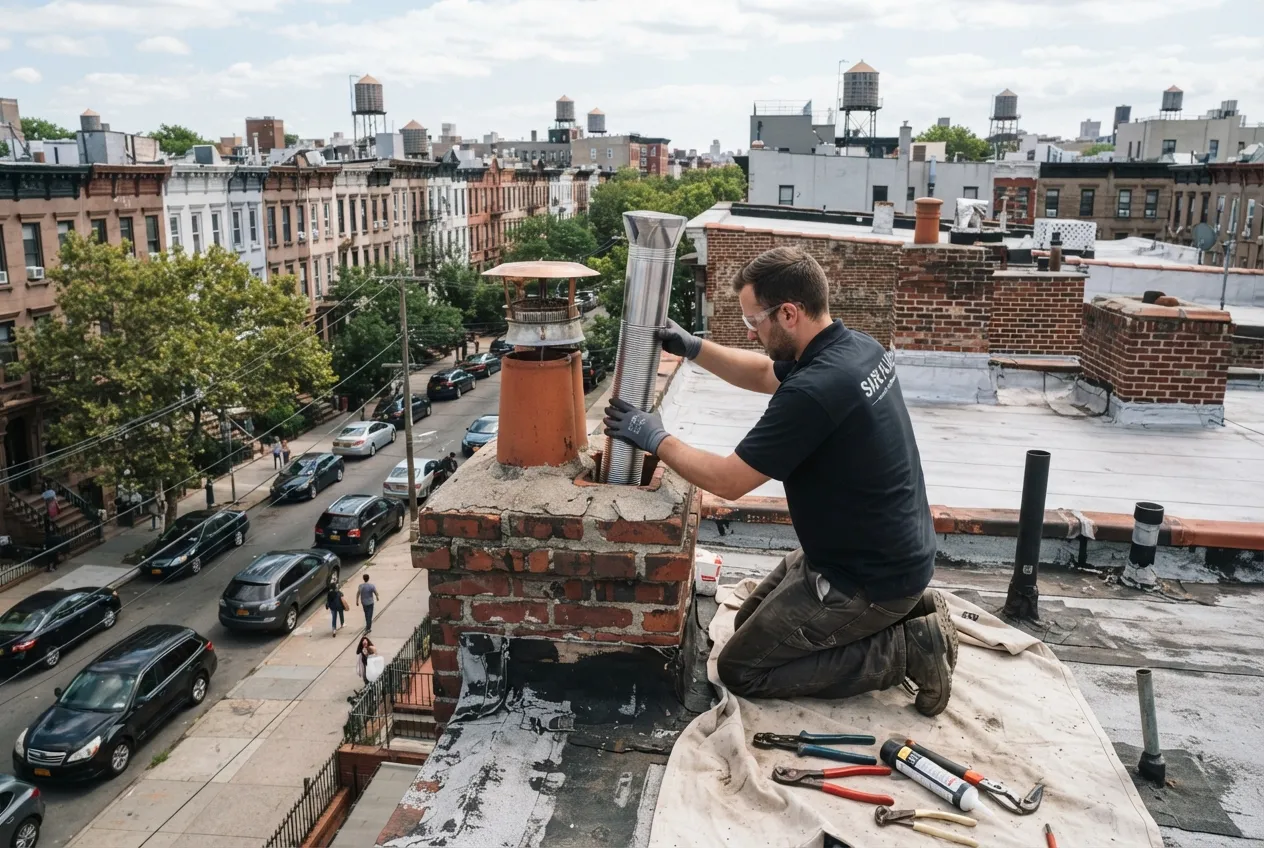
Most liners in Cobble Hill go in from the roof, so we usually reach the chimney through the roof hatch or over the parapet of a flat roof. Before we start, we protect the area around the appliance and any fireplace opening inside. Then we clean the flue so the new liner seats properly.
We lower the liner down the flue, connect it to the appliance at the bottom, and secure it with a top plate and cap at the top. Before the appliance goes back into service, we check the draft and every connection. Many single-flue jobs are finished in a day. Buildings with several flues or masonry repairs take longer, and we'll tell you what to expect before work begins.
Planning Around Heat Season
New York City's heat season runs from October 1 through May 31. During those months, building owners must keep apartments heated to the city's minimum temperatures. If you own a multi-unit brownstone or a small pre-war building, a boiler shut down because of a failed flue is a serious problem. Scheduling inspections and liner work in late spring or summer gives you time to fix problems without that pressure. If a liner problem turns up in mid-winter, we'll plan the work to keep the heat off for as short a time as possible.
Serving Cobble Hill and Nearby Neighborhoods
We install and inspect chimney liners throughout Cobble Hill and in nearby Carroll Gardens, Gowanus, Red Hook, Park Slope and Brooklyn Heights. The housing in these neighborhoods is similar, so the same issues come up again and again: aging clay tile, fuel conversions and chimneys shared through party walls. Contact us to schedule an inspection and get a written assessment of what your chimney needs.
More services in Cobble Hill
- Chimney Sweep in Cobble Hill
- Chimney Inspection in Cobble Hill
- Chimney Repair in Cobble Hill
- Air Duct Cleaning in Cobble Hill