The short answer
A chimney inspection checks whether your chimney, fireplace and vents are sound and safe to use. The NFPA 211 standard calls for one every year. Older Prospect Heights brownstones, rowhouses and pre-war buildings, especially those converted from oil to gas, benefit from a careful look at the flue liner and masonry.
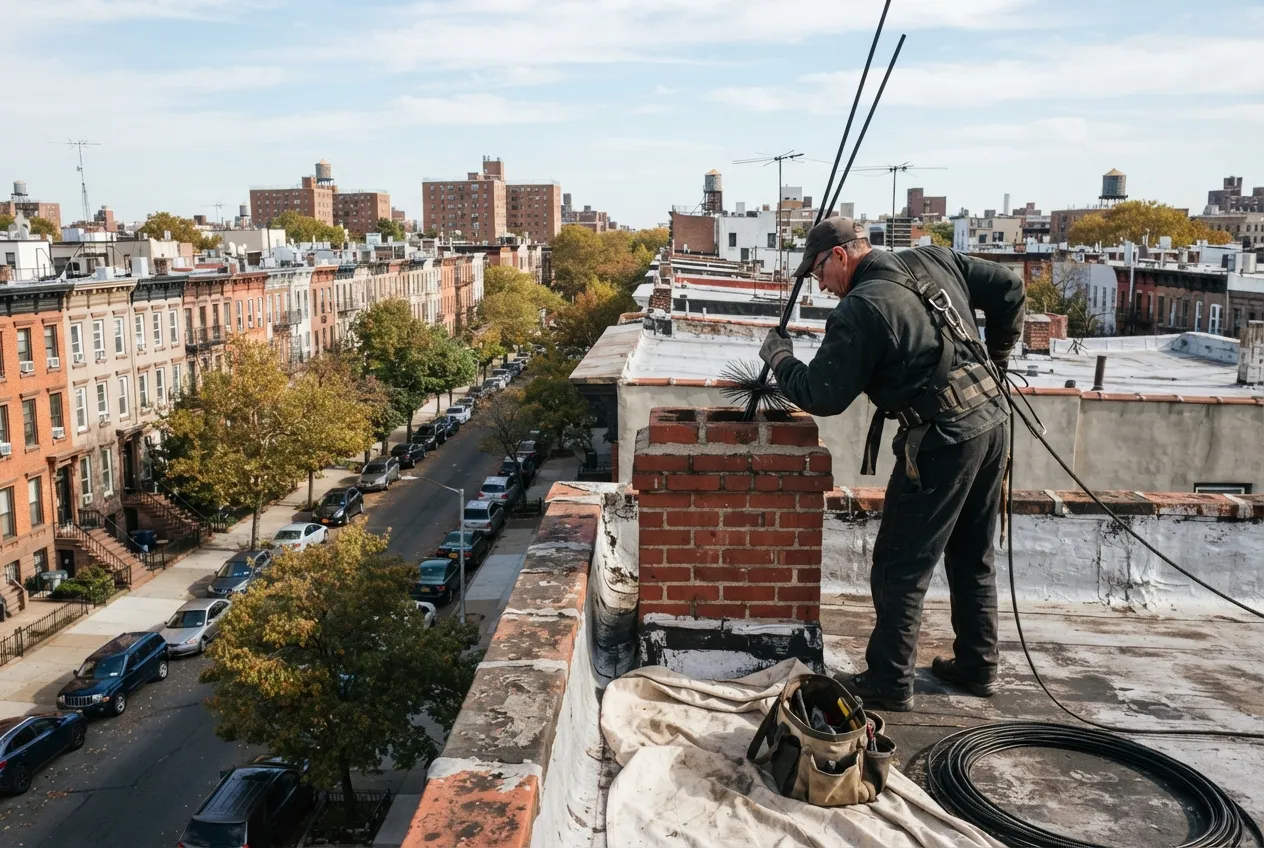
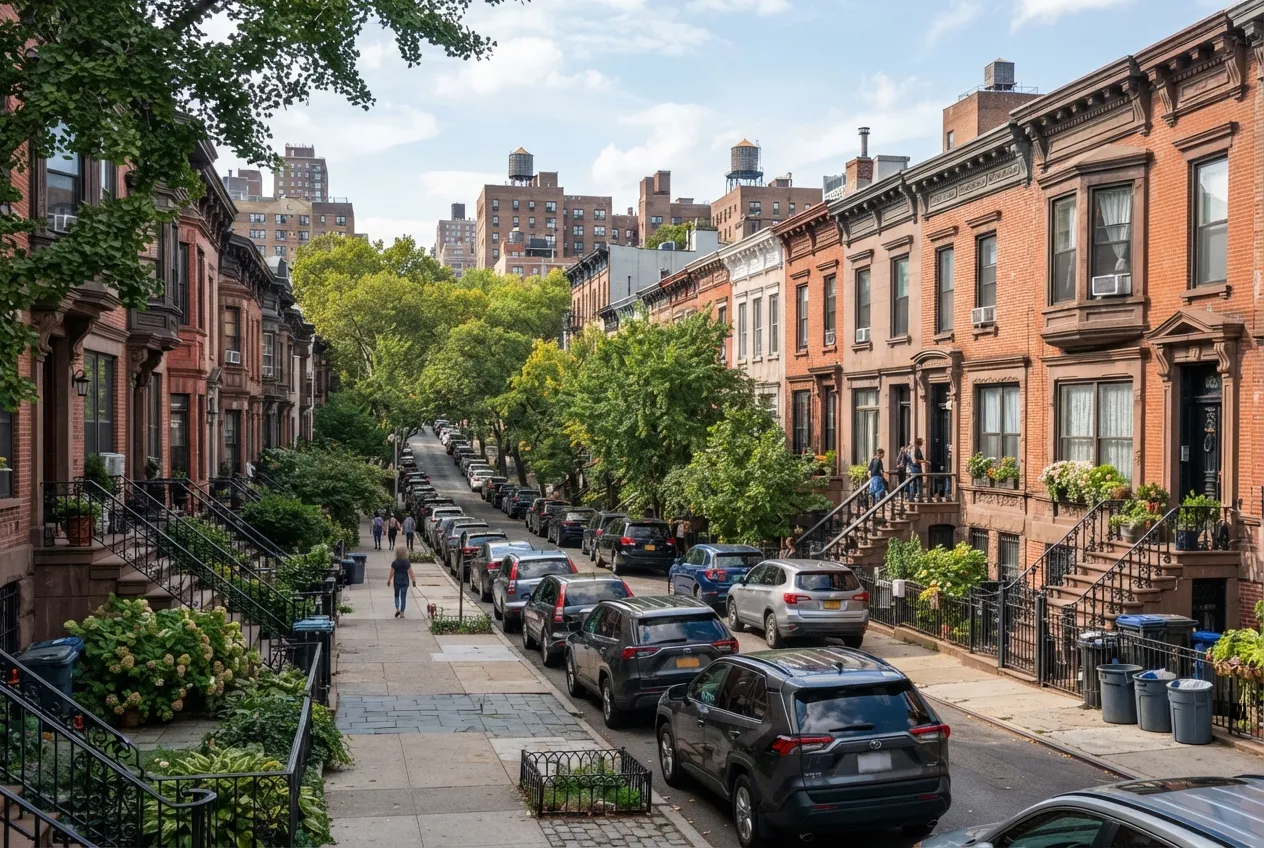
Many chimneys in Prospect Heights have been working for a very long time. Brownstones and rowhouses often have several flues running up one masonry stack, and pre-war apartment buildings depend on a boiler chimney that works hard every winter. SummitHearth Chimney Services inspects chimneys, fireplaces and vents in Prospect Heights, about a mile southeast of our Brooklyn office. Our certified technicians check the parts you can't easily see, explain what they find in plain terms, and tell you which issues need attention now and which can wait.
What a Chimney Inspection Covers in Prospect Heights Homes
An inspection is not the same as a sweep. Cleaning removes soot and creosote. An inspection checks whether the whole system is sound and safe to use. In Prospect Heights, that usually means looking at older masonry, flues that may be shared or no longer in use, and connections to boilers or water heaters that were replaced at some point without anyone checking the chimney they vent into.
Here is what our technicians typically examine:
- Firebox, damper and smoke chamber condition
- Flue liner cracks, gaps, missing sections or deterioration
- Creosote and soot buildup that affects safe use
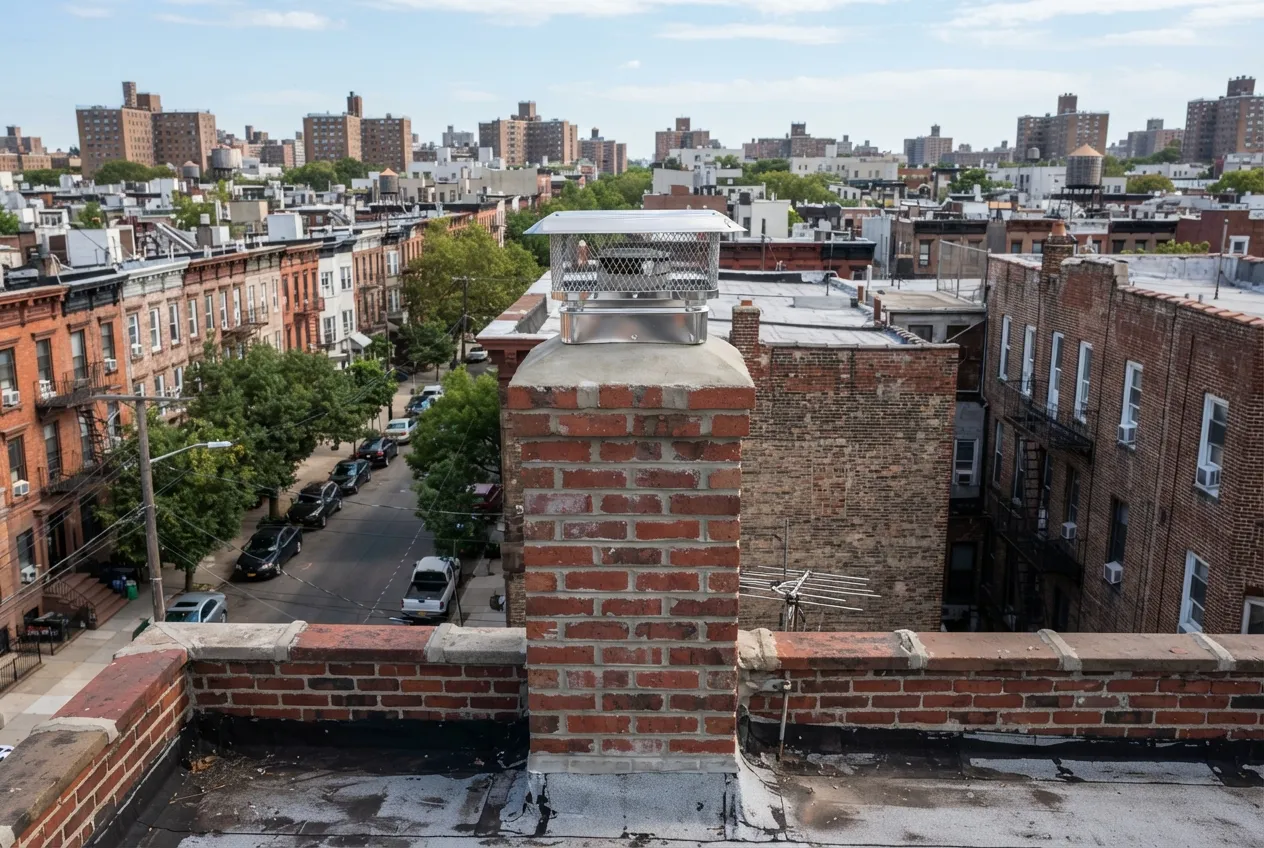
- Crown, cap, flashing and exterior brick and mortar joints
- Vent connections from boilers, furnaces and water heaters
- Blockages from debris, nests or fallen masonry
- Visible clearances between the chimney and nearby wood framing
Choosing the Right Inspection Level
The NFPA 211 standard calls for chimneys, fireplaces and vents to be inspected once a year. Chimney professionals use three inspection levels, and the right one depends on what has changed in your home since the last check.
- Level 1: for a system that hasn't changed and is used the way it always has been. This is the routine yearly check of the readily accessible parts.
- Level 2: when the system changes, such as a new boiler or water heater or a switch from oil to gas, or when the home is being sold. This usually includes a camera inspection of the flue.
- Level 3: when a hidden hazard has to be reached by opening part of the chimney or building, such as a wall or chimney chase.
Oil-to-Gas Conversions in Brownstones and Apartment Buildings
When a New York City building converts its boiler from oil to gas, the chimney has to be evaluated as part of the work. A new liner is often needed, because gas exhaust produces acidic condensate that can corrode a masonry flue. Many older Prospect Heights buildings have unlined or clay-lined flues that were built long before gas boilers were common.
If your building is planning a conversion, an inspection before the new equipment goes in gives you a clear picture of the flue. If the conversion happened years ago and no one is sure whether the chimney was relined, it's worth checking now. Condensate damage builds slowly inside the chimney, where it's hard to see until bricks or mortar start to fail.
Time for your annual chimney check?
Timing Your Inspection Around Heat Season
New York City's heat season runs from October 1 through May 31, when building owners must keep apartments heated to the city's minimum temperatures. For a building owner, a chimney problem found in January becomes a heating problem, and that affects tenants. Scheduling the inspection in late summer or early fall leaves time to handle repairs before the boiler runs all winter.
Homeowners with wood-burning fireplaces benefit from the same timing. Having the chimney inspected before your first fire of the season means any creosote buildup, damper problems or animal nests are found before they cause smoke or worse.
What Happens After the Inspection
After the inspection, we walk you through what we found and give you a written summary. Where we use a camera, we can show you the footage so you can see the inside of your flue for yourself. We separate safety concerns from routine maintenance items, so you know what has to be addressed before you use the system and what you can plan for later.
If repairs or relining are needed, we explain the options and why we recommend them. Besides Prospect Heights, we also inspect chimneys in Park Slope, Clinton Hill, Fort Greene, Downtown Brooklyn and DUMBO.
More services in Prospect Heights
- Chimney Sweep in Prospect Heights
- Chimney Repair in Prospect Heights
- Air Duct Cleaning in Prospect Heights
- Chimney Liner Installation in Prospect Heights