The short answer
Clinton Hill homeowners should have every chimney, fireplace and vent inspected once a year, as the NFPA 211 standard recommends. A Level 1 inspection fits most years. A Level 2 is the right call when you buy or sell a home, add or change an appliance, or convert a boiler from oil to gas.
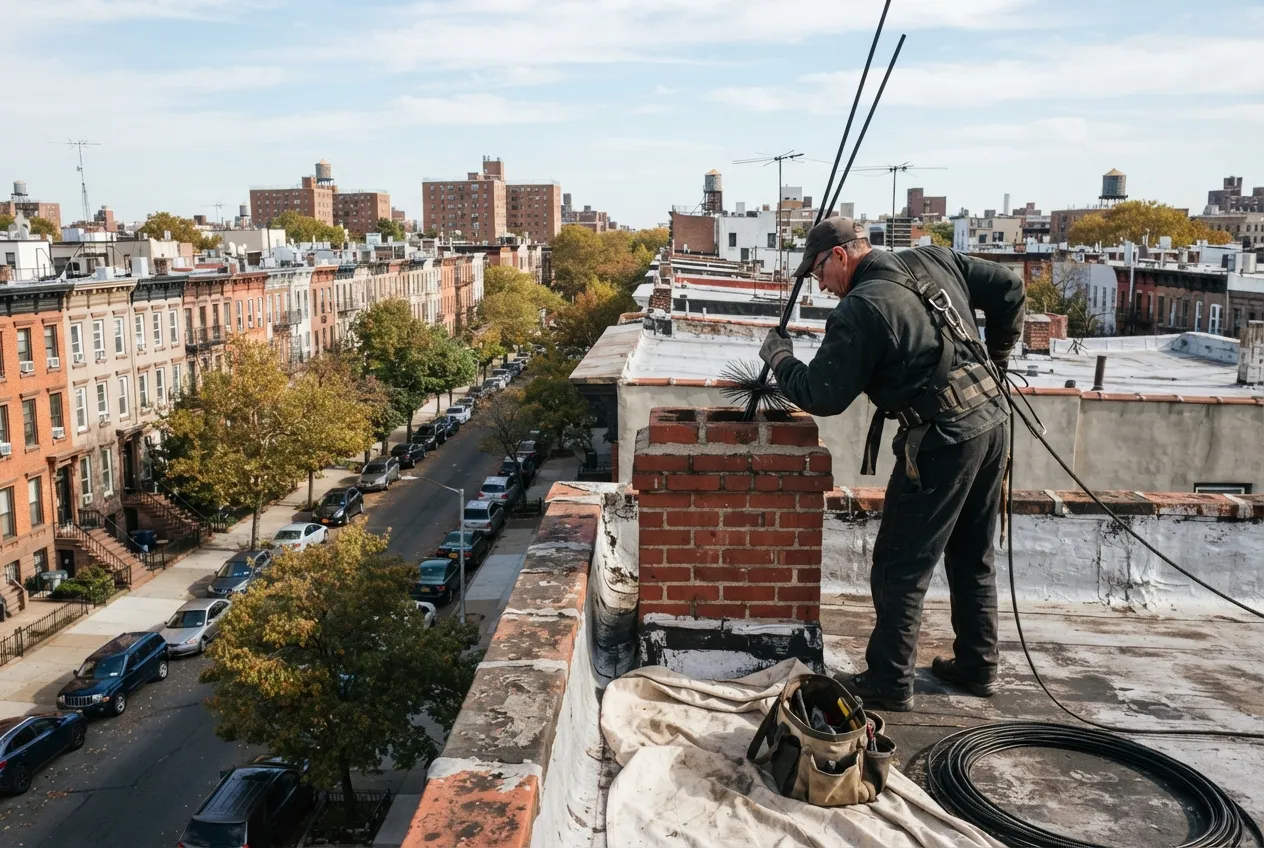
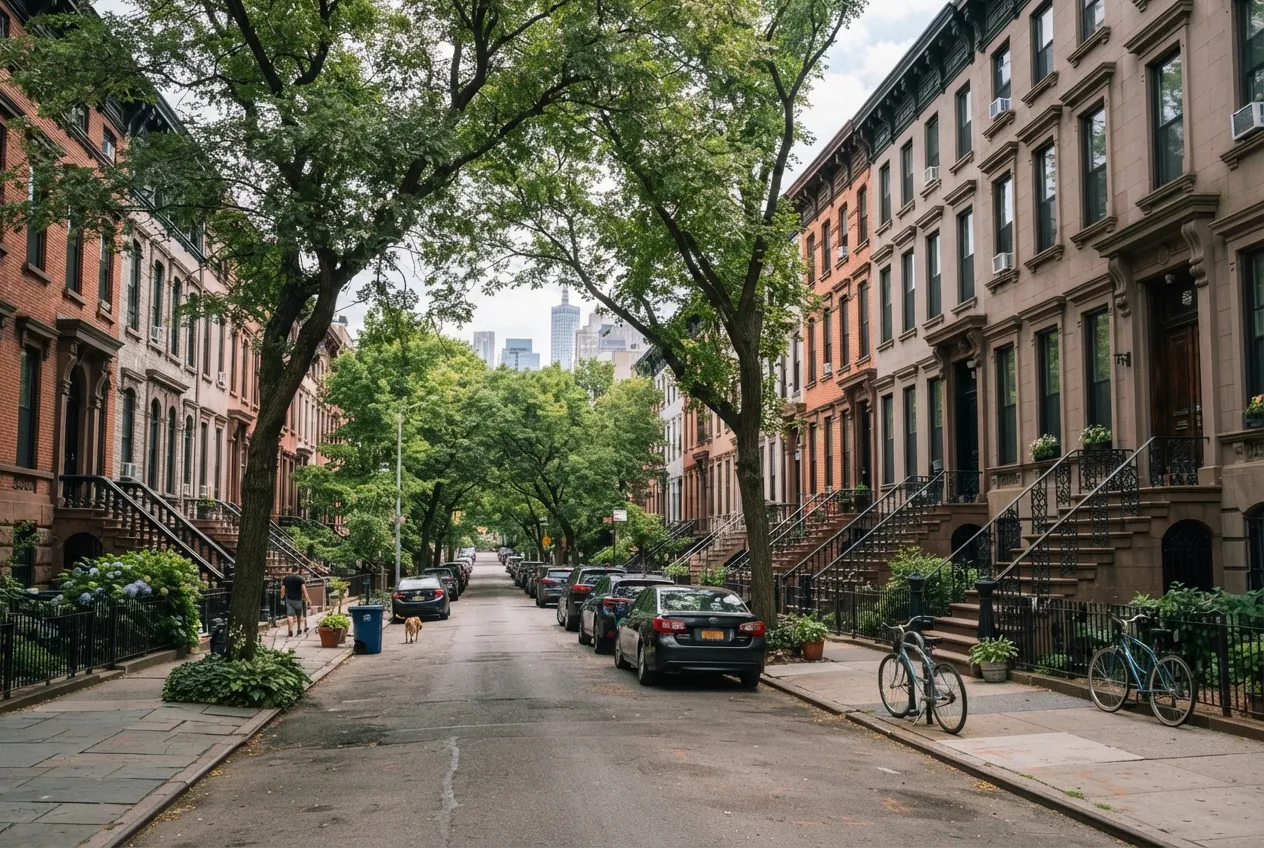
Clinton Hill homes come with a lot of chimney: brownstones and rowhouses with several fireplaces stacked floor over floor, pre-war apartment buildings with boiler flues running the full height of the building, and freestanding houses with their own masonry quirks. Many of those flues are a century old or more, and some have not been looked at in years. SummitHearth Chimney Services is about a mile west of Clinton Hill, and our certified technicians inspect chimneys throughout the neighborhood. Here is what a chimney inspection covers, which level you need, and when to schedule it.
Why Clinton Hill chimneys need a close look
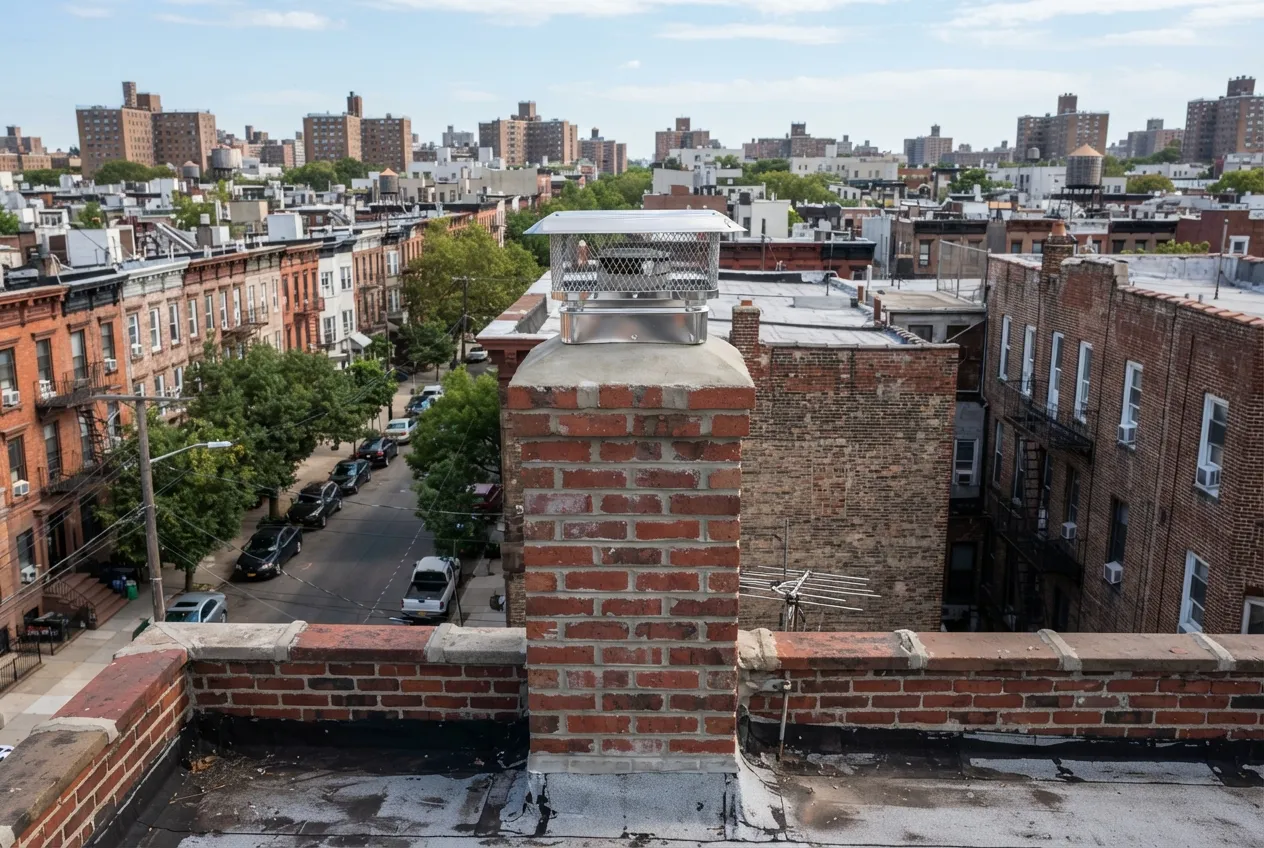
Older Brooklyn masonry wears out in ways you can't see from the living room. Mortar joints erode, clay flue tiles crack, and crowns at the top of the stack let water into the brick. In brownstones and rowhouses, one chimney mass often holds several separate flues side by side, so a problem in one can affect its neighbors.
Many homes in the neighborhood also have fireplaces that were closed off decades ago, reopened during a renovation, or kept as decorative mantels. Before anyone lights a fire in a fireplace with an unknown history, it needs an inspection. In apartment buildings, the flue serving the boiler or water heater matters just as much as any fireplace, because it carries exhaust out of the building every day of the heating season.
Which inspection level do you need?
The NFPA 211 standard calls for chimneys, fireplaces and vents to be inspected once a year. Chimney professionals use three levels of inspection, and the right one depends on what has changed in your home.
- Level 1: For a system that hasn't changed and that you plan to keep using as it is. We check the accessible parts of the chimney, the firebox, the damper and the connections, and look for blockages and creosote buildup.
- Level 2: For when the system changes, such as a new stove, insert or boiler, or a switch from one fuel to another, and whenever a home is sold. It goes further into the accessible attic, basement and crawl spaces, and includes a video scan of the flue interior.
- Level 3: For when a hidden hazard has to be reached by opening part of the chimney or the building, usually after a Level 2 turns up a concern that can't be confirmed any other way.
Oil-to-gas conversions and flue liners
Many Clinton Hill buildings that once burned heating oil have converted to gas or are planning to. In New York City, the chimney has to be evaluated as part of an oil-to-gas boiler conversion. A new liner is often needed, because gas exhaust produces acidic condensate that can corrode a masonry flue that was built for oil.
If your building is planning a conversion, schedule the chimney inspection early so its findings can shape the plan instead of holding up the work. We document the condition of the existing flue and explain whether it can stay in service or needs relining.
Time for your annual chimney check?
Timing your inspection around heat season
New York City's heat season runs from October 1 through May 31. During those months, building owners must keep apartments heated to the city's minimum temperatures. For anyone responsible for a boiler, that makes late spring and summer the practical window for inspection and any repairs, because the heating system can be shut down without leaving tenants cold.
Homeowners who use a wood-burning fireplace benefit from the same timing. An inspection in the off-season leaves room to schedule a sweep or repair before the first cold night, not after it.
What you get after the inspection
We explain what we found in plain language and show you photos or video of the problems we see. Our findings are sorted into three groups:
- Items that are safe as they are
- Items to watch or maintain, such as creosote that calls for a sweep
- Items to fix before the system is used again, such as cracked liners, missing caps, damaged crowns or poor clearances to woodwork
Serving Clinton Hill and nearby neighborhoods
Besides Clinton Hill, we inspect chimneys in Fort Greene, Prospect Heights, Downtown Brooklyn, DUMBO and Boerum Hill. The housing stock in these neighborhoods is much the same, from brownstones and rowhouses to pre-war apartment buildings, so the issues we find tend to repeat. Our technicians know what to look for in these chimneys.
More services in Clinton Hill
- Chimney Sweep in Clinton Hill
- Chimney Repair in Clinton Hill
- Air Duct Cleaning in Clinton Hill
- Chimney Liner Installation in Clinton Hill