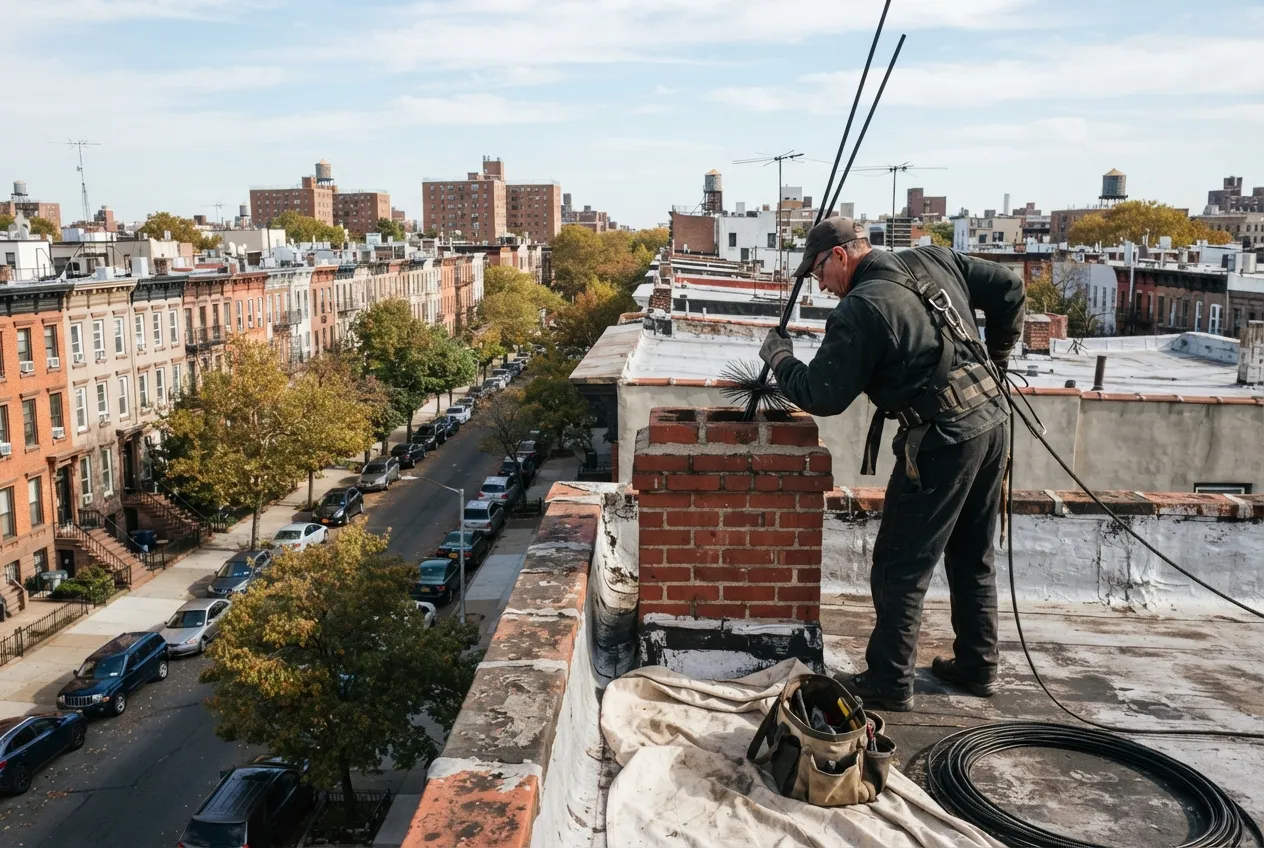
The short answer
Many Clinton Hill homes need a new chimney liner, especially when the original flue is cracked or deteriorated or when a boiler is switching from oil to gas. SummitHearth's certified technicians inspect the flue and then install a properly sized liner so exhaust vents safely out of your home.
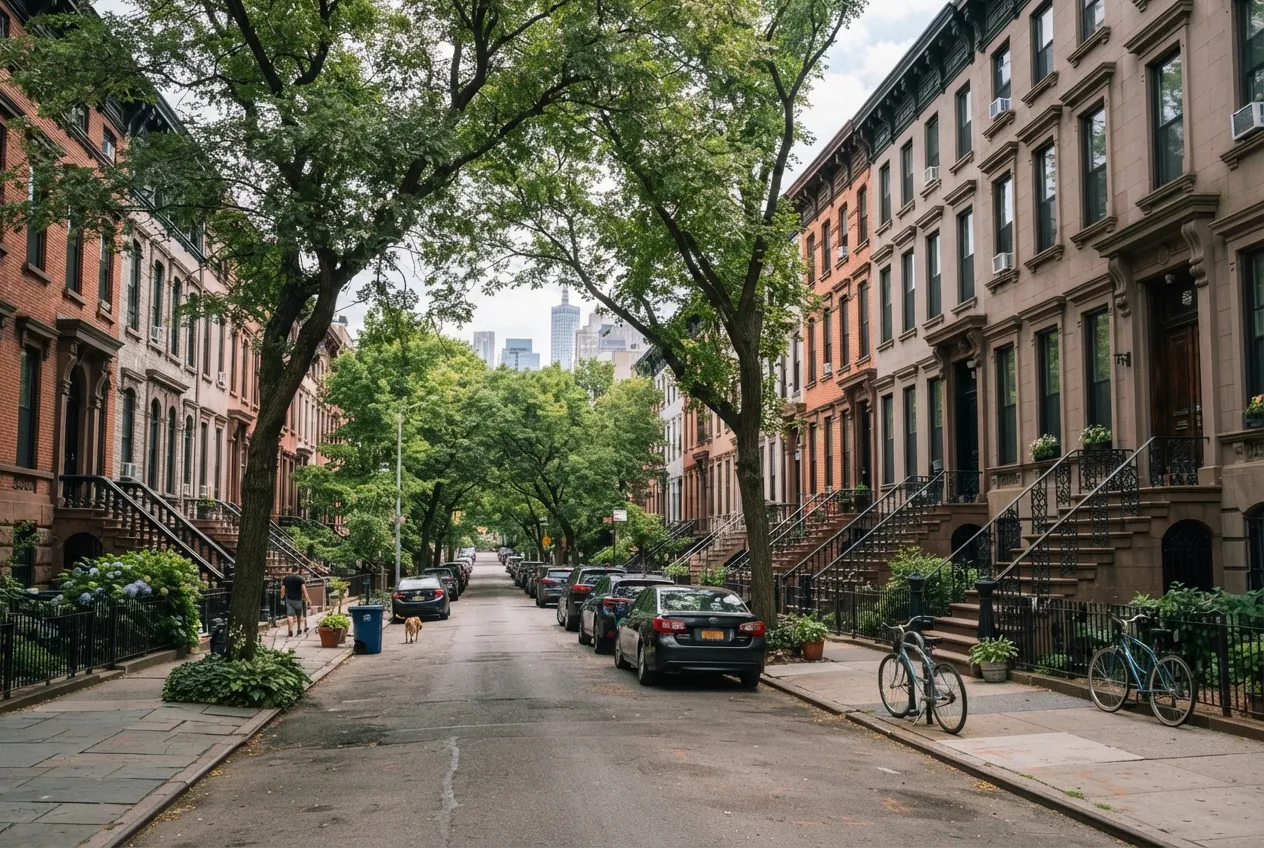
Many homes in Clinton Hill were built long before modern heating equipment, and their chimneys often still rely on the original masonry flue. A chimney liner is the protective channel inside the chimney that carries smoke and exhaust safely out of the house. SummitHearth Chimney Services installs liners in brownstones, rowhouses, pre-war apartment buildings and other homes across Clinton Hill, about a mile east of our Brooklyn office. Our certified technicians inspect the flue first. Then we recommend a liner that fits your appliance and your chimney.
Why Older Clinton Hill Chimneys Often Need a Liner
In older brownstones and rowhouses, the flue is often unlined brick. Others have clay tiles that have cracked, shifted or lost mortar over the decades. Gaps in a flue let heat reach nearby wood framing. They can also let exhaust, including carbon monoxide, seep into living spaces or into a shared wall in attached homes.
A properly sized liner also helps your appliance work as intended. A flue that is too large or too rough can cause poor draft. Poor draft leads to smoky fireplaces, more creosote buildup and condensation inside the chimney.
Boiler Conversions From Oil to Gas
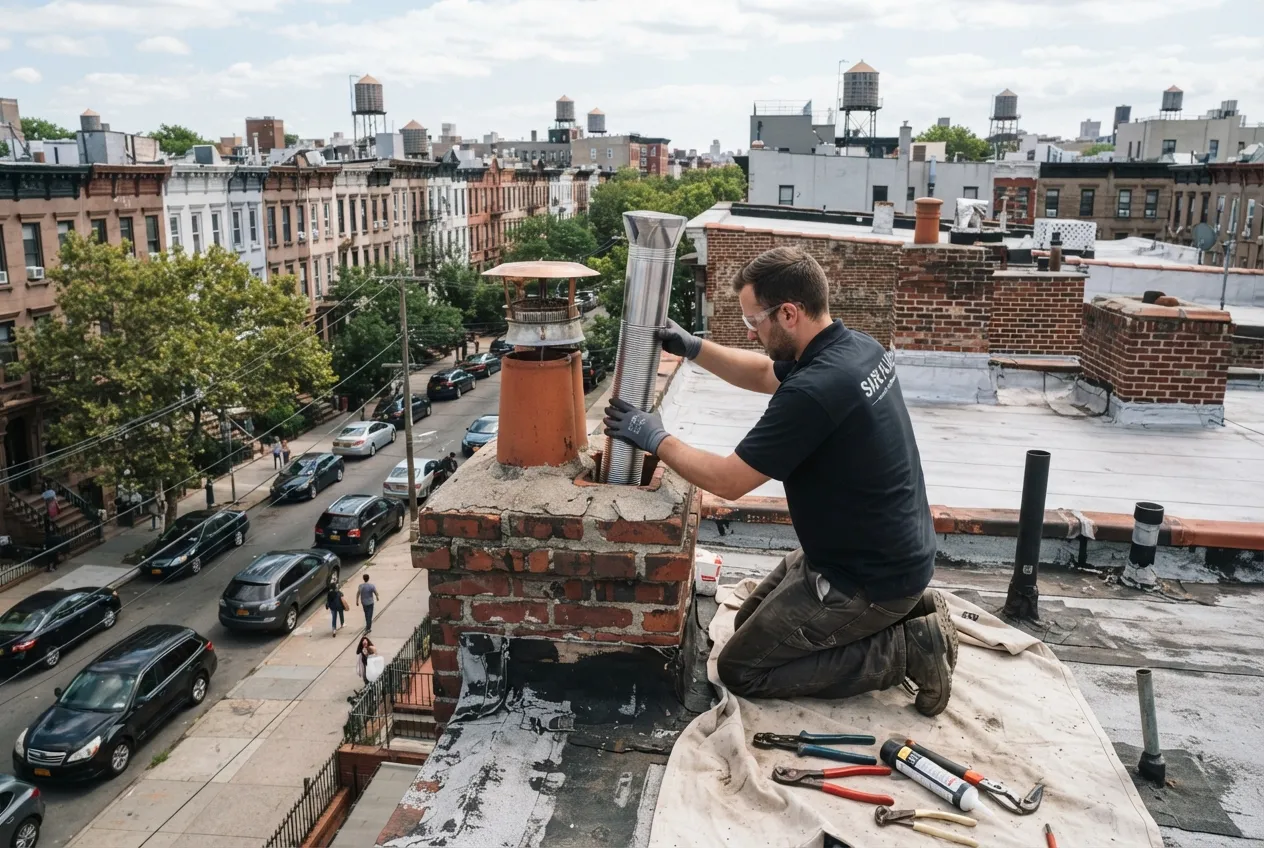
Many Clinton Hill homeowners and building owners are switching their heating systems from oil to gas. In New York City, the chimney has to be evaluated as part of that conversion, and a new liner is often needed. Gas exhaust produces acidic condensate, and over time that moisture can corrode a masonry flue that was built for oil.
Under the NFPA 211 standard, a change of fuel calls for a Level 2 inspection, which is more detailed than a routine annual check. We perform that inspection and document the condition of the flue. Then we size a liner to match the new boiler or water heater. If you are working with a heating contractor, we can coordinate with them so the liner is ready when the new equipment goes in.
Liner Options We Install
The right liner depends on what vents through the chimney and on the shape and condition of the flue. After the inspection, we explain the options that make sense for your home.
- Stainless steel liners for gas boilers, water heaters and many oil appliances, sized to each appliance's venting needs
- Insulated stainless liners for wood-burning fireplaces and stoves that need extra heat protection
- Liners for oddly shaped or offset flues, which are common in older attached homes
- Top plates, chimney caps and appliance connections that complete the system
Time for your annual chimney check?
What Installation Looks Like
Liner work in a brownstone or pre-war building usually means working from the roof and carefully inside the house. We protect floors and furnishings near the fireplace or boiler room, and we keep you informed at each step.
Sometimes an inspection suggests a hidden problem that can only be reached by opening part of the chimney or a wall. That calls for a Level 3 inspection, and we talk with you before anything is opened.
- Inspect the full length of the flue, often with a camera, and confirm measurements
- Clean the chimney so the liner goes into a clear passage
- Address any damage that affects the installation
- Install the liner from the top down and connect it to the appliance
- Seal and cap the top, then test draft to confirm the system vents properly
Planning Around Heat Season
New York City's heat season runs from October 1 through May 31. During that time, building owners must keep apartments heated to the city's minimum temperatures. If you own a multi-unit building in Clinton Hill, scheduling liner work for late spring or summer avoids taking a boiler offline when tenants rely on heat. If a problem turns up in the middle of winter, we work to keep downtime as short as possible.
After installation, plan on yearly inspections. NFPA 211 calls for chimneys, fireplaces and vents to be inspected once a year. A Level 1 inspection is usually enough when nothing about the system has changed.
Serving Clinton Hill and Nearby Neighborhoods
Clinton Hill is close to our Brooklyn office, so scheduling an inspection or estimate visit is straightforward. We also install chimney liners in Fort Greene, Prospect Heights, Downtown Brooklyn, DUMBO and Boerum Hill, where many homes have the same kind of older masonry chimneys.
More services in Clinton Hill
- Chimney Sweep in Clinton Hill
- Chimney Inspection in Clinton Hill
- Chimney Repair in Clinton Hill
- Air Duct Cleaning in Clinton Hill