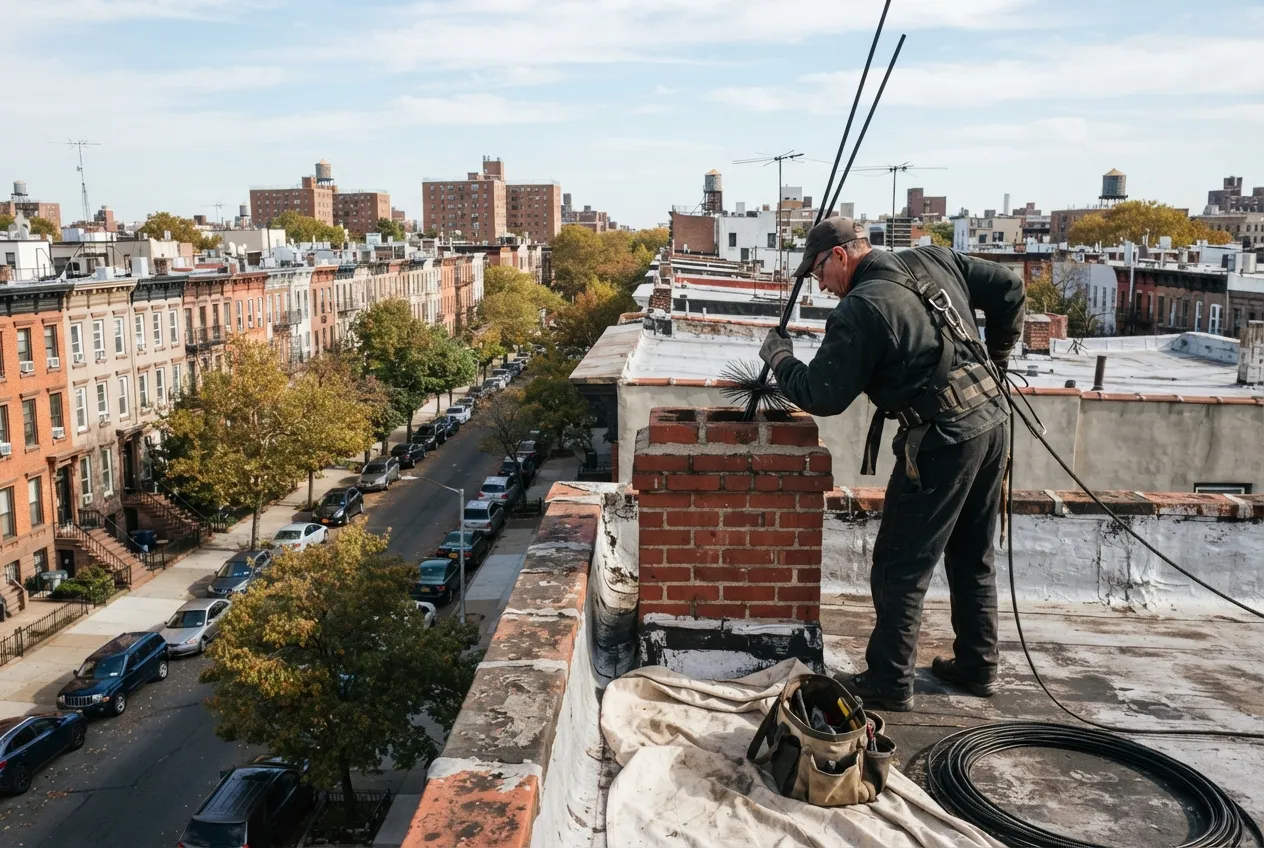
The short answer
Chimneys in Carroll Gardens should be inspected once a year, as the NFPA 211 standard calls for. A Level 1 inspection covers most homes when nothing has changed. A Level 2 inspection is needed after a fuel switch or new appliance, or when the home is sold.
Carroll Gardens is about a mile southwest of our Brooklyn office, so our technicians are in the neighborhood often. Many homes here were built long before modern heating systems. Their chimneys have outlasted several boilers, a few fireplace conversions and plenty of Brooklyn winters. A chimney inspection shows you the actual condition of the flue, the masonry and the appliance connections. That way you can use your fireplace or heating system with confidence and plan repairs before they become urgent. Our certified technicians inspect chimneys for homeowners and building owners throughout the 11231 ZIP code.
How Often Your Chimney Should Be Inspected
The NFPA 211 standard calls for chimneys, fireplaces and vents to be inspected once a year. That applies whether you burn wood every weekend or only use the flue to vent a gas boiler. Even a chimney that sees little use can develop cracked mortar or a damaged crown. It can also be blocked by nesting birds or fallen debris.
Chimney inspections come in three levels. The right one depends on what has happened with your home since the last inspection:
- Level 1: a check of the accessible parts of the chimney when nothing about the system has changed.
- Level 2: a more detailed inspection, including the flue interior. It's needed when you add a new appliance, switch fuels, or buy or sell the home.
- Level 3: used when a hidden hazard has to be reached by opening part of the chimney or the building.
Chimneys in Carroll Gardens Brownstones and Rowhouses
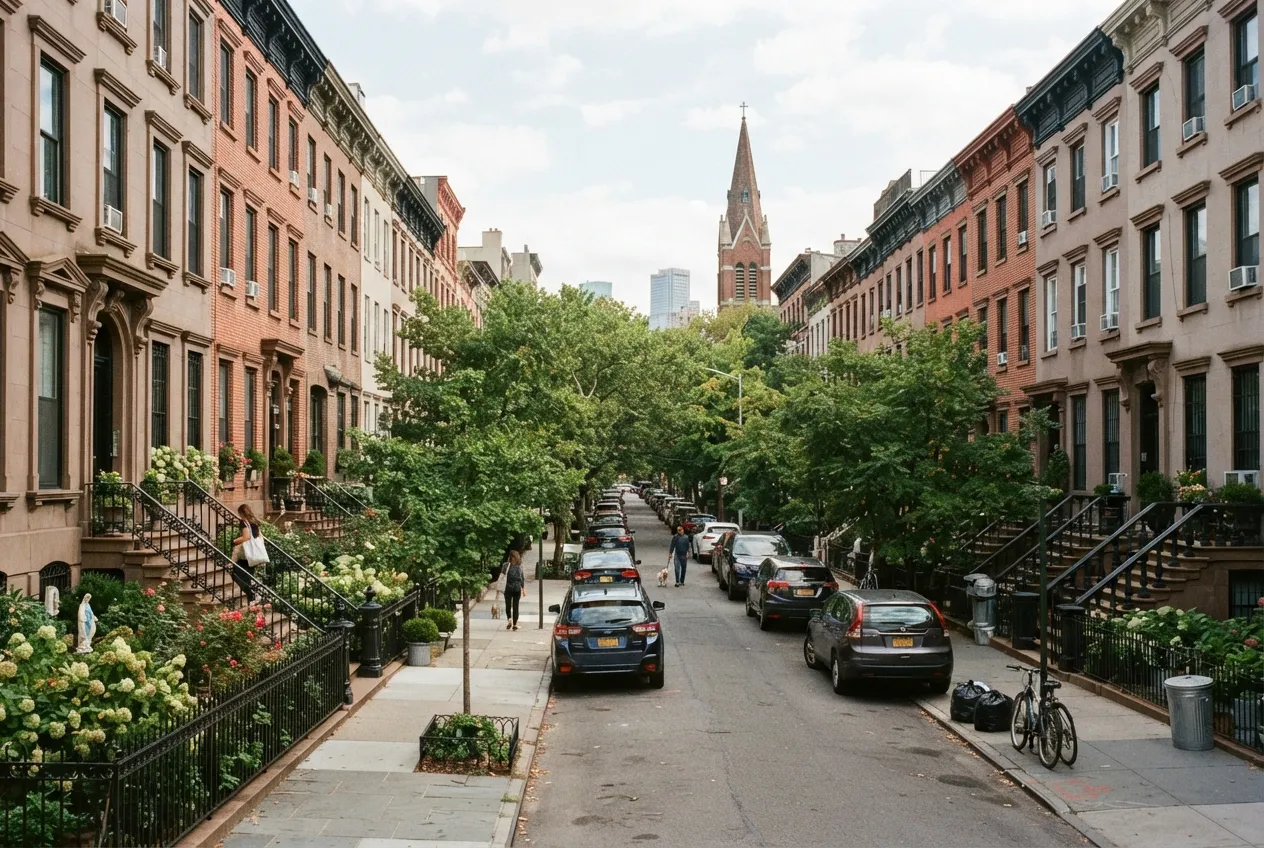
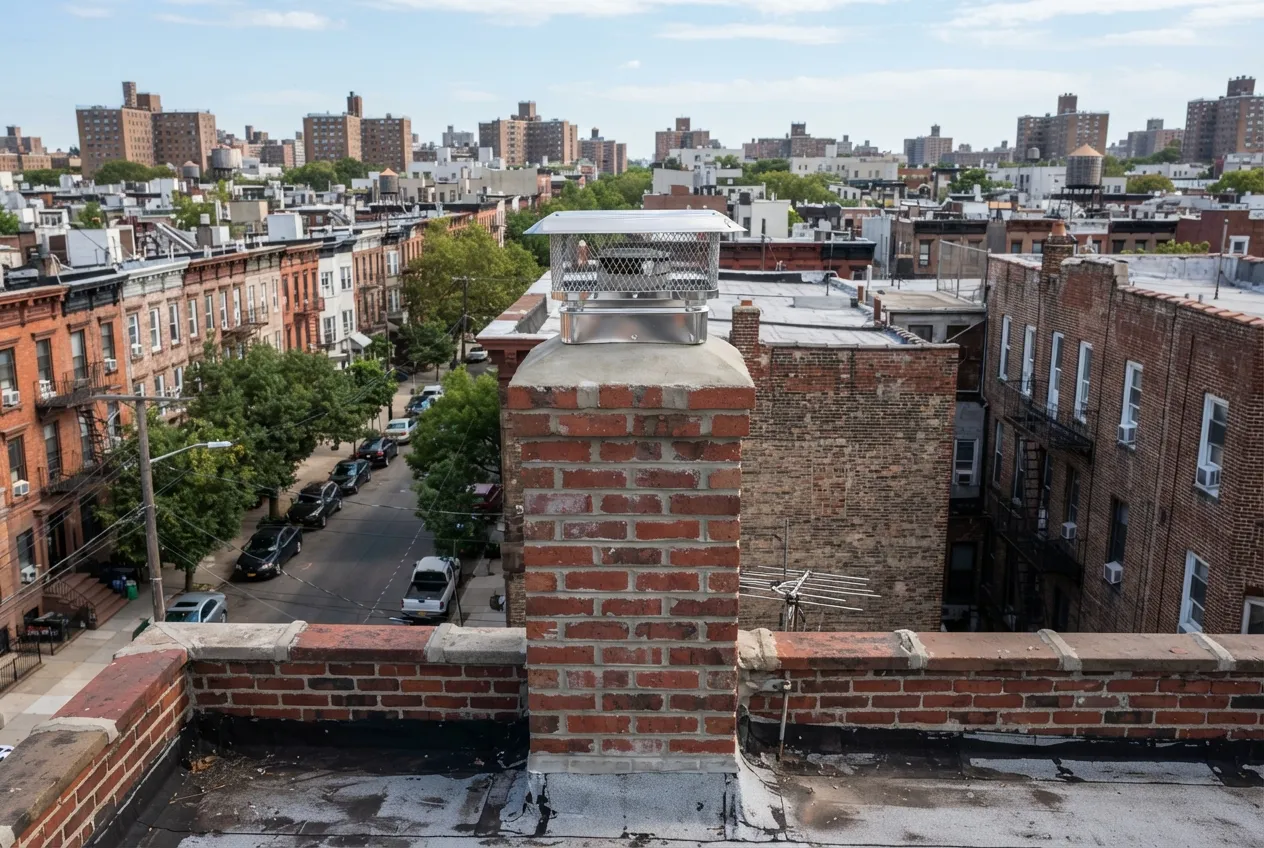
Much of Carroll Gardens is made up of brownstones, rowhouses and pre-war apartment buildings. In these homes, several flues often run through a single chimney stack. One stack may serve fireplaces on more than one floor along with the boiler or water heater. In attached houses, a chimney may sit along a shared wall, so the condition of its masonry can matter to more than one household.
Older fireplaces in these homes were often closed off or converted to gas, and some were later reopened by a new owner. If a fireplace hasn't been used in years, confirm that the flue is open, lined and sound before you light a fire. We look at how each flue is used today, not just how it was originally built.
Oil-to-Gas Conversions and Chimney Liners
When a New York City building converts its boiler from oil to gas, the chimney has to be evaluated as part of the work. Gas exhaust produces acidic condensate that can corrode a masonry flue, so a new liner is often needed. A Level 2 inspection gives you and your heating contractor a clear picture of the flue before the new equipment goes in.
We also recommend a Level 2 inspection if you're replacing a boiler or water heater with a different type of unit. The existing flue may not be sized or lined correctly for the new appliance.
Time for your annual chimney check?
Timing Your Inspection Around Heat Season
New York City's heat season runs from October 1 through May 31. During that period, building owners must keep apartments heated to the city's minimum temperatures. If you own a multi-family brownstone or a small apartment building, a chimney problem in January can quickly become a heating problem for your tenants. An inspection in late summer or early fall leaves time to make repairs before the boiler is running every day.
The same timing works for single-family homes. Fixing a cracked crown or a damaged cap is much easier in September than in the middle of a cold snap.
What We Check During a Chimney Inspection
We tailor every inspection to the chimney in front of us. When we're done, we walk you through what we found. We explain which issues need attention now and which ones you can plan for later.
Most inspections cover these areas:
- The chimney crown and cap, and the flashing where the stack meets the roof
- Exterior brick and mortar joints, checked for cracks, spalling and gaps
- The flue liner, checked for cracks, gaps and signs of corrosion
- Creosote and soot buildup in wood-burning flues
- The damper, smoke chamber and firebox in working fireplaces
- Connections from boilers and water heaters to the flue
- Blockages from debris, nests or animals
Serving Carroll Gardens and Nearby Neighborhoods
Along with Carroll Gardens, we inspect chimneys in Cobble Hill, Gowanus, Red Hook, Park Slope and Brooklyn Heights. These neighborhoods share a lot of the same housing, including brownstones, rowhouses and older multi-family buildings. That means aging masonry and multi-flue stacks need the same attention throughout the area.
More services in Carroll Gardens
- Chimney Sweep in Carroll Gardens
- Chimney Repair in Carroll Gardens
- Air Duct Cleaning in Carroll Gardens
- Chimney Liner Installation in Carroll Gardens