The short answer
Many older Carroll Gardens chimneys have unlined brick flues or worn clay tile liners that don't suit modern appliances, especially after an oil-to-gas boiler conversion. A new liner, sized to the appliance and installed after a camera inspection, keeps exhaust, heat and acidic condensation out of the masonry and out of your living space.
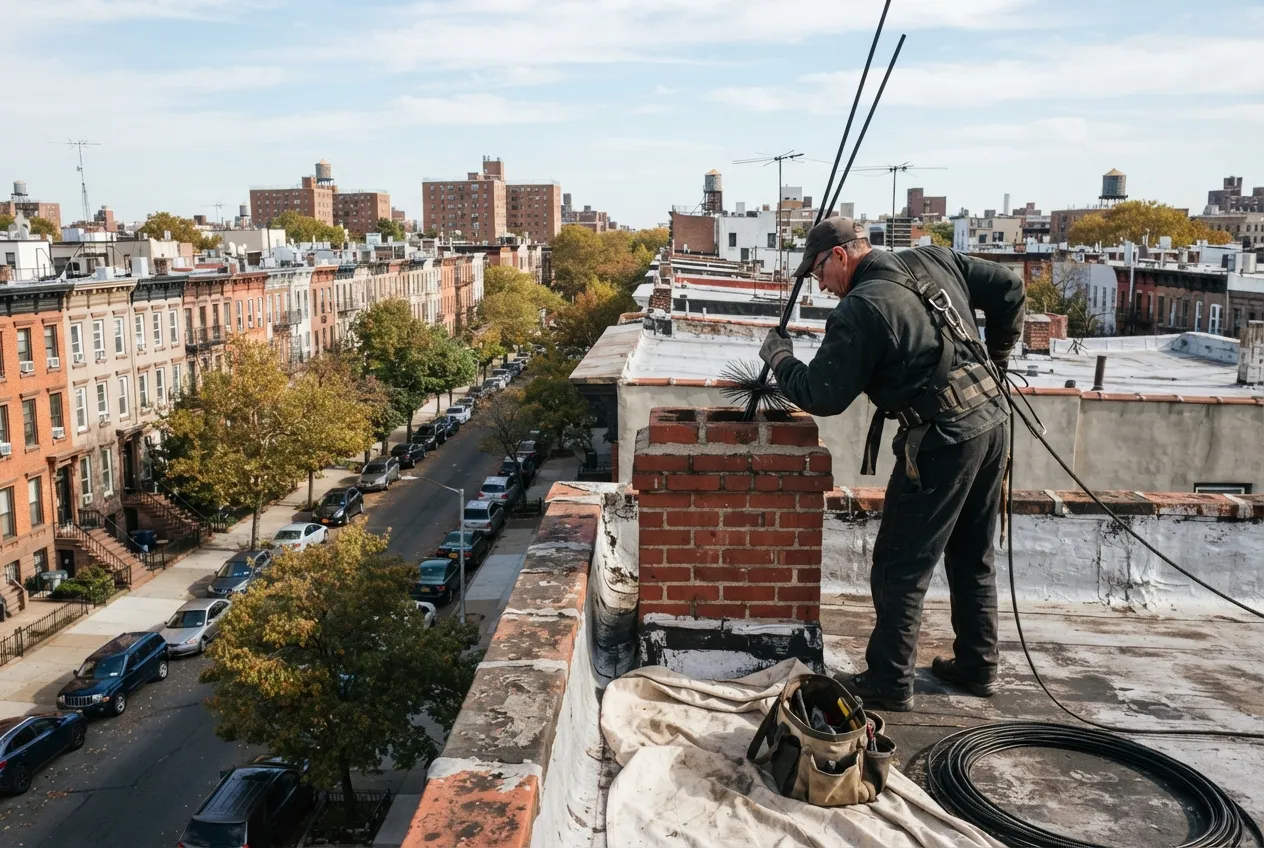
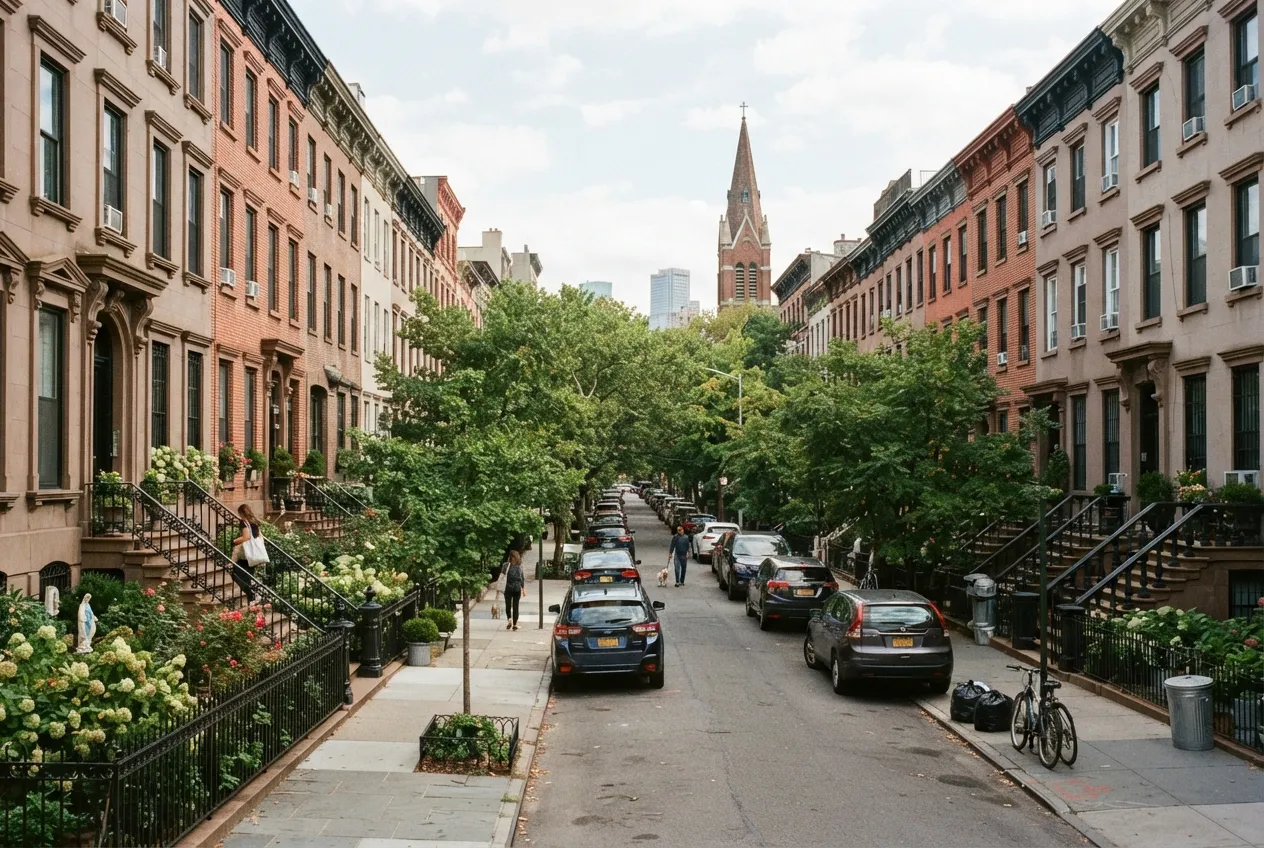
Carroll Gardens is full of brownstones, rowhouses and pre-war apartment buildings whose chimneys were built long before today's gas boilers, high-efficiency water heaters and fireplace inserts. A chimney liner is the protective channel inside the flue that keeps heat, exhaust and moisture away from the brick and from the house around it. When that liner is cracked, missing or the wrong size for the appliance it serves, the chimney stops doing its job safely. SummitHearth Chimney Services installs chimney liners for homes and buildings in Carroll Gardens (11231), about a mile southwest of our Brooklyn office.
Why older Carroll Gardens chimneys often need a new liner
Most chimneys in the neighborhood's brownstones and rowhouses were built with either bare brick flues or clay tile liners set in mortar. Over many decades of heating seasons, those tiles crack, joints open up and mortar washes out. Settling of the building can shift sections out of line. From the outside, the chimney may look fine while the inside is breaking down.
A damaged or missing liner causes three main problems. Heat can travel through gaps to wood framing near the chimney. Exhaust gases, including carbon monoxide, can leak into rooms instead of leaving through the top. And moisture soaks into the brick, which speeds up spalling and mortar loss.
In attached rowhouses, a flue often runs inside a wall shared with the house next door. A breach in that flue can affect more than one home, which is one more reason to keep the liner in good shape.
Oil-to-gas conversions and new appliances
When a New York City building converts its boiler from oil to gas, the chimney has to be evaluated as part of the job. A new liner is often needed because gas exhaust is cooler and produces acidic condensate that can corrode a masonry flue from the inside. An old flue that was sized for an oil burner is also frequently too large for a modern gas boiler, which can lead to poor draft and more condensation.
The NFPA 211 standard treats a change to the heating system, such as a new appliance or a switch of fuel, as a reason for a Level 2 inspection. That inspection is how we confirm what liner the chimney actually needs before any work begins.
- Converting a boiler from oil to gas
- Replacing a boiler or water heater with a different model
- Adding a wood or gas insert to an existing fireplace
- Reopening a fireplace that hasn't been used in years
- Finding cracked tiles, gaps or debris during an inspection
How we install a chimney liner
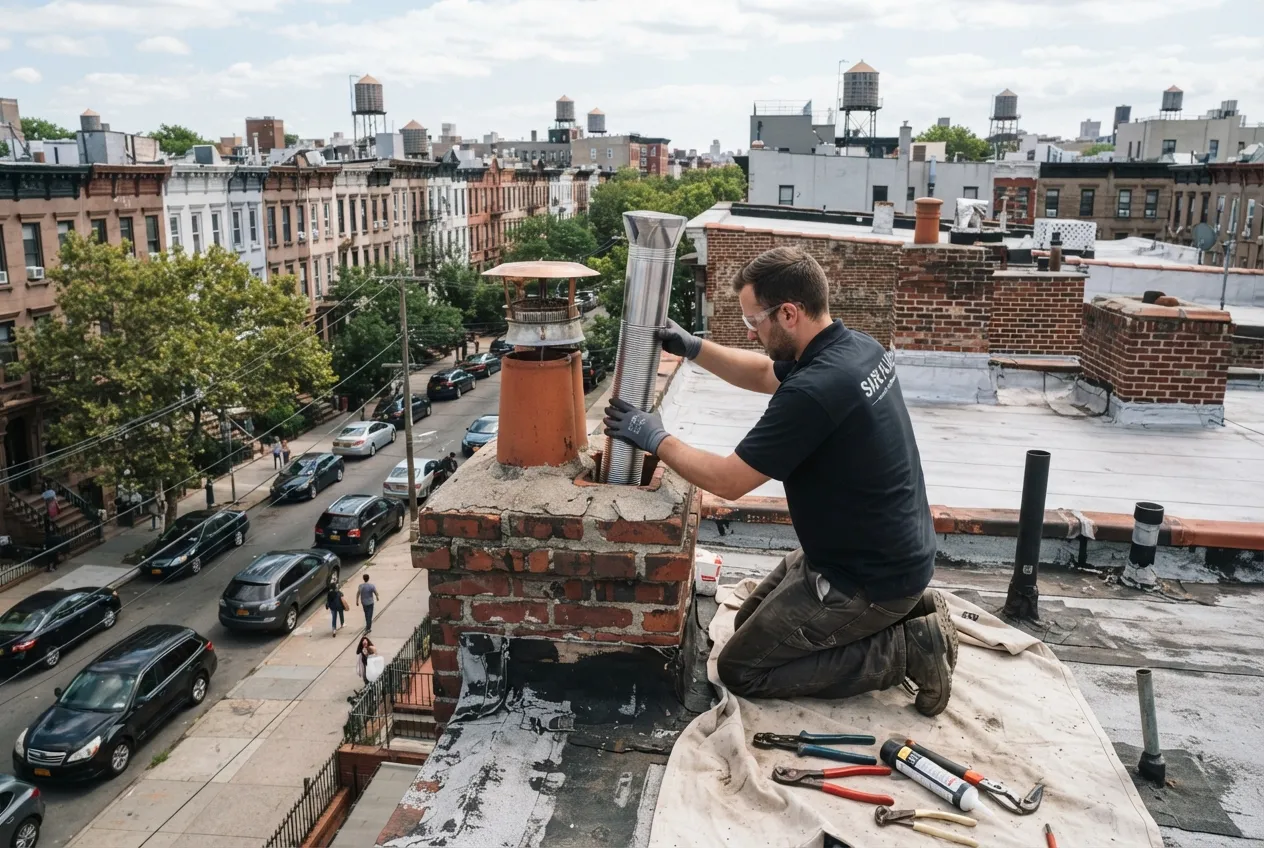
Every liner job starts with an inspection, including a camera look down the full length of the flue. From there, our certified technicians size the liner to the appliance it will serve, not just to the opening at the top of the chimney. A liner that is too big or too small can cause draft problems and condensation.
Brownstone and rowhouse chimneys are often tall, narrow and offset, so we plan the route and access ahead of time and protect the interior work area.
- Camera inspection to document the flue's condition and dimensions
- Liner selection matched to the fuel and appliance, typically stainless steel, insulated where the chimney calls for it
- Removal of debris or broken tile that would block the new liner
- Installation from the top of the chimney, with secure connections at the appliance end
- A cap at the top to keep out rain, animals and debris
- A final check of draft and connections, with photos you can keep
Time for your annual chimney check?
Timing liner work around heat season
New York City's heat season runs from October 1 through May 31, and building owners must keep apartments heated to the city's minimum temperatures during that time. If your building's boiler relies on the chimney being lined, it helps to plan the work early, ideally before October. When a liner problem turns up during heat season, we work with owners to schedule the job so the heating system is out of service for as short a time as possible.
The NFPA 211 standard calls for chimneys, fireplaces and vents to be inspected once a year. A yearly inspection is often how a failing liner is caught before it becomes an emergency.
Along with Carroll Gardens, we install chimney liners in nearby Cobble Hill, Gowanus, Red Hook, Park Slope and Brooklyn Heights.
More services in Carroll Gardens
- Chimney Sweep in Carroll Gardens
- Chimney Inspection in Carroll Gardens
- Chimney Repair in Carroll Gardens
- Air Duct Cleaning in Carroll Gardens