The short answer
A new chimney liner is usually needed when an existing flue is cracked or deteriorated, when a boiler converts from oil to gas, or when a new appliance needs a properly sized flue. SummitHearth inspects the chimney first, recommends the right liner type, and installs it for DUMBO homes and buildings.
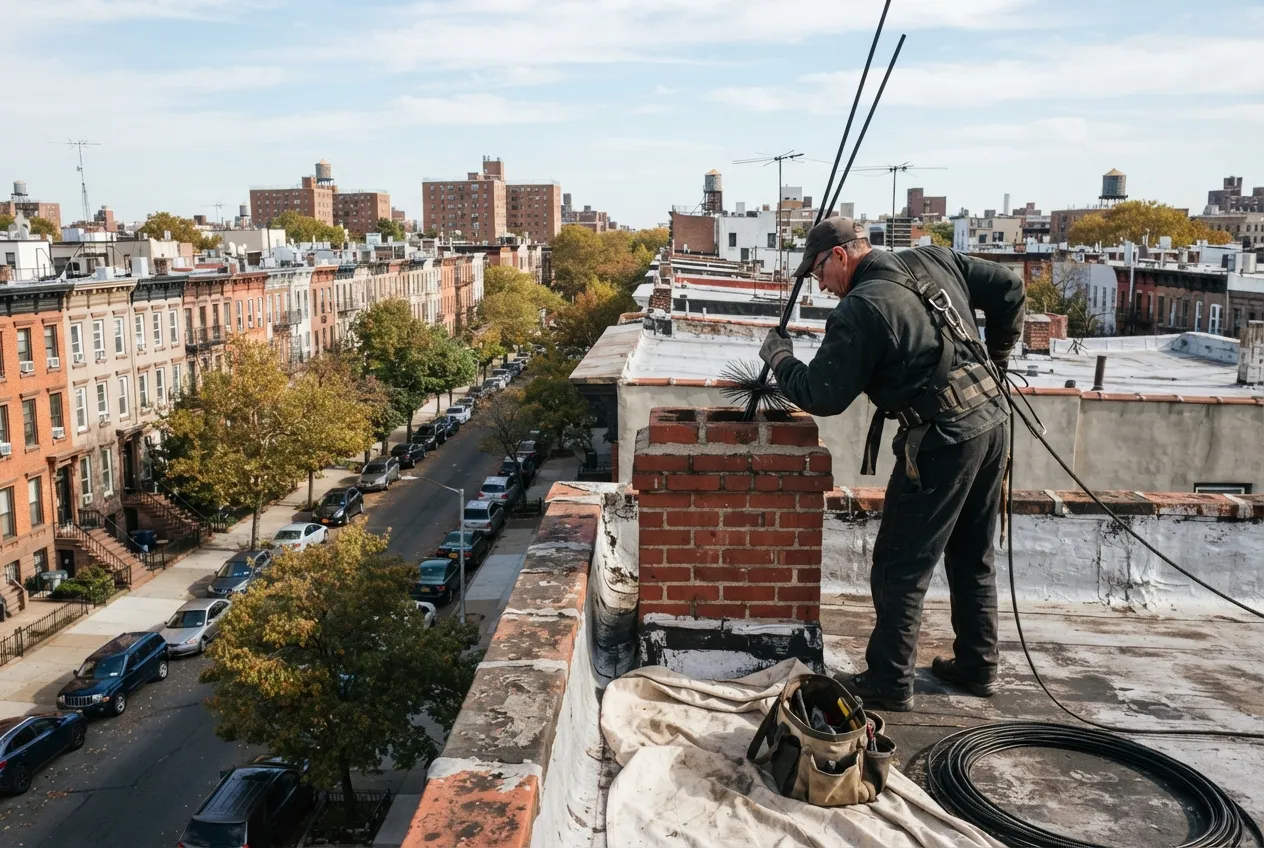
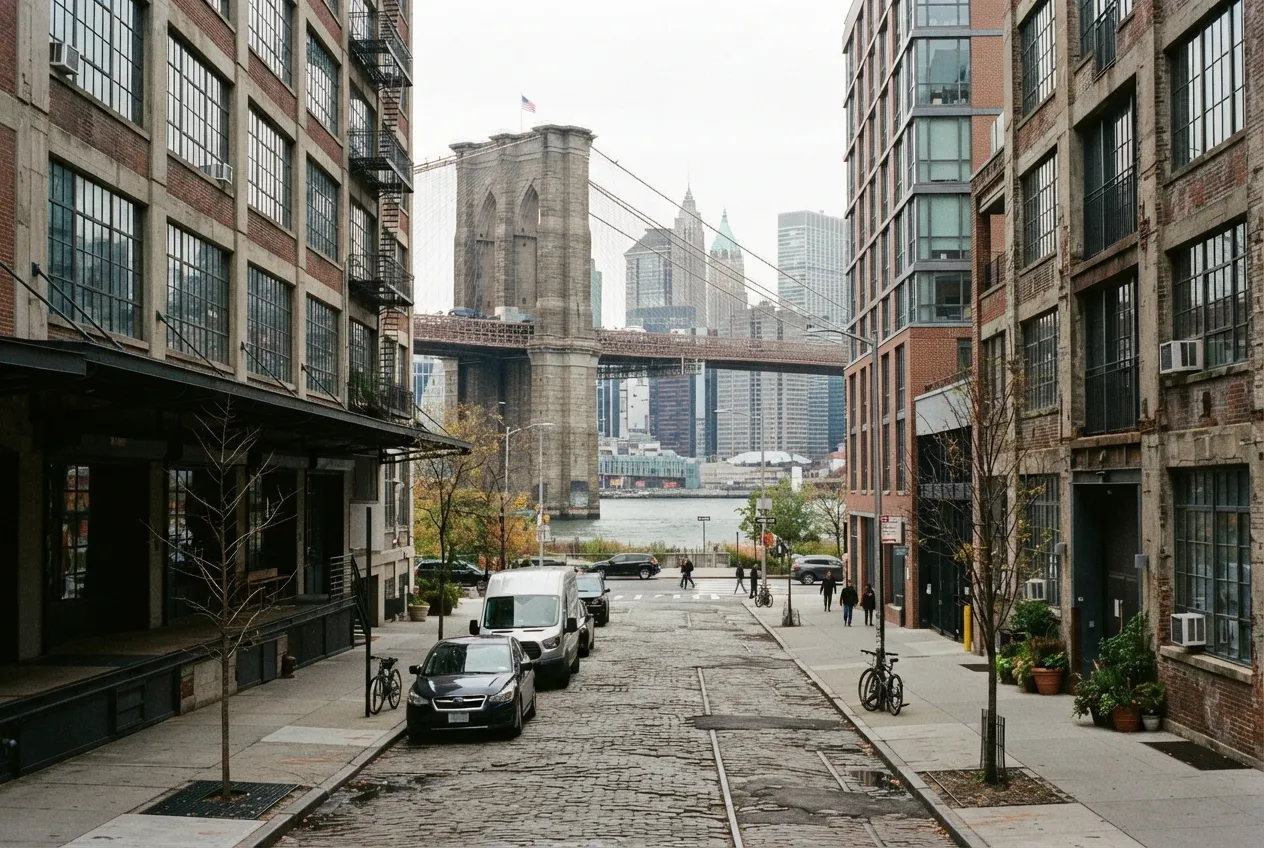
A chimney liner is the protective channel inside your flue that carries smoke and exhaust gases out of the house. It also keeps heat and corrosive byproducts away from the surrounding brick and framing. In DUMBO, many chimneys serve converted industrial loft buildings, pre-war apartment buildings and nearby rowhouses and brownstones. Many of those flues were built for coal or oil and are now asked to vent modern gas boilers, water heaters or wood stoves. SummitHearth Chimney Services installs chimney liners for homes and buildings in DUMBO and the 11201 ZIP code from our office at 451 Fulton St. Our certified technicians inspect the flue first, explain what it needs, and then install a liner sized for the appliance it will serve.
Why DUMBO Chimneys Often Need New Liners
Older masonry chimneys in this part of Brooklyn were often built with clay tile liners, or with no liner at all. Over decades, heat cycling, moisture and settling can crack tiles, open mortar joints and leave gaps where exhaust can reach the brick or seep into the building.
Fuel changes are another common reason. When a New York City building converts its boiler from oil to gas, the chimney has to be evaluated as part of the work. A new liner is often needed because gas exhaust produces acidic condensate that can corrode a masonry flue. An oversized old flue can also cool exhaust too quickly, which leads to more condensation and poor draft.
- Cracked, shifted or missing clay flue tiles
- Oil-to-gas boiler or water heater conversions
- A new appliance that needs a flue matched to its size
- Spalling brick, efflorescence or water staining inside the home
- Draft problems, such as smoke or exhaust odors indoors
Inspection Comes Before Installation
The NFPA 211 standard calls for chimneys, fireplaces and vents to be inspected once a year. It describes three inspection levels. A Level 2 inspection applies when the system changes, such as a new appliance or a switch of fuel, or when the home is sold. Most liner projects fall into this category. A Level 3 inspection is used only when a hidden hazard has to be reached by opening part of the chimney or building.
Before recommending a liner, we look at the full height of the flue, often with a camera. We note the condition of the existing liner, check the size and shape of the flue, and confirm which appliances vent into it. That information determines what kind of liner will work and how it should be sized.
Liner Options We Install
There is no single liner that fits every chimney. The right choice depends on the fuel, the appliance and the shape of the existing flue. We explain the tradeoffs before any work begins.
- Stainless steel liners: a common choice for gas and oil appliances and for wood stove inserts. They can be rigid or flexible to fit flues with offsets.
- Aluminum liners: used in some gas applications where the appliance manufacturer allows them.
- Cast-in-place liners: a mortar-like material formed inside the existing flue, sometimes used to restore a damaged masonry chimney.
- Clay tile replacement: an option in some rebuilds where the chimney is opened or reconstructed.
Time for your annual chimney check?
What Installation Looks Like in a DUMBO Building
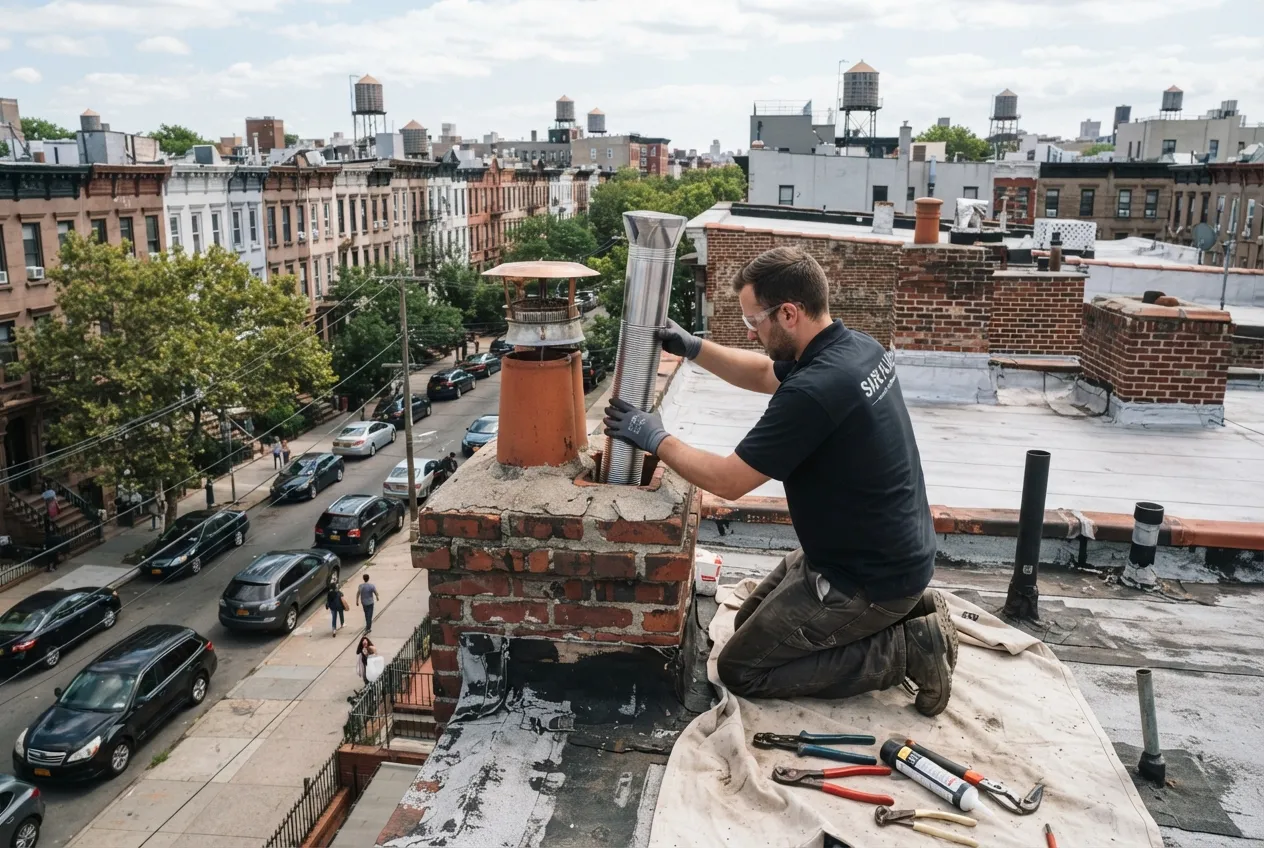
Most liner installations are done from the roof. Technicians lower the liner down the flue, connect it to the appliance at the base, and seal and cap the top. In multi-story loft and apartment buildings, we coordinate roof access and appliance shutdowns with the owner, super or building manager ahead of time.
Timing matters in New York City. Heat season runs from October 1 through May 31, and building owners must keep apartments heated to the city's minimum temperatures during that time. When a liner serves a boiler, we plan the work to keep heating downtime as short as possible. Owners who can schedule liner work outside heat season have more flexibility.
Serving DUMBO and Nearby Neighborhoods
We install chimney liners throughout DUMBO, and also work in Downtown Brooklyn, Boerum Hill, Brooklyn Heights, Fort Greene and Clinton Hill. Whether the chimney serves a single fireplace in a brownstone or a central boiler in a larger pre-war building, the process starts the same way: a careful inspection and a clear explanation of what the flue needs.
More services in DUMBO
- Chimney Sweep in DUMBO
- Chimney Inspection in DUMBO
- Chimney Repair in DUMBO
- Air Duct Cleaning in DUMBO