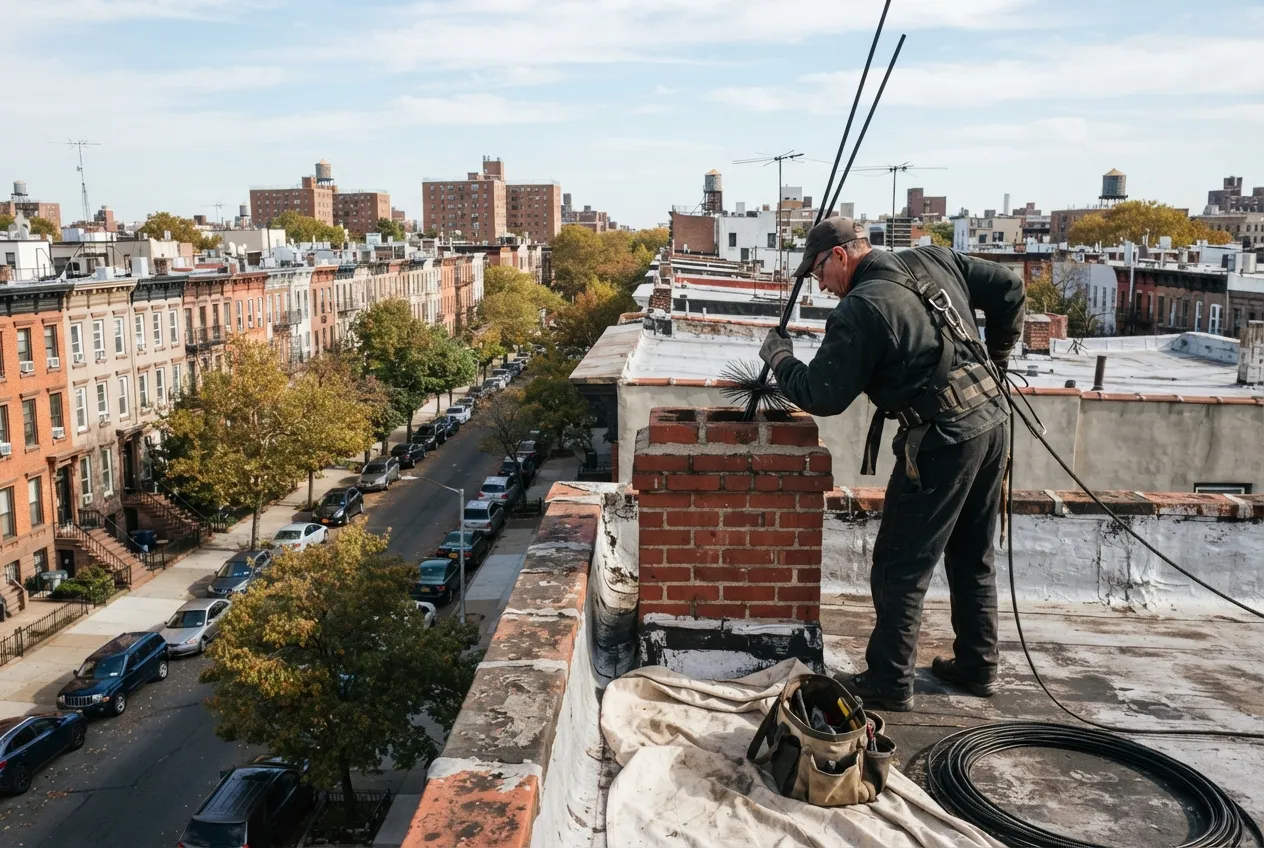
The short answer
Gowanus homes often need a new chimney liner when an old clay or masonry flue has cracked or when a boiler converts from oil to gas. SummitHearth inspects the flue first, then installs a liner sized and rated for the appliance it serves.
A chimney liner is the protective channel inside your flue that carries smoke and exhaust safely out of the house. In Gowanus, many homes still rely on old masonry chimneys with liners that are cracked, deteriorated or missing entirely. SummitHearth Chimney Services installs new liners for rowhouses, brownstones and multi-unit buildings throughout ZIP code 11231. Our office is about a mile northeast of Gowanus, so our certified technicians can inspect your flue, explain what we find and recommend a liner that fits your fireplace, boiler or water heater.
Why Liners Matter in Gowanus Homes
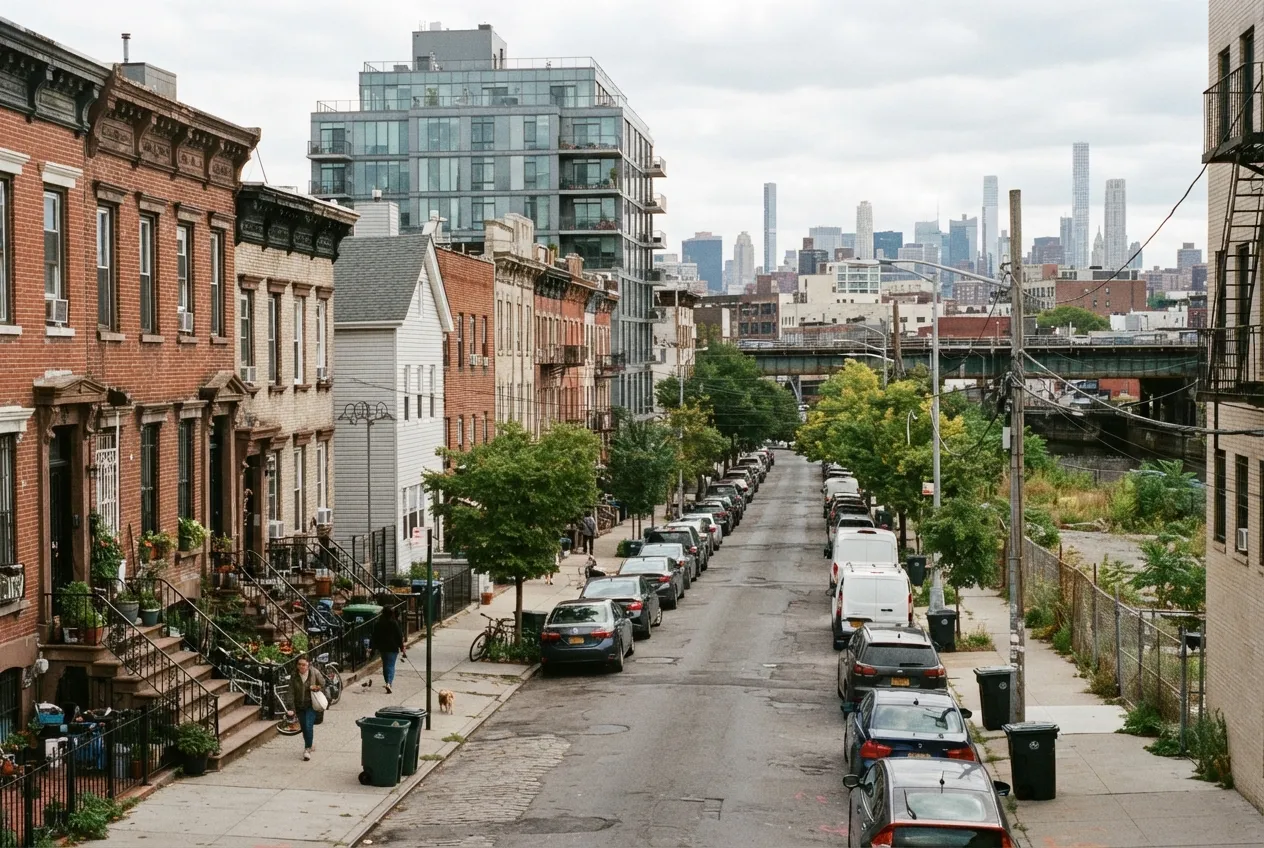
Much of the housing in Gowanus is older masonry construction: brick rowhouses, brownstones and pre-war apartment buildings, alongside newer residential buildings. Many of the older chimneys were built with clay tile liners, and some were built with no liner at all. Over decades, heat cycles, moisture and settling can crack tiles, loosen mortar joints and leave gaps where heat and exhaust reach the surrounding brick and wood framing.
A damaged liner can let carbon monoxide leak into living spaces, speed up masonry decay and make it harder for an appliance to draft properly. In a rowhouse or attached building, where chimneys often run alongside shared walls, a sound liner also helps keep heat and combustion gases where they belong.
Oil-to-Gas Conversions and Your Chimney
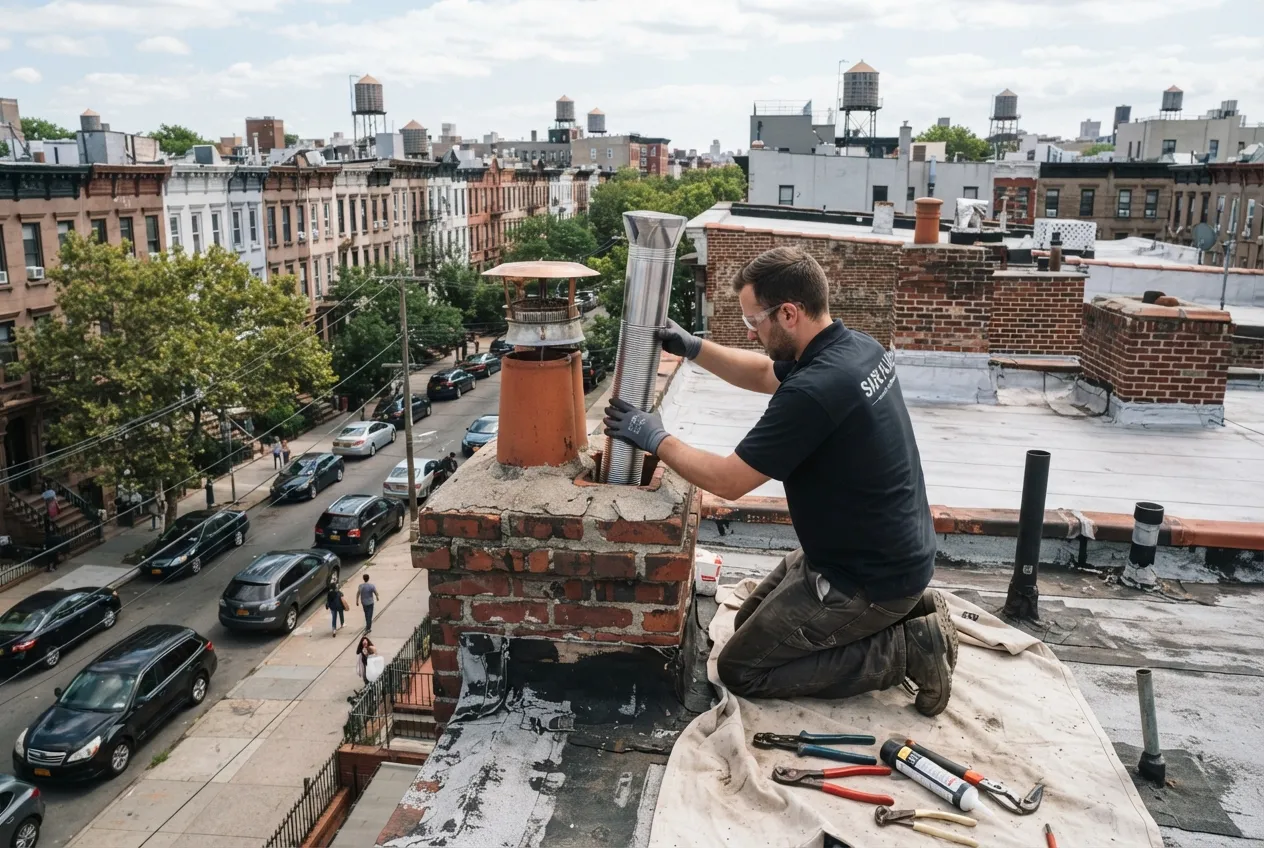
When a New York City building converts its boiler from oil to gas, the chimney has to be evaluated as part of the work. A new liner is often needed because gas exhaust produces acidic condensate that can corrode a masonry flue. An old flue that handled oil heat for years may not hold up once it starts carrying gas exhaust.
If your Gowanus building is planning a conversion, it helps to bring us in early. We can evaluate the chimney, measure the flue and coordinate the liner work so it fits into the boiler project instead of holding it up.
Liner Options We Install
The right liner depends on what the chimney serves, the size and shape of the flue, and the condition of the masonry. We will explain the trade-offs for your specific chimney before any work begins.
- Stainless steel liners: a common choice for gas and oil appliances and for relining damaged flues in older brick chimneys.
- Insulated stainless liners: used where added insulation helps the appliance draft properly and protects nearby framing.
- Cast-in-place liners: a poured lining that can help seal and reinforce an older flue with irregular dimensions.
- Clay tile replacement: an option in some open masonry chimneys where tiles can be accessed and replaced.
Time for your annual chimney check?
How Installation Works
Every liner job starts with an inspection. The NFPA 211 standard calls for chimneys, fireplaces and vents to be inspected once a year, and it describes three levels of inspection. A Level 2 inspection applies when the system changes, such as a new appliance or a switch of fuel, which makes it the typical starting point for relining work. A Level 3 inspection is reserved for cases where a hidden hazard has to be reached by opening part of the chimney or building.
- Inspect the flue, often with a camera, and document its condition.
- Measure the flue and confirm the size the appliance requires.
- Clean the chimney so the new liner goes into a clear passage.
- Install the liner, connect it to the appliance and fit a cap at the top.
- Review the finished work with you and explain any ongoing care.
Planning Around Heat Season
New York City's heat season runs from October 1 through May 31, when building owners must keep apartments heated to the city's minimum temperatures. For owners of multi-unit buildings in Gowanus, that makes timing important. Boiler chimney work is easiest to schedule in late spring and summer, when a short shutdown affects fewer people.
If a problem turns up during the colder months, we will talk through the options with you and plan the work to keep downtime as short as practical.
Serving Gowanus and Nearby Neighborhoods
Along with Gowanus, we install chimney liners in Carroll Gardens, Cobble Hill, Red Hook, Park Slope and Brooklyn Heights. These neighborhoods share much of the same older masonry housing, so we regularly see the same issues: aging clay flues, chimneys left unlined and buildings converting away from oil heat.
More services in Gowanus
- Chimney Sweep in Gowanus
- Chimney Inspection in Gowanus
- Chimney Repair in Gowanus
- Air Duct Cleaning in Gowanus