The short answer
SummitHearth repairs chimneys in Park Slope, including repointing, crown and cap work, flashing and flue liners for brownstones, rowhouses and pre-war buildings. Every repair starts with an inspection, so you know what is wrong and what it will take to fix it before any work begins.
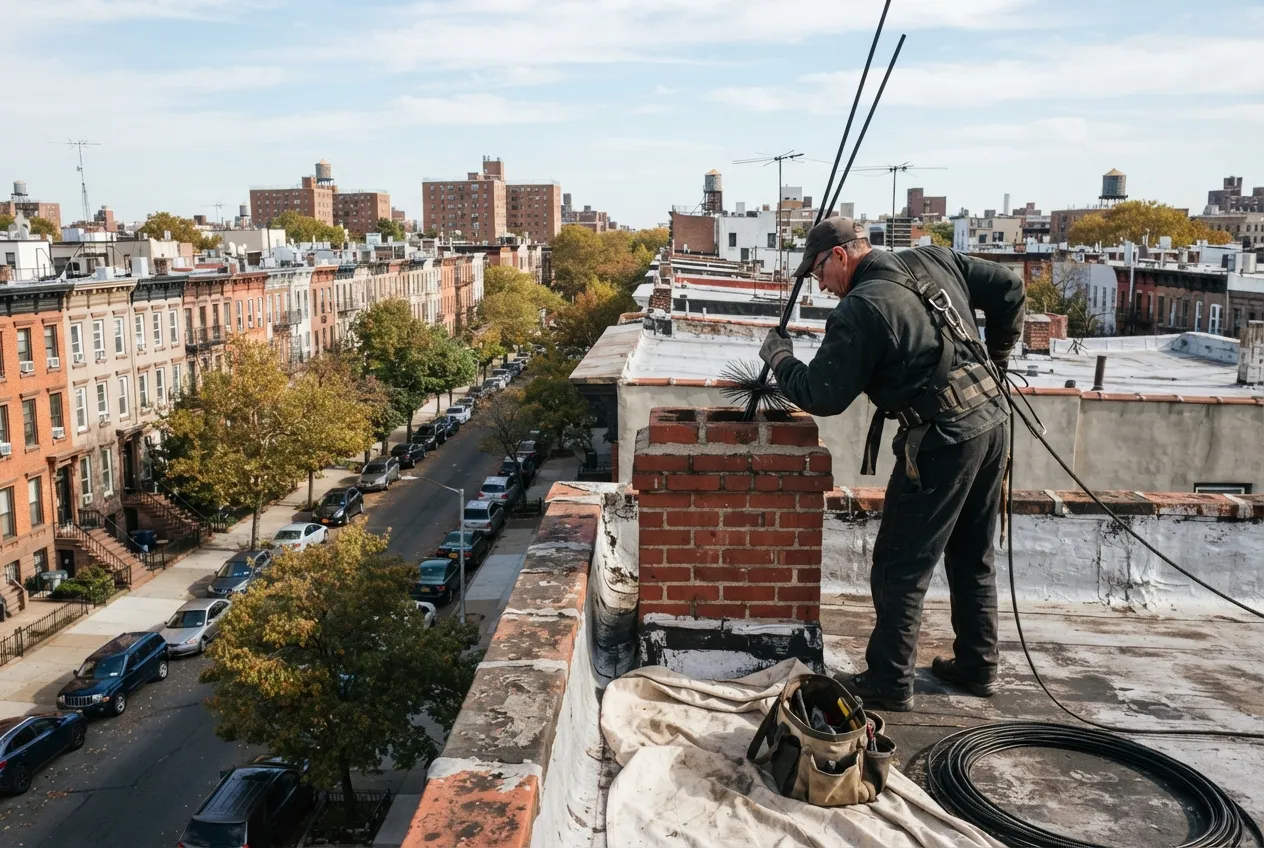
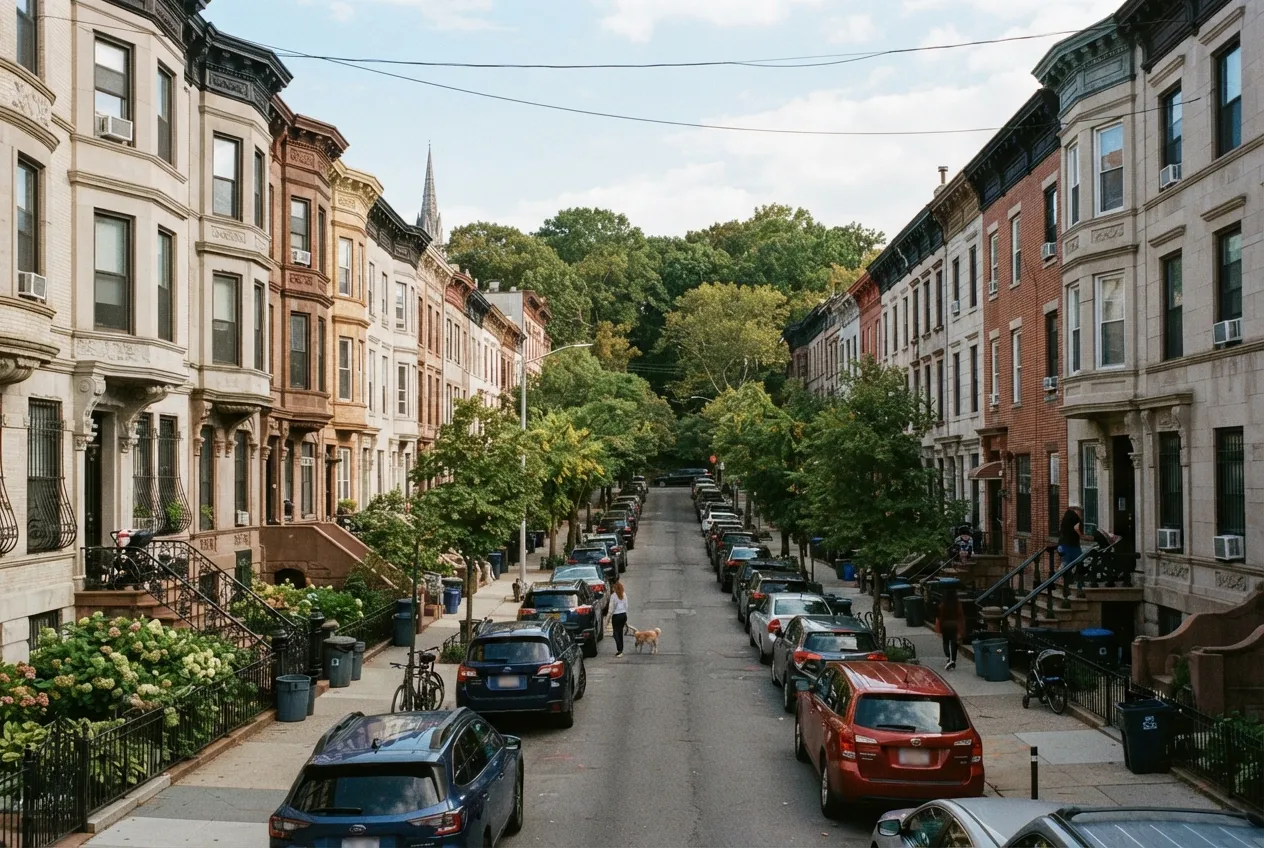
Most chimneys in Park Slope were built into brownstones, brick rowhouses and pre-war apartment buildings, and many still serve fireplaces, boilers and water heaters every day. Age, weather and changes in heating systems all wear down masonry, mortar, flue liners and the parts at the top of the stack. SummitHearth Chimney Services repairs chimneys for homeowners and building owners in Park Slope (ZIP 11217), about a mile south of our Brooklyn office. Our certified technicians start by finding out what is actually wrong. Then they explain the repair options in plain terms before any work begins.
Common Chimney Problems in Park Slope Homes
Older masonry chimneys in this part of Brooklyn tend to fail in predictable ways. Each winter, freeze-thaw cycles force water into cracked mortar and brick. Chimneys that run through party walls between rowhouses can leak into more than one home. Inside the flue, decades of use wear down clay tile liners or leave unlined brick exposed to heat and exhaust.
- Crumbling or missing mortar joints and spalling brick near the top of the stack
- Cracked or deteriorated chimney crowns that let water into the masonry
- Missing or damaged caps that allow rain, debris and animals into the flue
- Cracked, gapped or missing flue tiles
- Leaks where the flashing meets the roof, often showing up as stains on ceilings or walls near the chimney
- Worn dampers and smoke chambers in older fireplaces
The Repairs We Handle
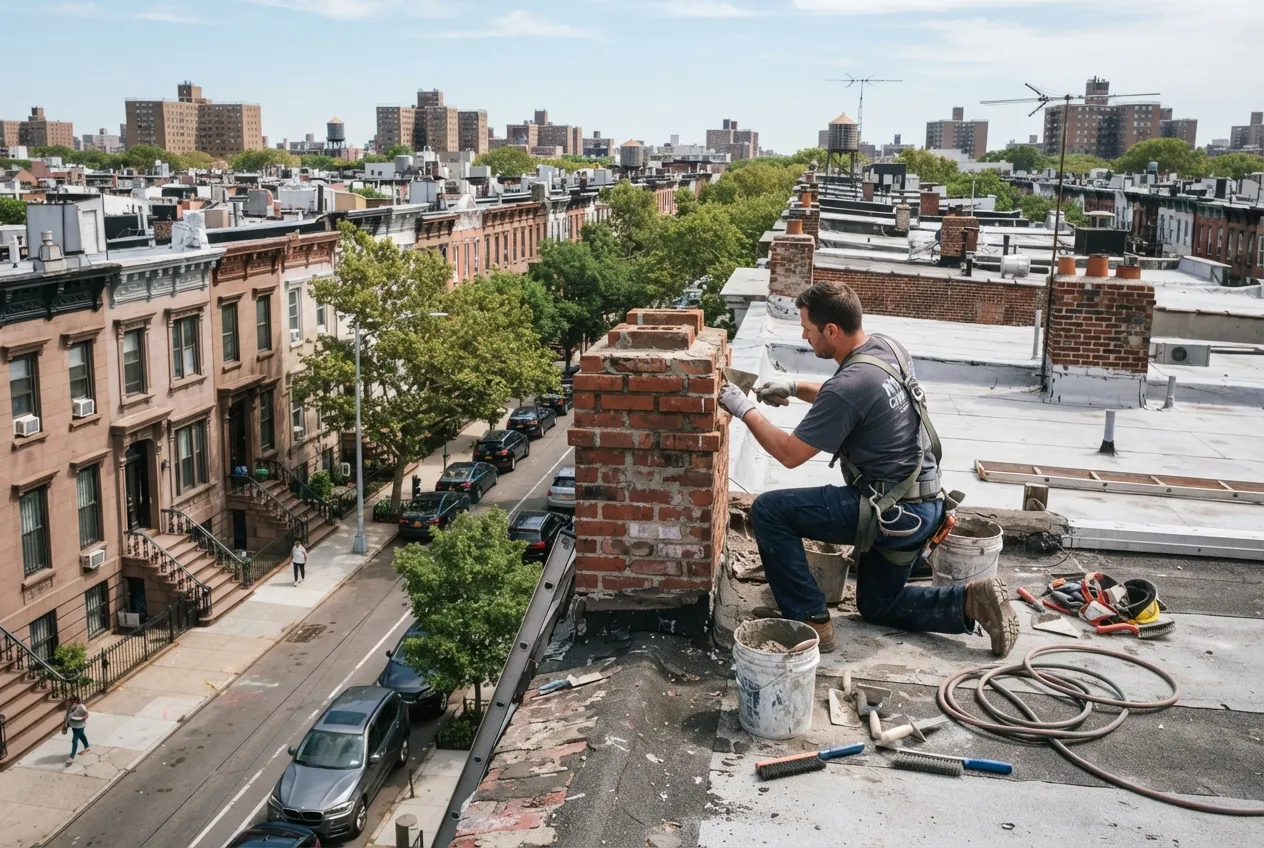
We repair both the outside and the inside of masonry chimneys. Outside work includes repointing (removing failing mortar and replacing it), rebuilding damaged sections of brick, repairing or recasting crowns, installing caps, and resealing or replacing flashing. Inside work includes repairing or replacing damaged flue tiles, installing stainless steel liners, and fixing dampers and smoke chambers so the fireplace drafts and closes properly.
Not every problem calls for a large repair. A small crown crack or a missing cap caught early is a much smaller job than water damage that has worked through the brick and into the house. We will tell you which issues need attention now and which can be monitored.
Oil-to-Gas Conversions and Chimney Liners
Many Park Slope brownstones and apartment buildings have switched their boilers from oil to gas, and others are planning to. When a New York City building makes that conversion, the chimney has to be evaluated as part of the work. Gas exhaust produces acidic condensate that can corrode a masonry flue, so a new liner is often needed.
We inspect the existing flue and check whether its size and condition suit the new appliance. If a liner is called for, we install it. If you are planning a conversion, bring us in early so the chimney work fits the boiler schedule instead of holding it up.
Time for your annual chimney check?
How a Repair Starts: Inspection First
The NFPA 211 standard calls for chimneys, fireplaces and vents to be inspected once a year, and chimney professionals use three inspection levels. A Level 1 inspection fits a chimney where nothing has changed. A Level 2 inspection applies when the system changes, such as a new appliance or a switch of fuel, or when the home is sold. A Level 3 inspection is needed when a hidden hazard can only be reached by opening part of the chimney or building.
For repairs, we start with the inspection level that fits your situation and document what we find, with photos where possible. You then get a written description of the recommended work and decide what moves forward.
Timing Repairs Around Heat Season
New York City's heat season runs from October 1 through May 31. During that time, building owners must keep apartments heated to the city's minimum temperatures. If your chimney serves a boiler that heats tenants' units, a chimney problem in January is also a heating problem. Spring and summer are good times for masonry and liner work, so the system is ready before October.
Fireplace chimneys benefit from the same planning. Fixing a crown or cap before winter keeps water out during the months when freeze-thaw damage is worst.
Serving Park Slope and Nearby Neighborhoods
Along with Park Slope, we repair chimneys in Prospect Heights, Carroll Gardens, Cobble Hill, Gowanus and Red Hook. These neighborhoods have similar housing, mostly rowhouses, brownstones and pre-war buildings, so their chimneys tend to need similar repairs.
More services in Park Slope
- Chimney Sweep in Park Slope
- Chimney Inspection in Park Slope
- Air Duct Cleaning in Park Slope
- Chimney Liner Installation in Park Slope