The short answer
SummitHearth Chimney Services cleans and inspects chimneys, boiler flues, dryer vents and air ducts throughout lower Manhattan, from Battery Park City to Greenwich Village. Book before the heat season starts on October 1 so problems turn up while repairs are still easy to schedule.
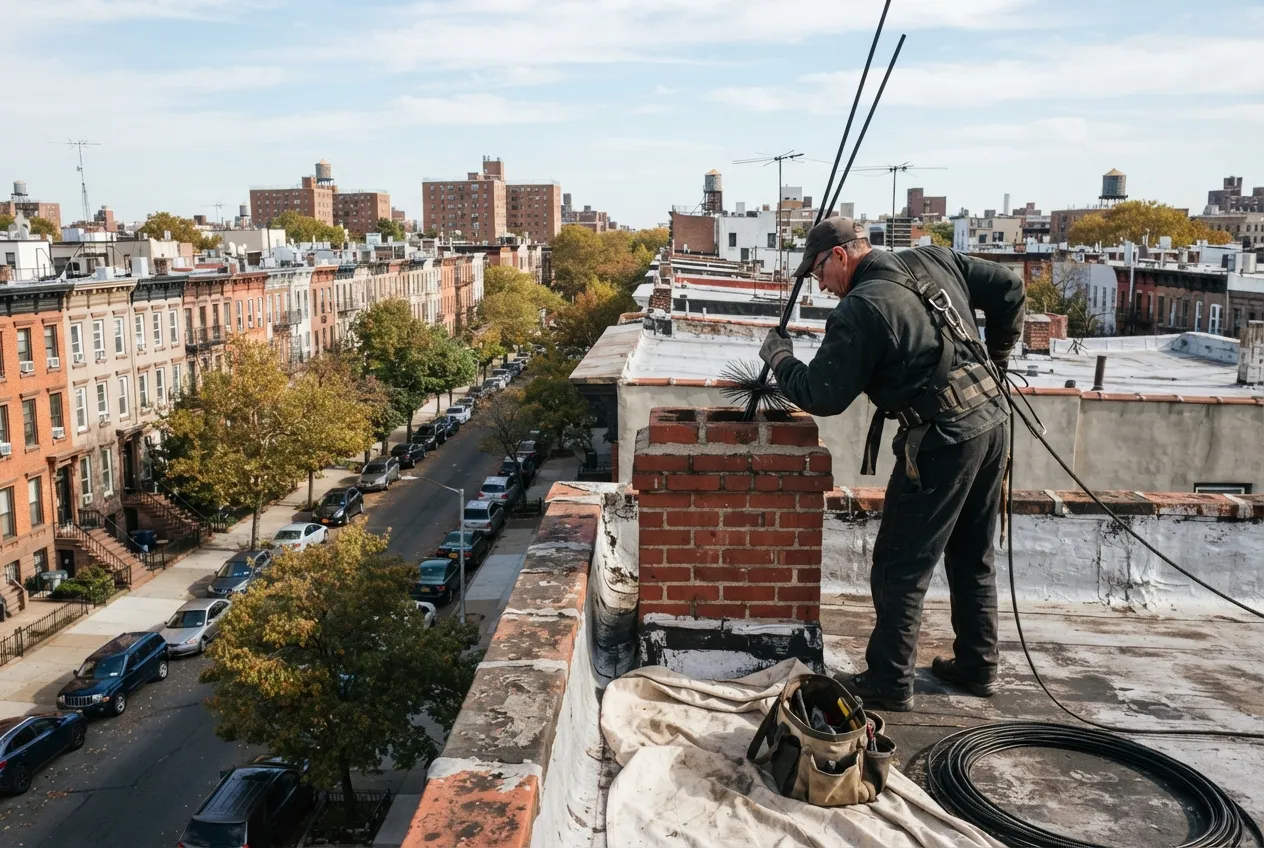
In Manhattan, a chimney is rarely just a chimney. A single roofline can carry a boiler flue, a wood-burning fireplace flue and a string of dryer exhausts, each serving a different apartment or business. SummitHearth Chimney Services cleans and inspects these systems across lower Manhattan. Our certified technicians plan every visit around how your building is put together, who needs to grant access, and what the system has to handle this winter.
What We Check in Different Building Types
Older walk-ups, converted lofts and newer apartment buildings each wear out in their own way. Before we bring out brushes or vacuums, we work out which flues serve which units and what fuel each one carries.
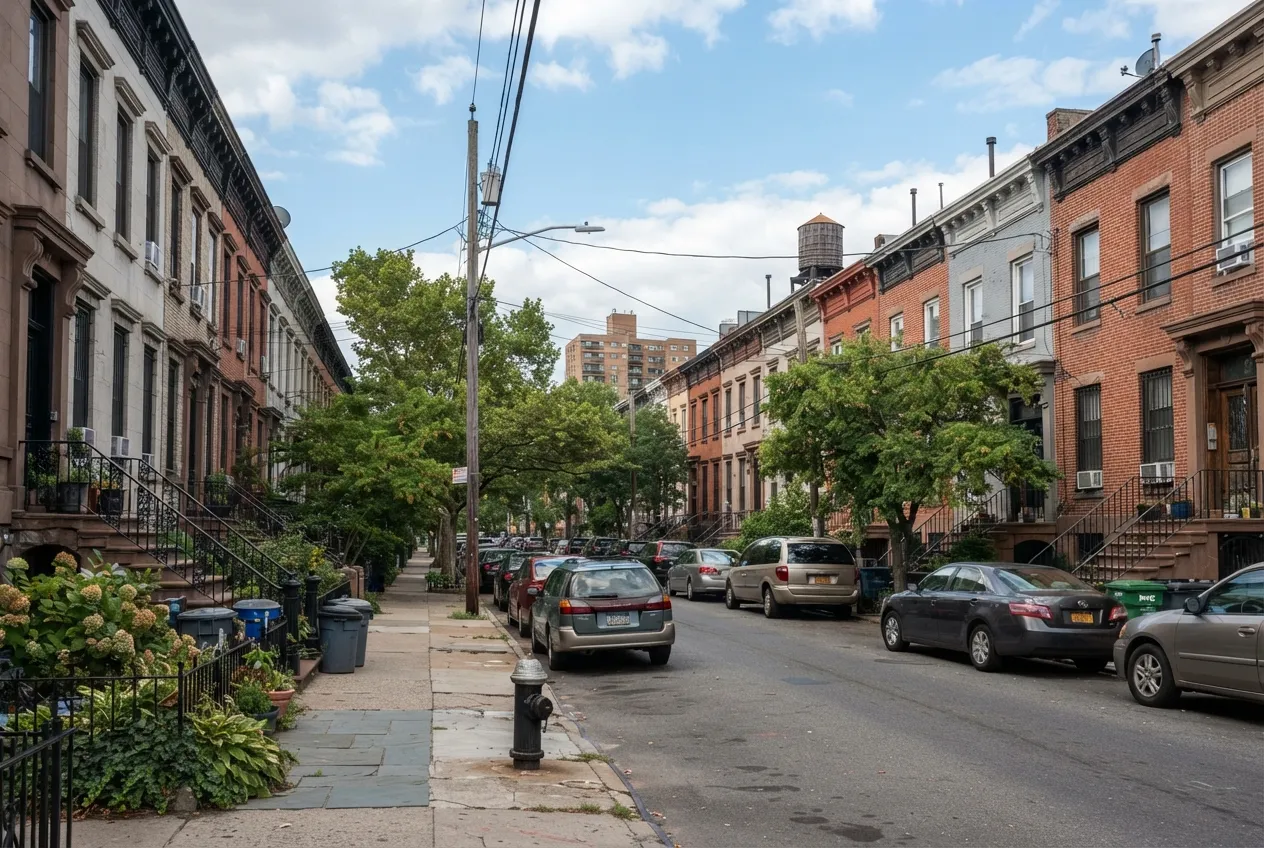
- Walk-ups and row houses: decorative fireplaces that may be closed off, cracked flue tiles, and crowns worn down by rain and freeze-thaw cycles.
- Loft conversions: long horizontal vent runs, flues altered during renovations, and dryer exhausts routed through ceilings.
- Co-ops and condos: shared boiler chimneys, building access rules, and coordination with management or the super before work starts.
- Mixed-use buildings: commercial exhaust and residential flues sitting close together on the same roof.
Plan Around October 1
New York City's heat season runs from October 1 through May 31, and building owners must keep apartments at the city's minimum temperatures for that entire stretch. A blocked or deteriorating boiler flue is a much harder problem in January than in August, so late summer and early fall are the practical window for inspection and cleaning.
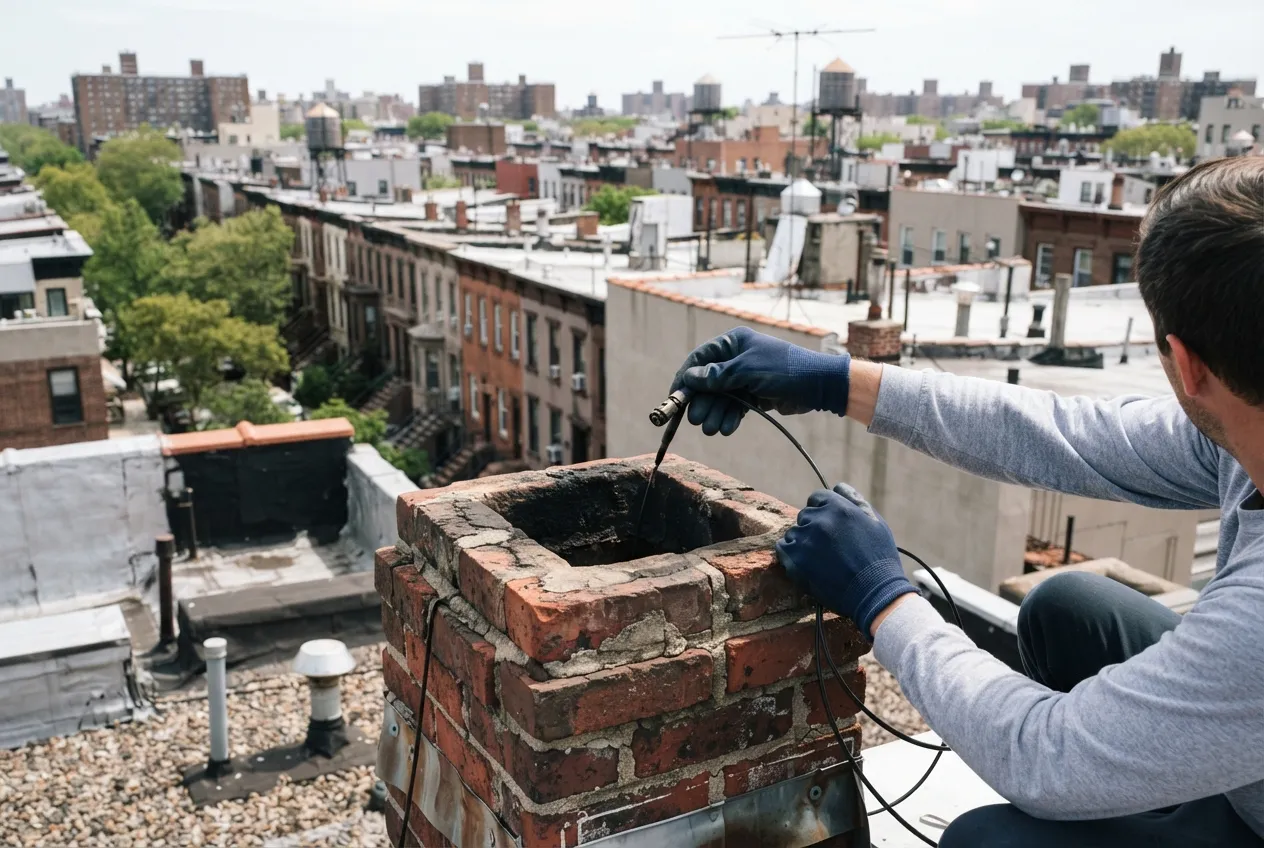
The NFPA 211 standard calls for chimneys, fireplaces and vents to be inspected once a year. A Level 1 inspection fits when nothing has changed. A Level 2 is the right call after a new appliance, a fuel switch or a sale of the home. A Level 3 is reserved for hidden hazards that can only be reached by opening part of the chimney or building.
Converting a Boiler From Oil to Gas
Many Manhattan buildings are moving off heating oil. When a boiler converts to gas, the chimney has to be evaluated as part of the job. Gas exhaust produces acidic condensate that can corrode a masonry flue, so a new liner is often needed. We examine the existing flue, explain what we find, and tell you plainly whether relining makes sense.
Time for your annual chimney check?
Dryer Vents and Air Ducts in Tight Quarters
According to the U.S. Fire Administration, failure to clean is the leading factor contributing to home clothes dryer fires. In apartments, dryer vents often snake through walls and ceilings for long distances, and lint collects where you cannot see it. Slow drying and a hot laundry area are common early signs.
For air ducts, we follow the U.S. EPA's guidance: cleaning makes sense when there is substantial visible mold growth, signs of vermin, or excessive dust and debris. The EPA notes that duct cleaning has not been shown to prevent health problems, urges care with chemical treatments, and suggests researching any offer that looks unusually cheap. If your ducts do not need work, we will say so.
Where We Work in Manhattan
Our crews serve Chinatown, Two Bridges, the Financial District, Battery Park City, the Lower East Side, Tribeca, the Civic Center, SoHo, Little Italy, Hudson Square, the East Village and Greenwich Village. If your building sits just outside these neighborhoods, ask us anyway.